
















US Navy Seizes Iranian Ship Touska in Gulf of Oman — Strait of Hormuz Crisis Explodes
The US Navy destroyer USS Spruance fired on and seized the Iranian cargo ship Touska in the Gulf of Oman after it tried to breach the naval blockade. Iran calls it piracy and vows retaliation. Full breakdown inside.

US Navy Fires On and Seizes Iranian Cargo Ship Touska — Strait of Hormuz on the Brink
April 20, 2026 | Breaking World News
The world woke up to a major escalation on Sunday as the United States Navy fired on and seized an Iranian-flagged cargo ship in the Gulf of Oman — the first such seizure since America's naval blockade of Iranian ports began just days ago. The incident has sent oil prices surging, halted tanker traffic through one of the world's most critical waterways, and pushed already fragile US-Iran ceasefire talks to the edge of collapse.
Here's everything you need to know.
🚢 What Happened: The Touska Incident
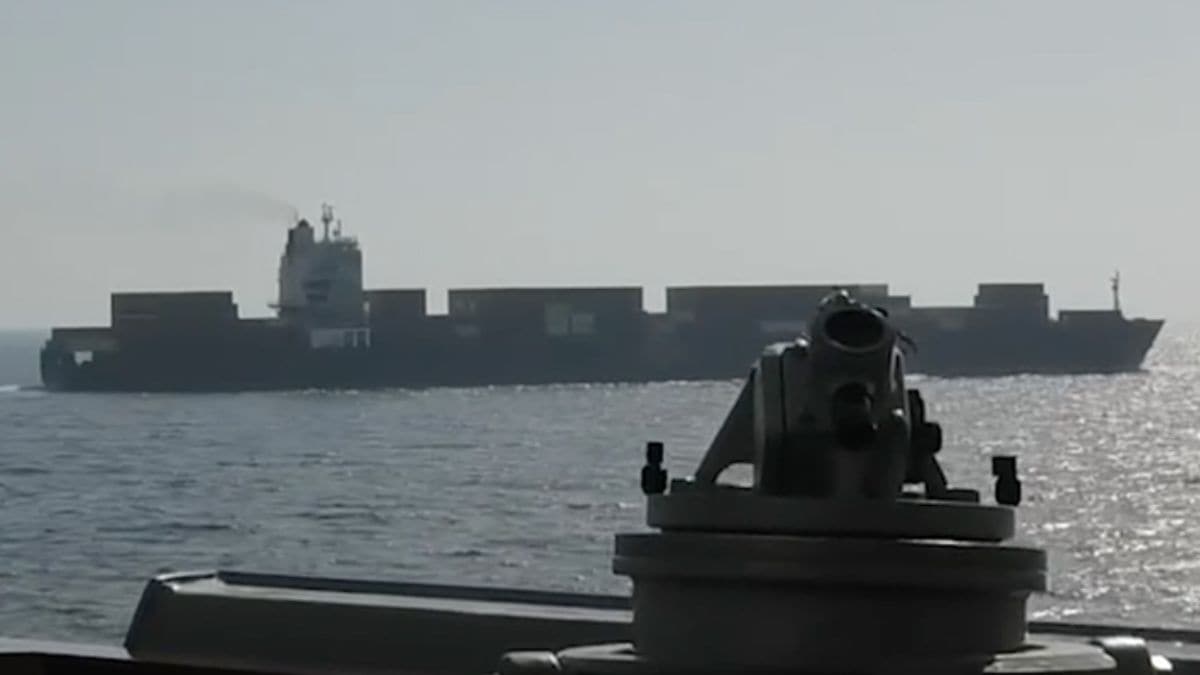
The US Navy guided missile destroyer USS Spruance fired several rounds at the engine room of the Iranian-flagged cargo ship Touska, disabling it in the Gulf of Oman. US Marines then boarded and seized the vessel.
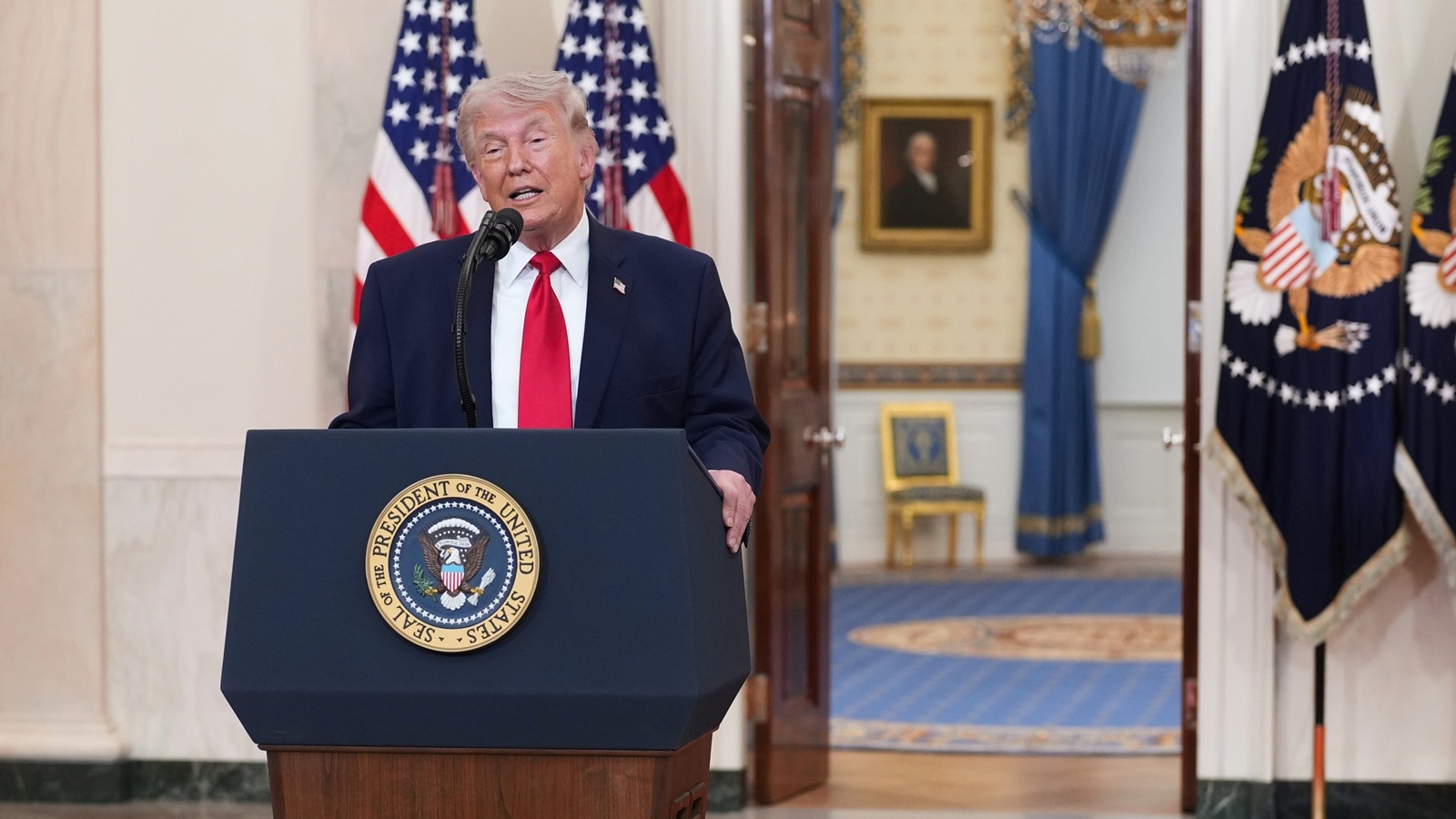
President Trump announced the incident on his Truth Social platform, describing it in blunt terms. Trump wrote that the Touska — nearly 900 feet long and weighing almost as much as an aircraft carrier — tried to get past the US naval blockade, and that the US Navy gave the crew fair warning to stop. When the crew refused, the Navy "stopped them right in their tracks by blowing a hole in the engine room." Trump confirmed that US Marines now have custody of the vessel.
US Central Command confirmed the ship's seizure, stating the repeated warnings happened over a six-hour period before American forces opened fire. "American forces acted in a deliberate, professional, and proportional manner to ensure compliance," CENTCOM said.
According to CENTCOM, the USS Spruance intercepted the Touska as it transited the North Arabian Sea at 17 knots, heading toward the Iranian port of Bandar Abbas. After the six-hour standoff, the destroyer disabled the ship's propulsion system using its five-inch gun, and US Marines boarded and took custody.
Trump also noted the Touska was already under US Treasury sanctions due to its prior history of illegal activity.
This marks the first seizure and the first ship fired upon since the US blockade went into effect.
🌊 What Is the Strait of Hormuz — And Why Does It Matter So Much?
If you've been hearing "Strait of Hormuz" constantly in the news lately and aren't sure why it's such a big deal, here's the short answer: it's the jugular vein of the global oil supply.
The Strait of Hormuz is just 34 kilometres wide at its narrowest point, forming a seaway between Iran and Oman. Its two shipping lanes carry around 20 million barrels of oil per day — roughly 20% of all global seaborne oil trade — from major producers like Saudi Arabia, the UAE, Iraq, and Qatar.
When this strait shuts down or becomes dangerous, it doesn't just affect the Middle East. It affects fuel prices in India, Europe, the US, and everywhere else that depends on oil. Which is basically the entire world.
📅 How Did We Get Here? A Quick Timeline
The current crisis didn't happen overnight. Here's the chain of events that led to Sunday's dramatic seizure:
President Trump announced "major combat operations" against Iran on February 28, with massive joint US-Israeli strikes targeting military and government sites inside Iran.
In response, Iran closed the Strait of Hormuz to international tanker traffic — a move that immediately sent oil markets into a tailspin and stranded thousands of sailors on ships in the Gulf.
In mid-March, Trump demanded that NATO and China help the US reopen the strait. By March 19, the US military launched a campaign to do exactly that.
On April 8, a temporary ceasefire was agreed, but Iran began controlling traffic through the strait and charging tolls of over $1 million per ship. After talks in Islamabad collapsed, Trump announced on April 13 that the US Navy itself would blockade Iranian ports — clarifying that only ships entering or leaving Iranian ports would be affected, while other vessels could transit freely.
Then came the back-and-forth that set up Sunday's seizure: Iran's Foreign Minister announced the strait would reopen for commercial vessels during the ceasefire truce, but Iran's Revolutionary Guard Corps immediately reversed that position, saying the strait would not return to normal as long as the US blockade of Iranian ports continued.
Iran's military said the US was engaged in "acts of piracy and maritime theft under the guise of a so-called blockade."
😡 Iran's Reaction: "This Is Piracy"
Tehran was furious. Iran's military accused the US of violating the ceasefire by firing on one of its commercial vessels, calling it "an act of aggression" and warned that Iran's armed forces "will soon respond to and retaliate against this US armed piracy."
Iran's First Vice President Mohammad Reza Aref made Iran's position clear: "Either a free oil market for all, or the risk of high costs for everyone."
Iranian parliamentary speaker Mohammed Bagher Qalibaf was equally direct, stating on Iranian state TV: "It is impossible for others to pass through the Strait of Hormuz while we cannot."
🛢️ Oil Prices, Indian Ships & Global Impact
The seizure and the renewed Hormuz closure are already rattling global energy markets.
Oil prices climbed sharply on Sunday, with Brent crude up about 7% to $96.88 per barrel, and US crude rising 7% to $90.33. No tankers passed through the Strait of Hormuz on Sunday, according to tracking data.
US gas prices, which reached a national average of $4.05 a gallon, may not return to under $3 a gallon until "next year," according to Energy Secretary Chris Wright.
India was directly affected too. India summoned the Iranian ambassador in New Delhi and expressed deep concern after two Indian-flagged ships came under fire in the strait. Iranian state media confirmed shots were fired near those vessels to force them to turn back.
French shipping company CMA CGM confirmed one of its vessels was the target of warning shots. Two additional tankers sailing under the flags of Botswana and Angola were also forced to turn back by Iranian forces on Sunday.
More than 20,000 seafarers remain stuck on hundreds of ships in the Gulf since the war began in late February.
🕊️ Peace Talks: On or Off?
Despite the escalation, diplomatic channels haven't fully closed — yet.
Trump announced that US negotiators including Vice President JD Vance, special envoy Steve Witkoff, and Jared Kushner would head to Islamabad, Pakistan, for a fresh round of negotiations with Iran.
Key sticking points remain serious. Issues include the fate of Iran's uranium stockpiles, curbs on uranium enrichment, and the reopening of the Strait of Hormuz.
Trump told Axios that "the concept of the deal is done" and expressed confidence a deal was close, while simultaneously threatening to "take out their bridges and their power plants" if Iran doesn't sign.
The ceasefire is set to expire on Wednesday, April 22. If no deal is reached by then, the situation could deteriorate dramatically.
🔍 What Happens Next?
The world is watching three things very closely right now:
1. Will Iran retaliate for the Touska seizure? Tehran has explicitly promised a military response. Whether that means another round of ship attacks, missile strikes, or something more targeted remains to be seen.
2. Will the Islamabad talks produce a breakthrough? Both sides are under pressure. Iran needs the blockade lifted. The US wants the strait fully open and Iran's nuclear program curbed. Wednesday's ceasefire deadline is the clock everyone is watching.
3. How high will oil prices go? Every day the strait remains closed tightens global energy supply. Analysts warn of $100+ per barrel oil if the standoff drags into May.
⚡ Quick Facts: The Touska Seizure
| Detail | Info |
|---|---|
| Ship Name | MV Touska |
| Flag | Iranian |
| Size | ~900 feet long |
| US Vessel | USS Spruance (Guided Missile Destroyer) |
| Location | Gulf of Oman / North Arabian Sea |
| Destination (attempted) | Bandar Abbas, Iran |
| Warning Period | 6 hours |
| Action Taken | Engine room disabled, Marines boarded |
| Current Status | In US Marine custody |
| Iran's Response | Called it piracy, vowed retaliation |
💬 The Bottom Line
The seizure of the Touska is the most dramatic single event in the US-Iran standoff since the blockade began. It sends an unmistakable message: the United States will actively enforce its blockade, even if that means boarding and disabling Iranian ships. Iran's vow to retaliate means this story is far from over.
With a ceasefire expiring in days, oil prices surging, and peace talks hanging by a thread, the world is holding its breath. Stay tuned to ViralDose for live updates as this situation develops.
What's Your Reaction?
 Like
0
Like
0
 Dislike
0
Dislike
0
 Love
0
Love
0
 Funny
0
Funny
0
 Angry
0
Angry
0
 Sad
0
Sad
0
 Wow
0
Wow
0