
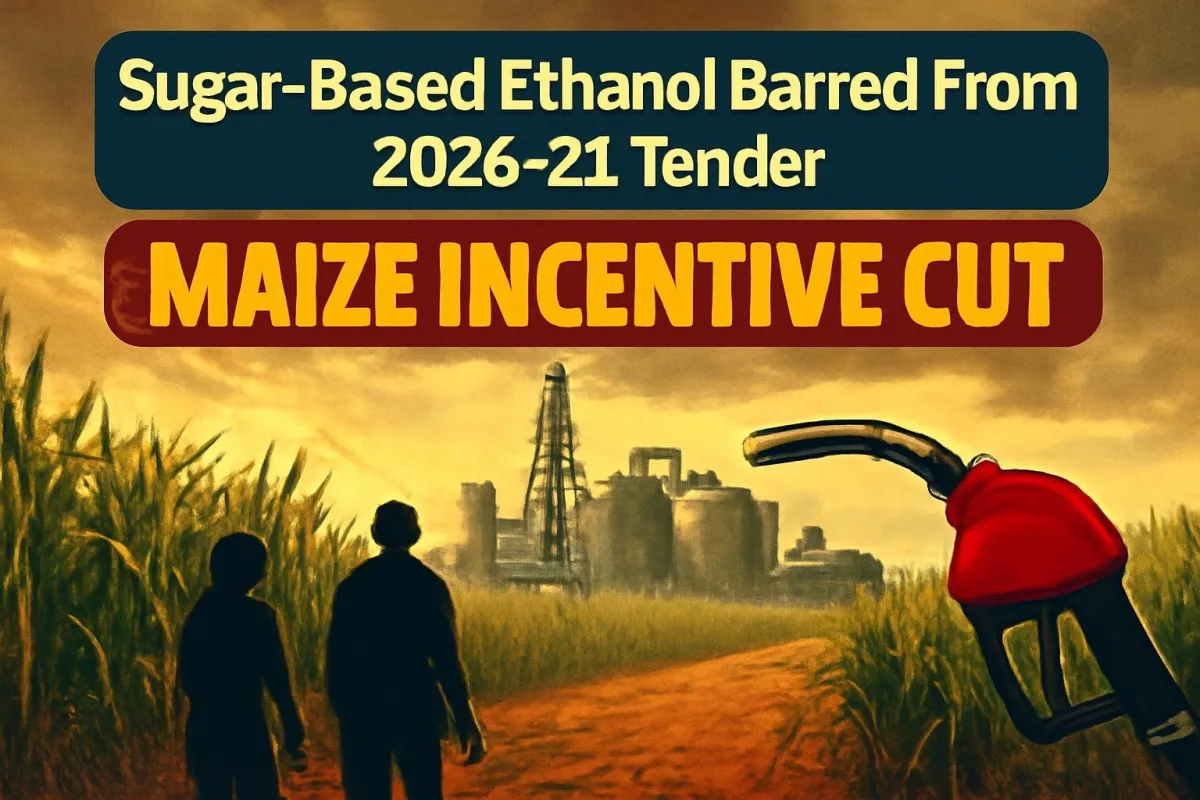
India's oil marketing companies have shut the door on sugar-based ethanol for the coming year. In a tender floated on October 16 for the 2026-27 ethanol supply year, the state-run fuel retailers did not invite a single bid for ethanol made from sugarcane juice, sugar syrup or B-heavy molasses – a sharp turn for a programme that has leaned on sugar mills for years. At the same time, the extra money paid for maize-based ethanol has been cut by Rs 3 a litre.
The message from the government is clear: with weak rains threatening this season's cane crop, sugar is meant for the kitchen, not the fuel tank.
What the tender says
The tender, issued through Bharat Petroleum on behalf of Indian Oil, BPCL and Hindustan Petroleum, seeks around 11 billion litres of ethanol for the supply year that runs from November 2026 to October 2027. This ethanol goes into petrol to meet the 20 per cent blending (E20) requirement.
The document states that sugar diversion for ethanol is to be reduced to zero for the 2026-27 supply year. In practice, that means distilleries can only offer ethanol made from grain and from C-heavy molasses, the final by-product left after sugar has been fully extracted.
| Tender date | October 16, 2026 |
| Issued by | BPCL for the three state-run oil companies |
| Quantity sought | About 11 billion litres |
| Supply period | November 2026 to October 2027 |
| Feedstocks barred | Sugarcane juice, sugar/sugar syrup, B-heavy molasses |
| Feedstocks allowed | Maize, broken rice, FCI surplus rice, C-heavy molasses |
| Maize ethanol price | Rs 68.86 per litre (down from Rs 71.86) |
| Maize incentive | Rs 2.79 per litre (down from Rs 5.79) |
Why the government pulled sugar out
The reason is the monsoon. Rainfall has been poor in Maharashtra and Karnataka, which together produce a large share of India's sugar. A thinner cane crop means less sugar, and the fear in Delhi is that diverting cane to distilleries would push up sugar prices in a year when food inflation is already a worry. Retail inflation climbed to 5.54 per cent in September, driven partly by vegetables, and the government is keen to keep kitchen staples in check ahead of the festive and wedding season.
India is the world's largest consumer of sugar. Over the past few years, surplus sugar was the backbone of the blending programme – mills were encouraged to convert cane juice and B-heavy molasses into ethanol, which gave them steady cash flow and helped the country push towards E20. Reports in August had already suggested that curbs on cane use for ethanol were being considered for the season starting October. The tender now makes it official.
The maize cut
Less obvious, but equally important, is the cut in the maize incentive. Earlier, oil companies paid a premium for maize-based ethanol to encourage distilleries to switch to grain. That premium has now been trimmed from Rs 5.79 to Rs 2.79 per litre, bringing the procurement price down to Rs 68.86. The move suggests the government believes grain-based capacity has grown enough that it no longer needs as large a push – and it also eases pressure on maize prices, which matter to poultry and cattle-feed makers.
What it means for you
For households: Keeping cane in the sugar pipeline should help steady sugar prices over the next few months. That matters for every kitchen, and especially for sweet-makers ahead of the festive season.
For motorists: Nothing changes at the pump right away. The blending target is still being met; only the source of the ethanol shifts from sugar to grain.
For cane farmers and mills: This is the hard part. Sugar mills that invested in juice-based distilleries will have to sit on that capacity or rework it for grain. Mills in Uttar Pradesh, Maharashtra and Karnataka had come to count on ethanol money to pay farmers on time, and the industry is likely to press the government for relief or a mid-year review if the cane crop turns out better than feared.
For maize growers: Demand from distilleries stays, but the lower price could soften what distillers are willing to pay for grain.
What happens next
Distilleries will now submit bids under the new rules, and the oil companies will allocate quantities in the weeks ahead. The big question is whether grain-based plants, along with C-heavy molasses, can supply the full 11 billion litres without the sugar route. If they fall short, blending levels could dip in some states. Industry bodies representing sugar mills are expected to seek a rethink once the actual crushing numbers for the season become clear.
For now, the policy signal is simple: in a dry year, food security comes first.




Comments (0)