
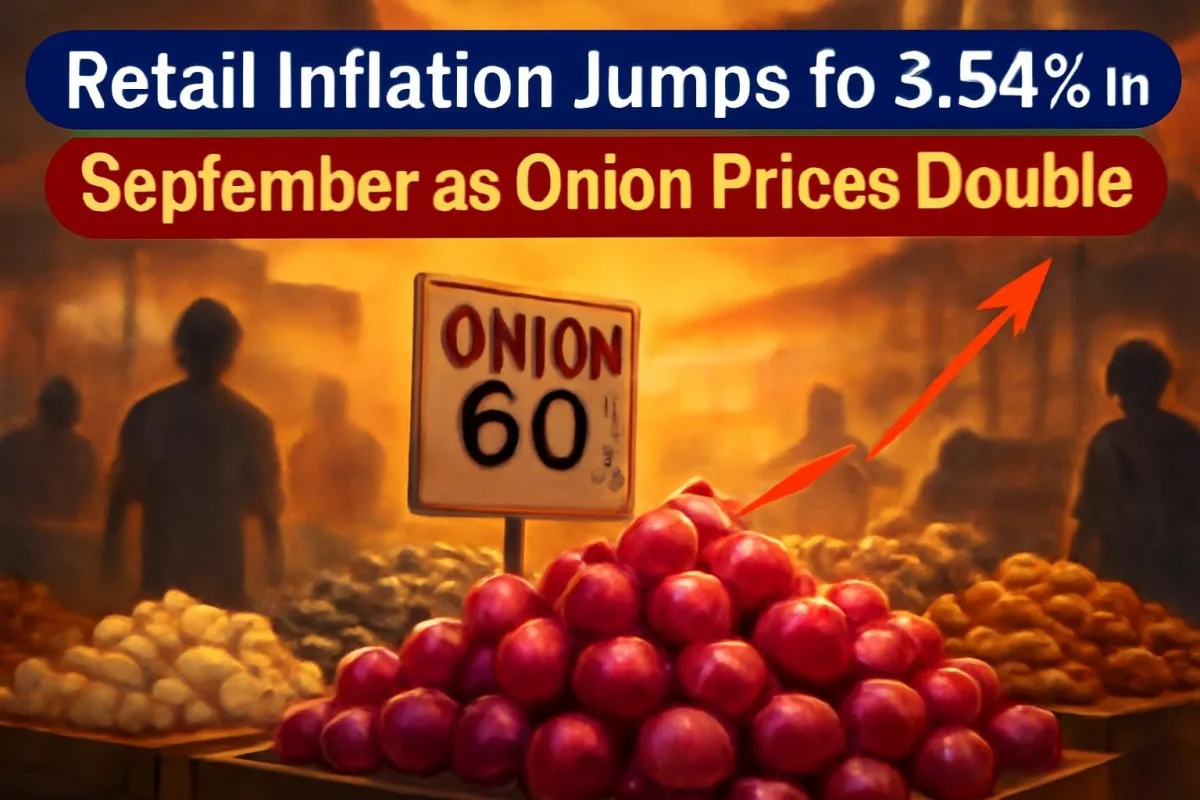
Kitchen budgets across India are feeling the pinch again. Retail inflation rose to 5.54% in September 2026, up sharply from 4.83% in August, according to provisional data released by the Ministry of Statistics and Programme Implementation (MoSPI) on October 12. The biggest push came from the dinner plate: food inflation jumped to 7.74%, and onion prices were more than double what they were a year ago.
The numbers matter well beyond economists' desks. When the price of everyday staples climbs this quickly, it shows up in household savings, in what families cut back on, and eventually in decisions taken by the Reserve Bank of India on interest rates.
What the September CPI data shows
The Consumer Price Index (CPI) is now calculated on the new base year of 2024=100. On that series, the all-India combined index stood at 109.49 in September. The jump of more than 0.7 percentage points in a single month is one of the sharper moves seen this year.
Rural India was hit harder than cities. Rural inflation rose to 6.08% from 5.24% in August, while urban inflation went up to 4.88% from 4.31%. The gap is largely explained by food, which takes a bigger share of the monthly budget in villages.
| Indicator | September 2026 |
|---|---|
| All-India CPI inflation | 5.54% (August: 4.83%) |
| Rural inflation | 6.08% (August: 5.24%) |
| Urban inflation | 4.88% (August: 4.31%) |
| Food inflation (CFPI) | 7.74% (August: 5.97%) |
| Rural food inflation | 8.06% |
| Urban food inflation | 7.18% |
| Released by | MoSPI, October 12, 2026 (provisional) |
| Next release (October data) | November 12, 2026 |
Onion, ginger and garlic lead the surge
If there is one item that sums up September, it is the onion. Onion inflation stood at a startling 108.09%, up from 48.78% in August. In simple terms, onions cost more than twice what they did in September 2025. Ginger (62.85%), garlic (54.62%) and lemon (36.41%) also posted steep increases, while silver jewellery rose 87.80% on the back of high precious-metal prices.
There was some relief on the other side of the vegetable basket. Potato prices were 11.50% lower than a year ago and tomato prices 8.62% lower. Lady's finger and coconut were also cheaper, and so were cars and jeeps, which fell 4.51%.
Category-wise picture
Among the broad spending groups, personal care and miscellaneous goods and services recorded the highest inflation at 13.75%, followed by restaurants and accommodation services at 9.36% and food and beverages at 7.36%. Transport costs rose 5.01%. At the lower end, housing, water, electricity and fuel was up 2.74%, and health just 1.40%.
Southern states top the inflation chart
Among large states, Tamil Nadu recorded the highest headline inflation at 6.81%, followed by Odisha (6.70%), Madhya Pradesh (6.68%), Telangana (6.64%) and Andhra Pradesh (6.29%). The same five states also lead on food inflation, with Tamil Nadu crossing double digits at 10.62% and Odisha at 10.18%. Telangana (9.00%) and Andhra Pradesh (8.91%) were not far behind.
For families in Hyderabad, Vijayawada or Chennai, this means the weekly vegetable and grocery run is costing noticeably more than the national average suggests.
What it means for you
A rise in inflation eats into real incomes. If your salary or pension has not moved, your money simply buys less than it did a year ago. Food-led inflation is especially painful for lower-income households, who spend a larger share of their earnings on essentials.
- Household budgets: Expect pressure on vegetable and spice spending until fresh kharif arrivals ease onion supplies.
- Eating out: With restaurant inflation above 9%, eating out and ordering in are getting costlier.
- Loans and EMIs: The RBI's target is to keep inflation at 4%, with a band of 2% to 6%. A reading of 5.54% is within the band but well above the target, which reduces the room for rate cuts in the near term.
- Dearness allowance: This CPI series is not the one used for DA calculations. Government employee DA is linked to the Labour Bureau's CPI for Industrial Workers.
What happens next
The September figures are provisional and can be revised. The October data is due on November 12, 2026. Much will depend on how quickly onion and other vegetable prices cool as new crop arrives in mandis, and on whether festive-season demand keeps prices of services firm.
For now, the message from the data is clear: after a relatively calm stretch, food prices are once again the biggest worry for Indian households.






Comments (0)