
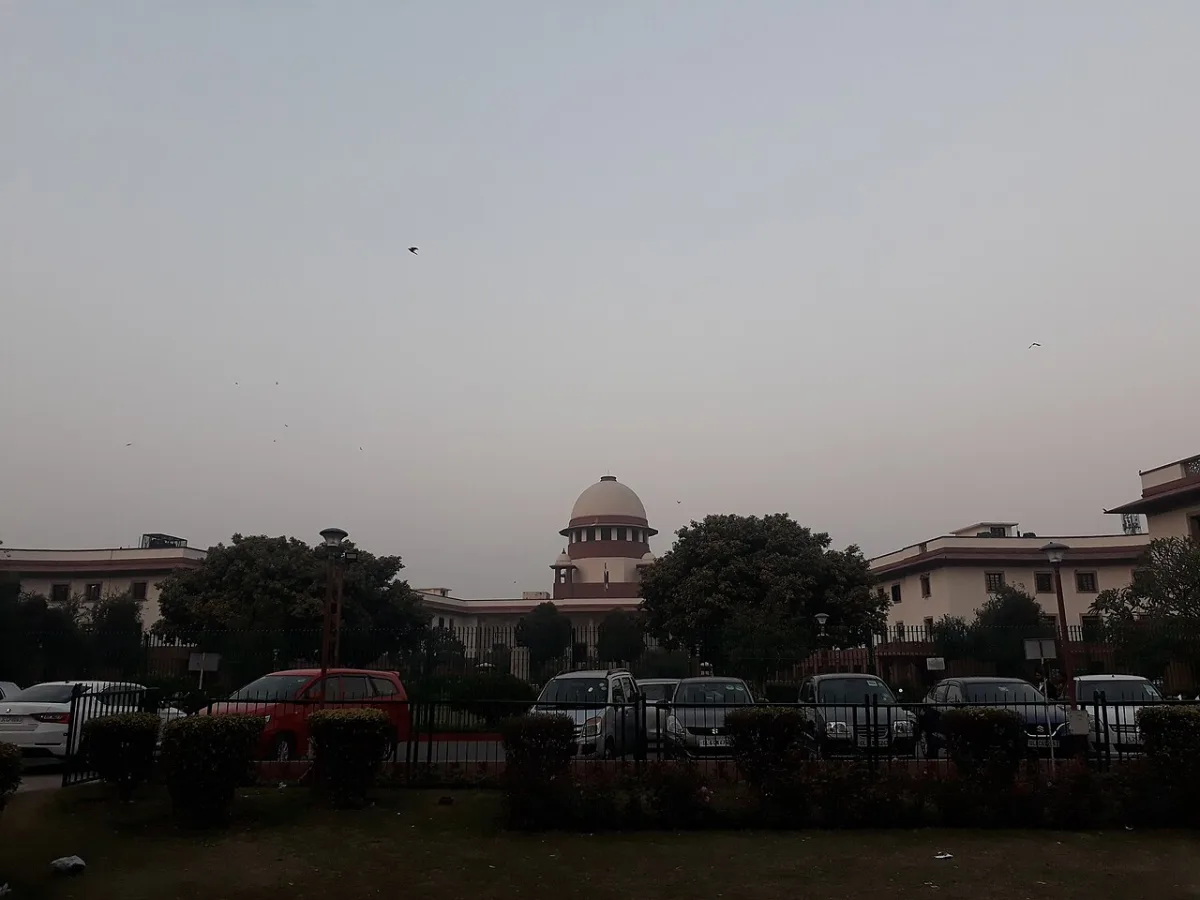
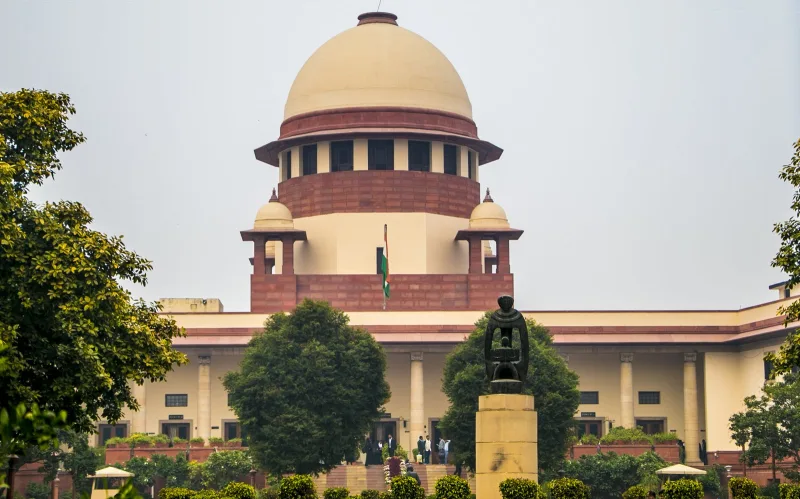
The opposition's "Chalo Delhi – March for Democracy" heads towards the Supreme Court this afternoon, but the meeting its two top leaders wanted at the end of it will not happen. Chief Justice of India Surya Kant has declined a request from Leaders of Opposition Rahul Gandhi and Mallikarjun Kharge to receive their memorandum in person, sources said late on Sunday, a day after a special Sunday bench of the same court ordered Delhi authorities to stop illegal detentions of peaceful protesters.
Taken together, the two developments set the stage for a tense Monday in the capital, where the row over the Election Commission and the Special Intensive Revision (SIR) of electoral rolls has now spilled from Jantar Mantar onto the steps of the country's highest court.
What the CJI told the opposition leaders
Gandhi and Kharge had written to the Chief Justice seeking time between 4 pm and 5 pm on Monday. The plan was to walk at the head of the march and hand over a memorandum at the end of it. According to sources, the CJI's response was sent to the leaders by official email on Sunday night.
Reports citing sources say the Chief Justice pointed out that issues of this kind are already pending before the Supreme Court. He indicated that no orders can be passed on the administrative side and that the leaders were free to file a petition on the judicial side, which could be taken up on Tuesday. He is also said to have stressed that the court remains open round the clock for any citizen whose fundamental rights are violated.
Before the reply came, Kharge had made clear the opposition was not trying to force the issue. "Only with folded hands, we can request him," he said, while accusing the government of imposing an "undeclared emergency" on the youth-led protests.
The march: time, place and demands
The Congress has called today's protest "Chalo Delhi – March for Democracy". Rahul Gandhi said it would bring together young people, opposition parties and civil society groups, describing the turnout he hopes for as Indians "united beyond party, gender, caste, community and state".
| Event | Chalo Delhi – March for Democracy |
| Date | Monday, October 12, 2026 |
| Assembly point | Connaught Place–Barakhamba Road junction, New Delhi |
| Assembly time | 1:30 pm |
| Destination | Supreme Court of India |
| Led by | Rahul Gandhi and Mallikarjun Kharge, with INDIA bloc parties |
| CJI meeting | Requested for 4–5 pm; declined |
| Next court date | Tuesday, October 13 (detention petitions) |
The memorandum the leaders want to deliver lists four demands:
- An end to what the opposition calls "vote chori", or vote theft.
- The resignation of Chief Election Commissioner Gyanesh Kumar.
- A halt to the Special Intensive Revision of electoral rolls.
- A return to voting by paper ballot.
Sunday's special hearing: what the Supreme Court ordered
The CJI's refusal to meet the leaders does not mean the court has stayed out of the protests. On Sunday, a bench of Justices Joymalya Bagchi and V Mohana held an unusual weekend hearing on complaints about mass detentions, police force, internet shutdowns and Metro closures during Saturday's protests in Delhi.
The bench issued notice to the Centre and passed a set of interim directions:
- No illegal detention of peaceful protesters, except under the procedure established by law.
- Normal Delhi Metro and railway services must be restored, with restrictions allowed only as permitted under Article 19(2) of the Constitution.
- Internet services must be restored, subject to law and order conditions.
- Free movement of people, subject to traffic rules, with barricades to be reviewed.
- Lawyers, journalists and others must not be obstructed in their professional work.
- Any Section 163 BNSS prohibitory notice near the Supreme Court must be removed so that access to courts is not blocked.
The bench asked Solicitor General Tushar Mehta to make sure trains and the Metro run on their normal schedule. It also reminded protesters to stay peaceful and not to incite others, and said it was "duty-bound under Article 32 to protect and enforce fundamental rights". Habeas corpus petitions alleging mass detentions will be heard along with the main matters on Tuesday, October 13.
How the protests reached this point
The agitation began with youth groups and the Cockroach Janta Party taking aim at the Chief Election Commissioner and the SIR exercise, which critics say risks removing genuine voters from the rolls. The government and the Election Commission have defended the revision as a routine clean-up, and the Supreme Court upheld the commission's power to carry it out in a ruling earlier this year.
Last week the protests snowballed. INDIA bloc leaders marched from Parliament to Vijay Chowk and met President Droupadi Murmu on Friday. On Saturday, hundreds were detained in Delhi, internet services were curbed in parts of the city and several Metro stations were shut, prompting the petitions that led to Sunday's hearing.
What it means for Delhi commuters today
Anyone travelling through central Delhi on Monday afternoon should expect heavy police deployment and possible traffic diversions around Connaught Place, Barakhamba Road, Mandi House and the roads leading to the Supreme Court on Tilak Marg. The court's direction that Metro and rail services run normally should, in principle, keep public transport open, but commuters are advised to check Delhi Traffic Police and DMRC updates before heading out.
What happens next
All eyes now move to Tuesday. If the opposition takes up the CJI's suggestion and files a petition on the judicial side, it could be listed alongside the detention cases already set for October 13. The Centre is also expected to respond to the bench's notice. Until then, the march itself, and how the police handle it, will decide whether Monday cools tempers or raises them further.


Comments (0)