
The long-running talks on Ladakh's political future have hit a fresh roadblock. A day after meeting Home Ministry officials in Leh on Thursday, October 15, the Leh Apex Body (LAB) and the Kargil Democratic Alliance (KDA) on Friday rejected the Centre's draft proposal on an elected body and constitutional safeguards for the Union Territory. Both groups say the offer falls far short of what was agreed in May, though they insist the dialogue is not over and will continue in New Delhi on October 22.
What the two Ladakh bodies rejected
The Ministry of Home Affairs (MHA) shared a draft that, for the first time, put two things on one page: the structure of a proposed UT-level elected body and the safeguards Ladakh would get under Article 371 of the Constitution. On paper that looked like progress. In the room, it did not land well.
KDA co-chairman Asgar Ali Karbalai said what had been shared with the two bodies was an agency that would sit below the existing council, not an empowered institution. He accused the ministry of backtracking from the understanding reached in May and said backtracking was not a good signal. LAB chairman Chering Dorjay Lakruk told reporters there was a huge gap between what the MHA offered and what the groups have been demanding, while adding that the talks have not failed.
According to LAB, the ministry also indicated that the head of the proposed body would not write the annual performance reports of Ladakh's Chief Secretary, which the groups say goes against an earlier assurance. They also say the Article 371 draft did not list the specific subjects and powers Ladakh's representatives had asked for.
How the talks reached this point
Ladakh became a separate Union Territory without a legislature in 2019. Since then, LAB, representing Leh, and KDA, representing Kargil, have pushed jointly for democratic representation and protection of land, jobs and culture in the region.
The May understanding
On May 22, the Centre and Ladakh's representatives reached an in-principle understanding on two fronts. The first was a directly elected UT-level body with legislative, financial and executive powers. The second was constitutional safeguards modelled on Articles 371A, 371F and 371G, the special provisions that apply to Nagaland, Sikkim and Mizoram.
September's non-starter
The next round in New Delhi on September 9 was described by both groups as a non-starter because of little movement on core issues. One decision did come out of that day, though: members of the UT-level body would be directly elected rather than picked through the Autonomous Hill Development Councils. The groups later sent written replies to seven questions raised by the ministry.
Key facts at a glance
| Detail | Information |
|---|---|
| Groups involved | Leh Apex Body (LAB) and Kargil Democratic Alliance (KDA) |
| Latest meeting | October 15, 2026, in Leh, with MHA officials |
| Rejection announced | October 16, 2026 |
| Main objection | Proposed body seen as weaker than the existing council; Article 371 powers not spelt out |
| Earlier understanding | May 22, 2026: elected body with legislative, financial and executive powers |
| Written response due | October 18, 2026 |
| Next round of talks | October 22, 2026, New Delhi |
Development push runs alongside
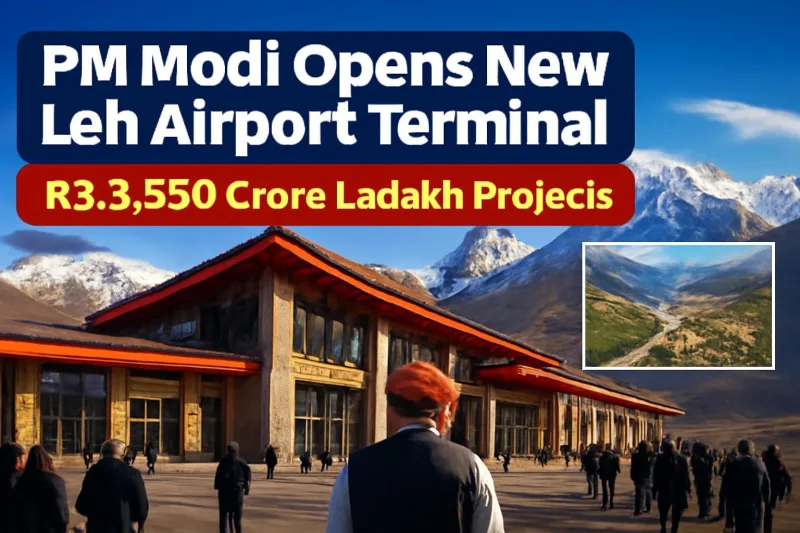
The rejection came in the same week that Prime Minister Narendra Modi virtually inaugurated projects worth about Rs 3,350 crore for Ladakh, including the new passenger terminal at Leh's Kushok Bakula Rimpochee Airport and the Nimmu-Padum-Darcha road. The Prime Minister said Ladakh's development remains a top priority, pointing to growth in roads, bridges and tap-water coverage since 2019.
Karbalai, however, accused the Lieutenant Governor's administration and the Chief Secretary of overstating projects when presenting them to the Prime Minister. For the two bodies, the core message is that infrastructure, however welcome, is not a substitute for a say in how the region is governed.
What it means for people in Ladakh
For residents of Leh and Kargil, the questions at stake are practical: who decides on land allotments, who controls local budgets, and how government jobs are protected for locals. An elected body with real powers would give them a direct voice on these matters for the first time since 2019. A purely advisory body, the groups argue, would not.
The issue also matters nationally. Ladakh sits on sensitive borders with China and Pakistan, and the Centre has been cautious about the design of any new structure there. That is one reason talks have moved slowly despite agreement on broad principles.
What happens next
LAB and KDA plan to send their written response to the MHA by October 18, after studying the draft in detail. Both sides will then meet again in New Delhi on October 22. Lakruk's comment that the talks have not failed suggests the door remains open, but the groups have made clear they want the May understanding restored, not diluted. The next round will show whether the ministry is willing to revise its draft on the powers of the proposed body and the scope of Article 371 safeguards.
Comments (0)