
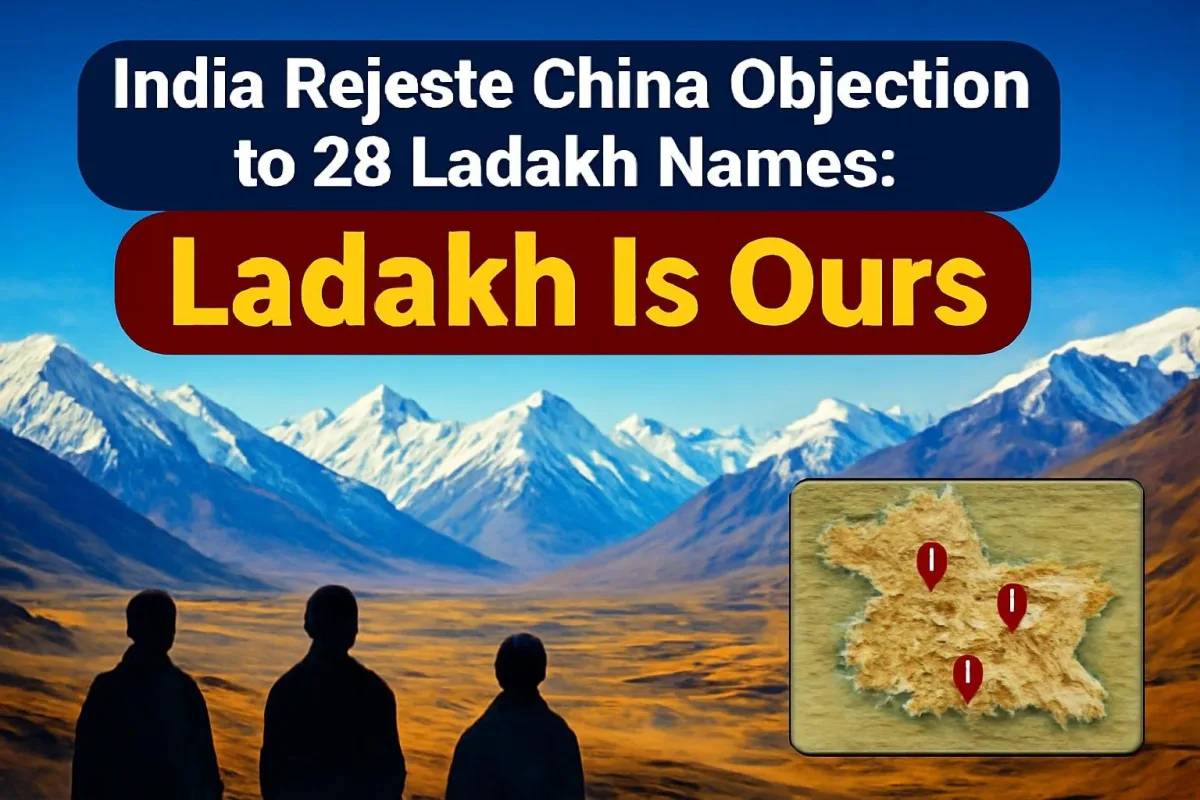
India has firmly rejected China's objection to the standardised naming of 28 places and geographical features in Ladakh. Responding to remarks from Beijing, Ministry of External Affairs spokesperson Randhir Jaiswal said on Tuesday, October 13, that the Union Territory of Ladakh is "an integral and inalienable part of India" and that "no amount of denial by the Chinese side can change this established fact."
The exchange is the latest flashpoint in the long-running boundary dispute between the two neighbours, and it comes at a time when Ladakh is also at the centre of domestic political attention.
What India Did
On October 2, 2026, a Ministry of Home Affairs notification formally adopted standard names for 28 locations and physical features in Ladakh on the official Survey of India map of the Union Territory. The list covers peaks, glaciers, mountain passes, valleys, a river and other land features.
According to the MEA, the names were chosen in consultation with the Ladakh administration and local stakeholders. Jaiswal said identifying these places formally on the Survey of India map was meant to ensure accurate recognition and improve public awareness, and that the announcement was self-explanatory.
Two of the names stand out: Gogra and Hot Spring. Both were major friction points during the military standoff between Indian and Chinese troops along the Line of Actual Control (LAC) that began in 2020.
Some of the 28 Standardised Names
| LAC friction points | Gogra, Hot Spring |
| Peaks | Kanishka Peak, Zorawar Peak |
| Glaciers | Parpik Glacier, Skamri Glacier |
| Passes | Chapchingal Pass, Shachmirik Pass |
| Valley and river | Shkorga Valley, Yangpa River |
| Names linked to Buddhist masters | Guru Rinpoche, Rinchen Zangpo, Marpa Lotsava Ri, Milarepa Kangri |
| Other features | Martand Giri, Shiva Ri, Maheshwara Ri, Drak Karpo, Kumarayana Point and more |
| Notified on | October 2, 2026, by the Ministry of Home Affairs |
China's Objection
Chinese Foreign Ministry spokesperson Mao Ning called India's move "illegal and invalid." She said China has never recognised what she described as the "so-called Union Territory of Ladakh," and claimed that the naming could not change Beijing's position on the western sector of the boundary.
India's reply was short and pointed. "It is reiterated that the UT of Ladakh is an integral and inalienable part of India," Jaiswal said, adding that no denial from the Chinese side could alter that fact.
Background: A Familiar Pattern
This is not the first time the two countries have sparred over names on a map. China has in the past released its own lists of names for places in Arunachal Pradesh, which India has consistently rejected, saying that assigning "invented" names does not change reality on the ground.
The India-China boundary has never been fully demarcated, and the alignment of the LAC is not mutually agreed in all sectors. Eastern Ladakh saw the most serious clashes in decades in 2020, including the deadly Galwan Valley confrontation. Several rounds of military and diplomatic talks led to disengagement at friction points such as Gogra and Hot Spring, but the larger boundary question remains unresolved.
By formally placing Indian names on these features in an official map, New Delhi is signalling that its claims are settled and documented – a move that matters in any future boundary negotiation.
Why It Matters for India
For readers, the dispute may look like a war of words over maps, but names carry weight in diplomacy. Official cartography is often used as evidence of administration and continuous control. Several of the chosen names also draw on the region's Buddhist heritage and local history, which strengthens the cultural link between the places and the people of Ladakh.
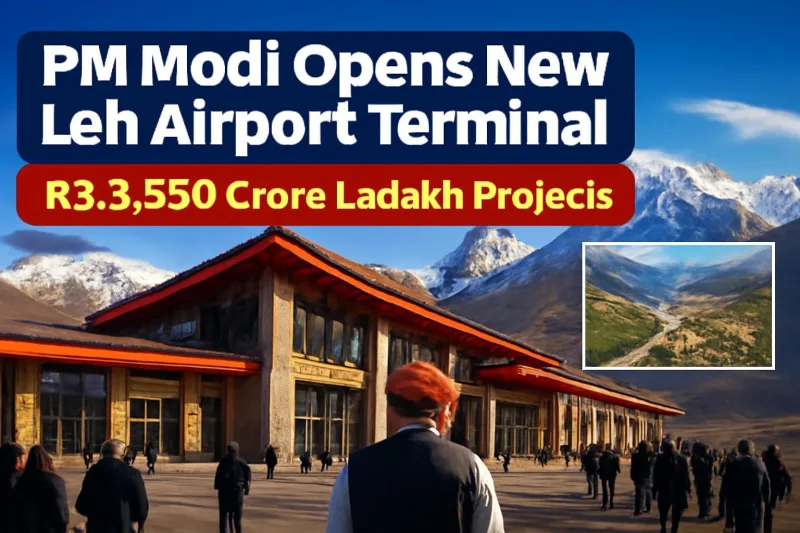
The timing is notable. Ladakh is also the focus of political attention at home, with talks between the Union Home Ministry and Ladakh's representatives on the powers of an elected body scheduled in Leh, and the Prime Minister set to open a new terminal at Leh airport. A firm public message to Beijing fits the Centre's wider push to highlight development and connectivity in the strategically sensitive region.
What Happens Next
Neither side is expected to back down on the naming issue. India will continue to use the standardised names on official maps, while China is likely to keep restating its claims. At the same time, both governments have kept diplomatic and military channels open since the 2020 standoff, and the war of words is unlikely, on its own, to derail those talks. Observers will be watching for any change on the ground along the LAC in the weeks ahead.



Comments (0)