
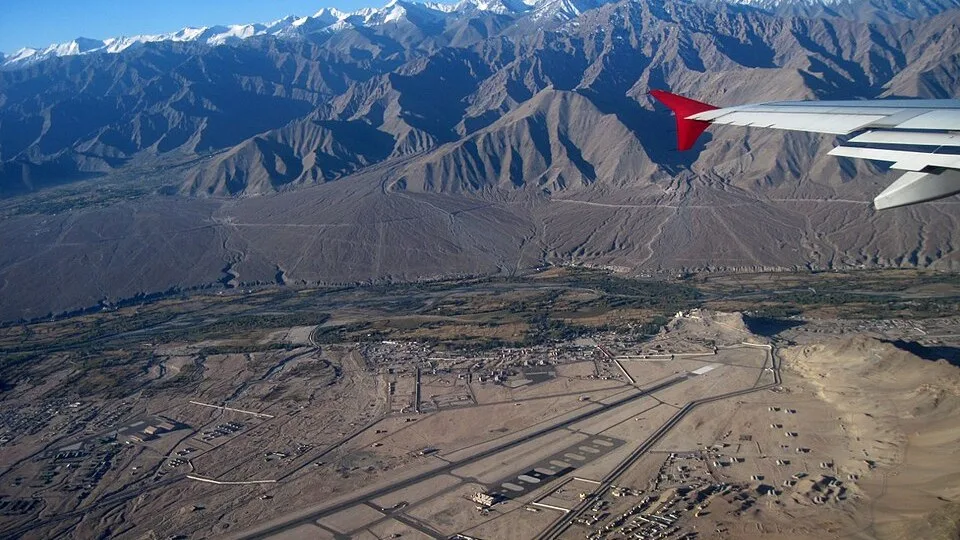
Ladakh has a big day ahead. Prime Minister Narendra Modi is set to virtually inaugurate the new integrated terminal at Leh's Kushok Bakula Rimpochee Airport on Thursday, October 15, from 11 AM. On the same day a Union Home Ministry team will sit down with Leh and Kargil leaders in Leh for the next round of talks on an elected body for the Union Territory.
The two events show the twin tracks Ladakh has been on for years: steady infrastructure growth on the ground, and a long political conversation about how the region should be governed. Here is what is happening, and why it matters.
A terminal built for three times the traffic
Leh is still the only operational commercial airport in Ladakh, and anyone who has flown there in peak tourist season knows how cramped the old building gets. The new terminal is meant to fix that. Once it opens, the airport is expected to handle up to 54 flights a day, roughly three times the present figure of about 18.
The Prime Minister will launch the projects by video conference from New Delhi and then address the gathering. Lieutenant Governor Vinai Kumar Saxena is expected to join from Leh, along with Chief Secretary Ashish Kundra and local public representatives. Officials have said the terminal is ready and should open to passengers soon after the ceremony.
Key facts about the new Leh terminal
| Airport | Kushok Bakula Rimpochee Airport, Leh |
| Inauguration | October 15, 2026, 11 AM (virtual, by PM Modi) |
| Built-up area | About 23,000 square metres, three levels |
| Reported cost | Over Rs 600 crore |
| Flight capacity | Up to 54 flights a day (about 18 now) |
| Annual passengers | About 3.5 million |
| Peak handling | Up to 2,000 passengers an hour |
| Phase 1 features | 20 check-in counters, inline baggage system, 2 arrival belts, 15 lifts, 12 escalators |
| Green features | 700 kWp rooftop solar plant, geothermal floor heating |
Heating floors with the earth's warmth
The most interesting detail is how the building stays warm. Leh sits at well over 3,000 metres and winter temperatures fall far below freezing. Instead of relying only on diesel or electric heaters, the terminal uses geothermal technology for floor heating, which officials have described as a first for an Indian airport. A 700 kWp rooftop solar plant adds to the clean-energy supply. In a fragile mountain region, cutting fuel use is not just a talking point; diesel has to be trucked in over high passes.
What comes after the opening
The work does not end on Thursday. In the second phase, the old terminal will be pulled down to make room for a new apron, four more aircraft parking bays and three aerobridges. Separately, the UT administration is pushing to start commercial flights from Thoise in the Nubra Valley and from Kargil, which would spread air traffic beyond Leh. Reports say roads and bridges built mostly by the Border Roads Organisation are also on the list of works to be dedicated, with functions planned in all seven districts of Ladakh.
The other big meeting: Ladakh talks in Leh
After the inauguration, a sub-committee of the Union Home Ministry is expected to meet the Leh Apex Body (LAB) and the Kargil Democratic Alliance (KDA) in Leh, most likely in the afternoon. Earlier rounds were held in New Delhi.
The groups and the Centre reached an in-principle understanding on May 22. At the September 9 meeting, it was decided that a new UT-level body for Ladakh would be directly elected by the people rather than picked by the hill councils. Subjects like land, culture, heritage, forests, environment and natural resources were discussed as falling under its control.
What is still missing is the fine print: the body's name, number of seats and exact powers. The KDA wants the ministry to bring a written draft to the table this time, with legislative, financial and executive powers spelled out. The LAB, led by chairman Chering Dorjay Lakruk, is expected to reply to nine questions the ministry raised in September. Both groups also want constitutional safeguards similar to those under Article 371 for some northeastern states.
What it means for people in India
For travellers, the new terminal should mean shorter queues, more flight options and, over time, possibly better fares as airlines add capacity. Ladakh's tourism season is short and intense, and a bigger airport can spread that rush more comfortably. For residents, better air links matter for medical travel, students and trade, especially in winter when road access is cut off.
For the wider country, the talks are worth watching. Since Ladakh became a Union Territory in 2019 without a legislature, local groups have pressed for a say in decisions on land and jobs. A clear outcome on Thursday would be a big step in a process that has seen protests and long pauses.
What happens next
Watch for three things on Thursday: the formal opening and the date commercial operations shift to the new building; any new projects announced by the Prime Minister; and whether the Home Ministry puts a draft framework for the elected body on the table. If the talks produce a draft, the next step would be detailed consultations and a legal route to set up the body.
Either way, October 15 is shaping up to be one of Ladakh's most important days this year.





Comments (0)