
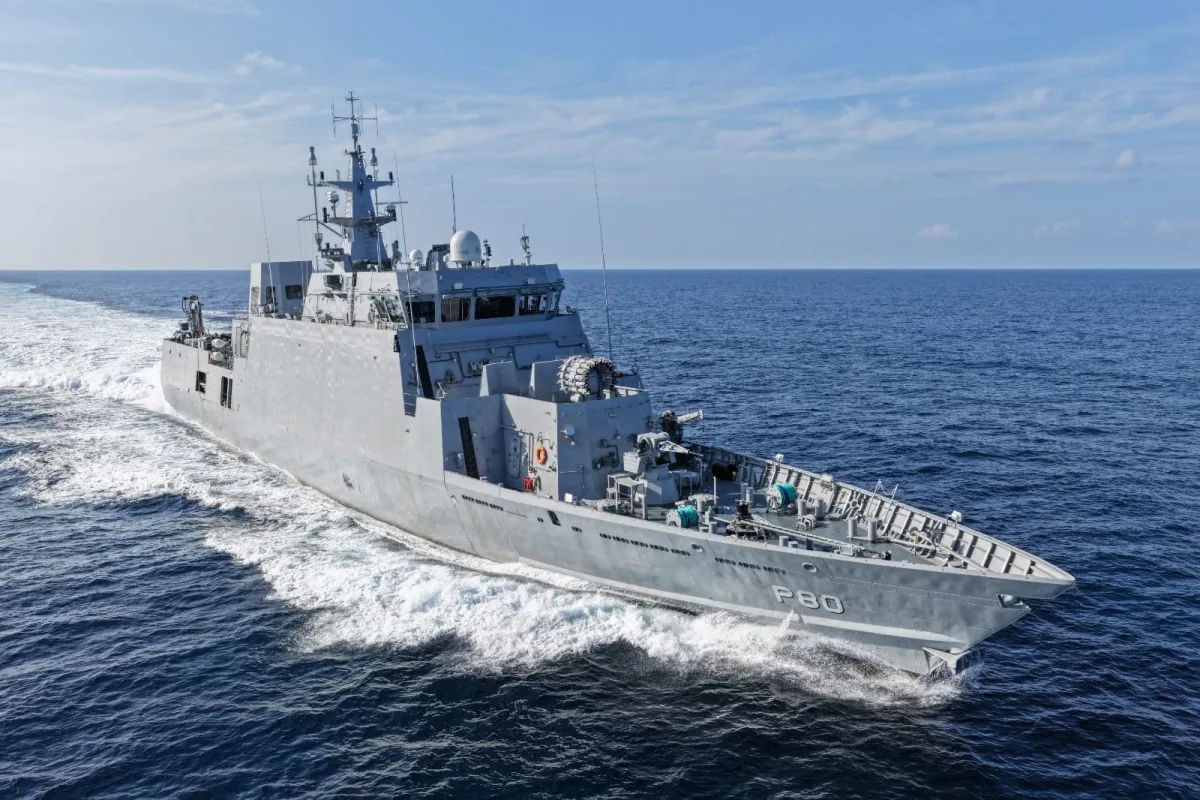
The Indian Navy will add another home-built submarine hunter to its fleet on Sunday, October 12, when the anti-submarine warfare shallow water craft Mangrol is commissioned at the Naval Dockyard in Mumbai. Built by Cochin Shipyard Limited (CSL) in Kochi with more than 80 per cent indigenous content, the ship is designed to track and hunt enemy submarines in the shallow coastal waters that bigger warships cannot easily patrol.
Who will commission INS Mangrol
Vice Admiral Sanjay Vatsayan, Flag Officer Commanding-in-Chief of the Western Naval Command, will preside over the ceremony. Senior naval officers, Ministry of Defence representatives, officials from Cochin Shipyard, veterans and representatives of the Indian companies that supplied the ship's weapons and sensors are expected to attend.
Mangrol is the third Anti-Submarine Warfare Shallow Water Craft (ASW-SWC) built by CSL. Cochin Shipyard handed the vessel over to the Navy in August 2026, and Sunday's ceremony formally brings it into service under the naval ensign.
INS Mangrol: key facts
| Ship type | Anti-Submarine Warfare Shallow Water Craft (ASW-SWC) |
| Class | Mahe class (third ship built by CSL) |
| Builder | Cochin Shipyard Limited, Kochi |
| Commissioning | October 12, 2026, Naval Dockyard, Mumbai |
| Presiding officer | Vice Admiral Sanjay Vatsayan, FOC-in-C, Western Naval Command |
| Length | About 78 metres |
| Top speed | About 25 knots |
| Propulsion | Three diesel engines driving waterjets |
| Indigenous content | More than 80 per cent |
| Named after | Mangrol, coastal town in Junagadh district, Gujarat |
What makes this ship special
Most of India's large frigates and destroyers are built for the deep ocean. But submarines, mines and other underwater threats can also lurk close to the coast, near harbours and shipping lanes, where the water is too shallow for big warships to manoeuvre comfortably. The ASW-SWC was designed to fill exactly that gap.
Mangrol runs on three diesel engines that drive waterjets instead of conventional propellers. This makes the ship highly agile in confined, shallow waters and lets it turn and stop quickly, a big advantage when chasing a quiet submarine near the shore.
Weapons and sensors
The ship's combat suite is built around Indian systems:
- Abhay hull-mounted sonar – a compact, indigenous sonar to detect and track underwater targets.
- Lightweight torpedoes – to attack submarines once they are located.
- Indigenous anti-submarine rocket launcher – for engaging targets at shorter ranges.
- Maareech advanced torpedo decoy system – to confuse and divert incoming enemy torpedoes.
Apart from anti-submarine warfare, Mangrol can carry out underwater surveillance, low-intensity maritime operations and mine warfare-related tasks, making it a useful all-rounder for coastal defence.
A name with history
The new ship takes its name from Mangrol, a coastal town and busy fishing harbour in Gujarat's Junagadh district. It also carries forward the legacy of an earlier INS Mangrol (M85), a minesweeper that served the Indian Navy until it was decommissioned on April 7, 2004. Reviving old names is a long-standing naval tradition, linking new crews with the service record of the ships that came before them.
Part of a bigger push for home-built warships
Mangrol belongs to a 16-ship ASW-SWC programme that the Navy split between two public sector yards: Cochin Shipyard in Kochi and Garden Reach Shipbuilders and Engineers (GRSE) in Kolkata. Its sister ships Mahe and Malvan were launched along with it in Kochi on November 30, 2023. As these vessels join the fleet one after another, they are steadily replacing the Navy's ageing Abhay-class corvettes and older minesweepers.
The commissioning also fits into the Navy's busy 2026 calendar. The service has said it plans to commission a record 18 warships this year, and only a few days ago India launched its first indigenous fleet support ship, Surya, in Visakhapatnam. Each of these milestones is being presented as proof of the Make in India and Aatmanirbhar Bharat push in defence manufacturing, where Indian shipyards and hundreds of smaller suppliers now build most of the Navy's new ships.
What it means for India
India has a coastline of more than 7,500 km, along with island territories in the Arabian Sea and Bay of Bengal. Protecting ports, offshore oil platforms and fishing zones from underwater threats needs a large number of smaller, specialised ships, not just a few big ones. The ASW-SWC fleet gives the Navy exactly that: more hulls, closer to the coast, at lower cost.
For coastal communities like Mangrol in Gujarat, the ship's name is also a matter of pride. For India's defence industry, every ship delivered with over 80 per cent local content means more orders and skills staying within the country.
What happens next
After Sunday's ceremony, INS Mangrol will join the Western Naval Command and begin operational training with the fleet. More ASW-SWC vessels from both Cochin Shipyard and GRSE are expected to follow over the coming months, gradually building a dedicated layer of coastal submarine hunters along India's western and eastern seaboards.






Comments (0)