
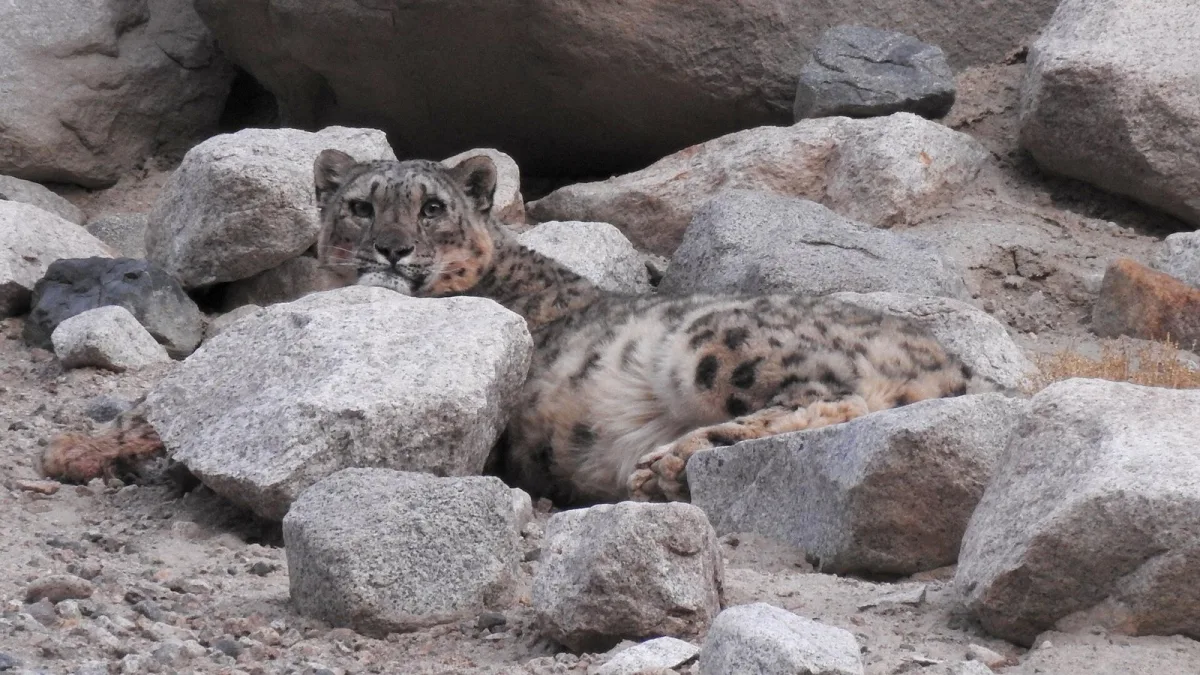
Ladakh now has a safari built around one of the world's most elusive big cats. Lieutenant Governor Vinai Kumar Saxena on Wednesday, October 7, 2026, flagged off six specially designed open-back vehicles for the Ladakh snow leopard safari, which officials describe as India's first high-altitude wildlife safari. The launch took place at Wildlife Week celebrations at the Choglamsar Protected Forest in Leh.
The safari will be run by the Snow Leopard and High-Altitude Nature Conservation (SHAN) Society together with the Union Territory's Department of Forest, Ecology and Environment.
Where the safari will run
Operations will begin in three valleys where snow leopards are seen most often: Rumbak, Shang and Uley. Rumbak and Shang lie in and around Hemis National Park, the best-known snow leopard landscape in India, while Uley, further west along the Indus, has become popular with wildlife photographers in recent winters.
Officials say more routes will be identified later across Hemis National Park, Changthang, the Karakoram Wildlife Sanctuary and areas in Nubra, Zanskar, Sham, Kargil and Drass.
| Safari | Ladakh Snow Leopard Safari |
| Launched | October 7, 2026, Choglamsar, Leh |
| Flagged off by | Lt Governor Vinai Kumar Saxena |
| Operator | SHAN Society with UT Forest Department |
| Vehicles | Six open-back safari vehicles |
| Starting areas | Rumbak, Shang, Uley |
| Planned expansion | Hemis, Changthang, Karakoram WLS, Nubra, Zanskar, Sham, Kargil, Drass |
| Snow leopards in Ladakh | 477 of India's estimated 718 |
Why Ladakh is launching it
Snow leopard tourism in Ladakh has boomed over the past decade, especially in winter, when the cats come down to lower slopes following their prey. With that popularity came problems: private vehicles driving off-road to chase sightings, crowds gathering around animals, and waste and plastic left behind in fragile valleys.
The new safari is designed to bring that under control. Visitor numbers will be regulated, vehicles will stick to approved routes and every trip will be handled by trained local drivers and wildlife guides. Authorities say carrying capacity, wildlife disturbance, waste management and plastic pollution will be strictly monitored.
"Wildlife should not be protected at the cost of people, nor should development come at the cost of wildlife," the Lieutenant Governor said at the launch, summing up the idea of linking conservation with local incomes.
Numbers that make Ladakh special
Ladakh is home to about 477 of India's estimated 718 snow leopards, which is roughly two out of every three in the country. The region also has more than 38 species of mammals, over 340 species of birds and around 1,800 species of vascular plants, making it one of India's most important high-altitude ecosystems.
More than a safari: other initiatives announced
- Twenty local young people are being trained in bird identification and birdwatching and will receive binoculars, with bird hides planned at major hotspots.
- A wild animal felting programme involves 50 women from Turtuk, Photoksar, Sangrah, Chushul and Shargole, creating handmade wildlife souvenirs.
- Funds were handed over for conservation education in 50 schools in Leh and Kargil through eco-clubs.
- An AI-based human-wildlife conflict mitigation device, developed by the Wildlife Division in Kargil with the University of Ladakh, was inaugurated.
- The SHAN Society released a brochure of its wildlife tourism packages.
What it means for travellers
For Indian travellers, the safari offers a more organised way to try for a sighting of the "ghost of the mountains" without hiring private expeditions or wandering into restricted slopes. Sightings are never guaranteed, since snow leopards are shy and well camouflaged among rocks, but local guides who know the valleys improve the odds considerably.
Tips if you are planning a trip
- Check the latest packages, prices and booking process with the SHAN Society or the Ladakh Forest Department before travelling; these details have not yet been widely published.
- Plan for winter if a sighting is your main goal, and pack for temperatures that can drop well below freezing.
- Spend at least two days acclimatising in Leh before heading to the valleys, as Rumbak and Uley sit at high altitude.
- Follow guide instructions, keep noise low and never leave plastic or food waste behind.
What happens next
The forest department is expected to finalise more routes in the coming months, and Ladakh has also announced the second edition of its Black-necked Crane Festival. Together, these moves suggest the Union Territory wants to position wildlife tourism, done responsibly, as a major draw beyond its monasteries and mountain passes.




Comments (0)