
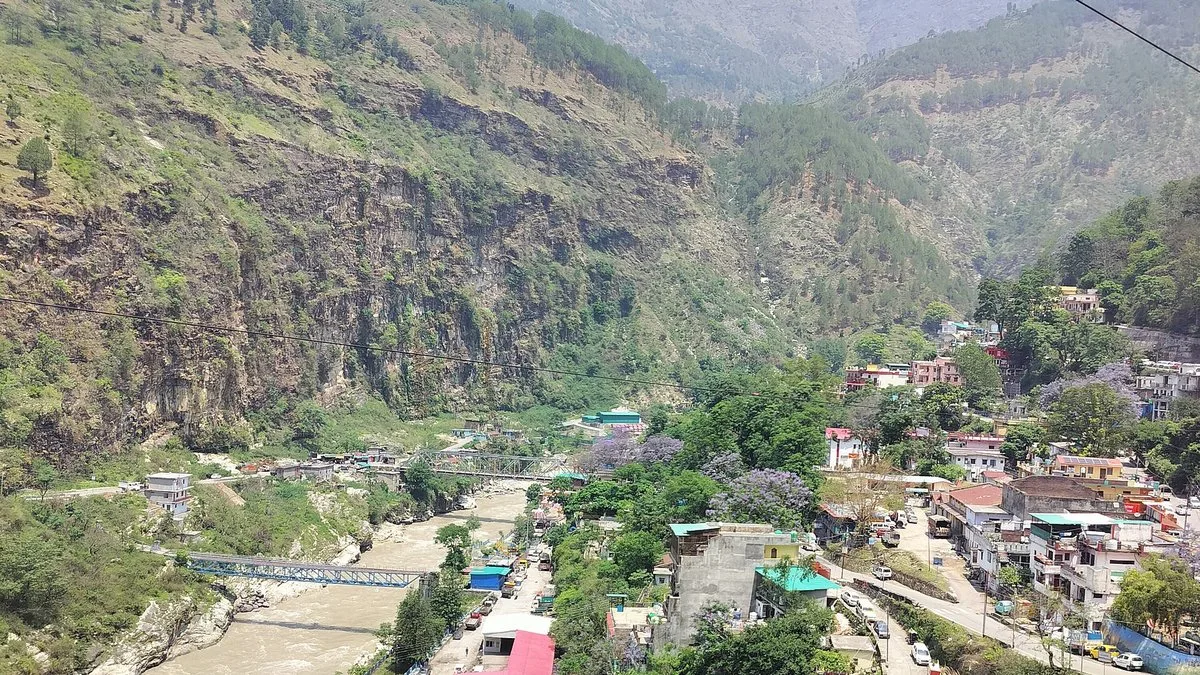
A magnitude 4.9 earthquake struck Chamoli district in Uttarakhand at around 10:23 pm on Tuesday, October 6, sending tremors through the hill state and as far as Delhi, Noida and Ghaziabad. The National Centre for Seismology (NCS) said the quake was centred at a shallow depth of about 13 km. No casualties or major damage had been reported.
For many people in Delhi-NCR, the shaking came just as they were settling in for the night. Ceiling fans swayed, sofas moved and residential society WhatsApp groups quickly filled up with the same question: "Did you feel that?"
What happened: the key details
The NCS, the government agency that monitors earthquakes in India, shared the details of the quake on its official channels shortly after it struck. Here is what we know so far:
| Detail | Information |
|---|---|
| Magnitude | 4.9 |
| Date and time | October 6, 2026, around 10:23 pm IST |
| Epicentre | Chamoli district, Uttarakhand (30.103°N, 79.561°E) |
| Depth | About 13 km |
| Reported by | National Centre for Seismology (NCS) |
| Felt in | Chamoli, Rudraprayag, Bageshwar, Pithoragarh, Champawat and other parts of Uttarakhand; Delhi, Noida, Ghaziabad |
| Damage | No casualties or major damage reported |
Where it was felt
Inside Uttarakhand, residents in several districts, including Chamoli, Rudraprayag, Bageshwar, Pithoragarh and Champawat, reported feeling the ground move. People in towns such as Gopeshwar, Badrinath, Rishikesh, Haldwani, Bhowali and Khatima also described brief shaking, and some stepped out of their homes as a precaution.
Hundreds of kilometres away in the national capital region, the tremors were milder but noticeable, especially for people on higher floors of apartment buildings. Reports came in from parts of Delhi, Noida and Ghaziabad.
Why a quake in the hills is felt in Delhi
It surprises many people that an earthquake in the Garhwal Himalayas can be felt in Delhi. There are two main reasons.
Shallow depth
This quake originated only around 13 km below the surface. Shallow earthquakes release their energy closer to the ground, so the shaking travels further and is felt over a wider area than a deeper quake of the same size.
Magnitude versus intensity
Magnitude measures the energy released at the source, while intensity is how strongly the shaking is felt at a particular place. Intensity drops as you move away from the epicentre, but it also depends on local soil and the type of building you are in. Tall buildings and soft alluvial soil, both common in the Delhi-NCR region, can make even distant tremors noticeable.
A magnitude around 5 is generally described as light to moderate. Such quakes are usually felt by many people but rarely cause serious damage to well-built structures.
Why Uttarakhand keeps shaking
Uttarakhand sits in one of the most earthquake-prone belts in the world. The Himalayas exist because the Indian tectonic plate is slowly pushing into the Eurasian plate, and that constant pressure builds up stress along faults in the region. Small and moderate earthquakes are a regular reminder of that process.
Chamoli itself has a long history of seismic activity and is also familiar with other natural hazards, which is why disaster preparedness is a constant concern for the district administration and for the pilgrims and tourists heading to places such as Badrinath and Hemkund Sahib.
Delhi is not far behind in terms of risk. The capital falls in a high seismic zone, and experts have long warned that the bigger worry is not small tremors like this one but the quality of construction in densely packed neighbourhoods.
What it means for you: simple earthquake safety steps
Tuesday's quake caused no harm, but it is a useful nudge to brush up on basics. If you feel tremors again:
- Drop, cover and hold on. Get down, take cover under a sturdy table or desk and hold on until the shaking stops.
- Stay away from windows, glass, mirrors and heavy furniture or shelves that could fall.
- Do not use lifts during or immediately after shaking. Use the stairs once it is safe.
- If you are outdoors, move to an open area away from buildings, trees, electricity poles and wires.
- If you are driving, pull over in a safe spot away from flyovers and bridges, and stay inside the vehicle.
- After the quake, check for gas leaks and cracks, and follow updates only from official sources such as NCS and the state disaster management authority, not forwarded messages.
What happens next
Officials will continue to monitor the region for aftershocks, which are common after moderate earthquakes and are usually smaller than the main shock. Residents of Chamoli and nearby districts would do well to stay alert and report any structural damage to local authorities. ViralDose will update this story if any significant aftershocks or damage reports emerge.





Comments (0)