
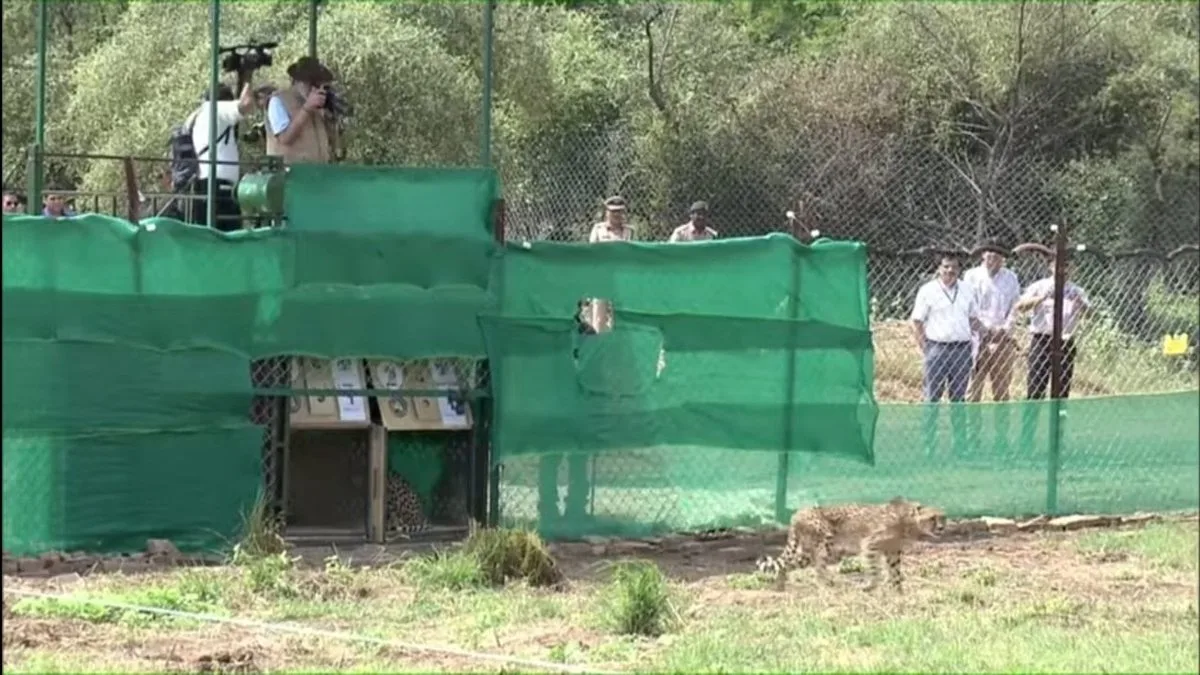
Two cheetahs, a male named Vyom and a female named Neera, have a new home in the forests of Bundelkhand. Madhya Pradesh Chief Minister Mohan Yadav released the pair into the Veerangana Durgavati Tiger Reserve in Sagar district on Wednesday, October 7, making it the state's third cheetah habitat after Kuno National Park and Gandhi Sagar Wildlife Sanctuary.
Both animals were shifted from Kuno. The release marked the closing event of Wildlife Conservation Week and, according to the chief minister, the start of a new phase of Project Cheetah, India's effort to bring back the big cat that was wiped out from the country decades ago.
A third home for India's cheetahs
Veerangana Durgavati Tiger Reserve, still widely known by its old name Nauradehi, is Madhya Pradesh's largest tiger reserve. It spreads over about 2,339 sq km across Sagar, Damoh and Narsinghpur districts. The area was first protected as a sanctuary in 1997 and became a tiger reserve on September 20, 2023, after the Nauradehi Wildlife Sanctuary was merged into it.
Its mix of open forest and grassland is the kind of landscape cheetahs prefer for hunting at speed. The reserve is also home to tigers, leopards, sloth bears, chital, sambar and nilgai, and is an important site for India's endangered vultures. That makes it one of the few places where several big cats will now share the same ecosystem.
"Our government decided to develop the third habitat for cheetahs at Veerangana Durgavati Tiger Reserve in the state," Yadav said at the event. "The most important aspect is that where we are releasing the cheetahs, it is already a home to tigers."
Key facts
| Detail | Information |
|---|---|
| Cheetahs released | Vyom (male) and Neera (female) |
| Shifted from | Kuno National Park |
| New home | Veerangana Durgavati Tiger Reserve (Nauradehi), Sagar |
| Reserve area | About 2,339 sq km across Sagar, Damoh and Narsinghpur |
| Date of release | October 7, 2026 |
| India's cheetah count | 60, after five cubs were born at Kuno this week |
| Next step | Two more cheetahs planned for the reserve next month |
How Project Cheetah got here
Project Cheetah began in September 2022, when the first batch of cheetahs brought from Africa was released at Kuno National Park in Sheopur. It was the world's first intercontinental relocation of a large carnivore, and the early years were difficult, with several deaths among adult cats and cubs that drew criticism from wildlife experts.
Since then, the programme has slowly found its feet. Gandhi Sagar Wildlife Sanctuary in Mandsaur became the second site, and cubs born on Indian soil have pushed numbers up. With five new cubs at Kuno this week, the chief minister said the country's cheetah population had reached 60. Spreading the animals across separate landscapes also reduces the risk that one disease outbreak or one bad season could undo years of work.
What it means for local communities
Yadav tied the release to jobs and tourism for villages around the reserves. He said wildlife tourism in the state earned around Rs 80 crore this year, of which about Rs 20 crore went to nearby villagers. Residents living near tiger reserves who have suitable houses can run homestays and get government help of roughly Rs 2-3 lakh, he said, adding that people who have lived around these forests for generations should share in the income.
For Bundelkhand, a region better known for drought and migration than for tourism, a cheetah habitat could bring safari visitors, guides' jobs and small businesses, if the cats settle well and the park is managed carefully.
Other announcements at the event
- The Vulture Population Estimation Report 2026 was released.
- A book on the Veerangana Durgavati Tiger Reserve, written in the Bundelkhandi language, was launched.
- The chief minister spoke about turtle conservation, gharial reintroduction in the Chambal and crocodile conservation in the Narmada.
What happens next
Vyom and Neera will be closely tracked by forest staff and the Project Cheetah team over the coming weeks to see how they adjust, hunt and move through their new territory. Officials plan to bring two more cheetahs to the reserve next month. Whether visitors get to see them on safaris will depend on how quickly the animals settle in and on the reserve's tourism plans, which are yet to be announced.





Comments (0)