
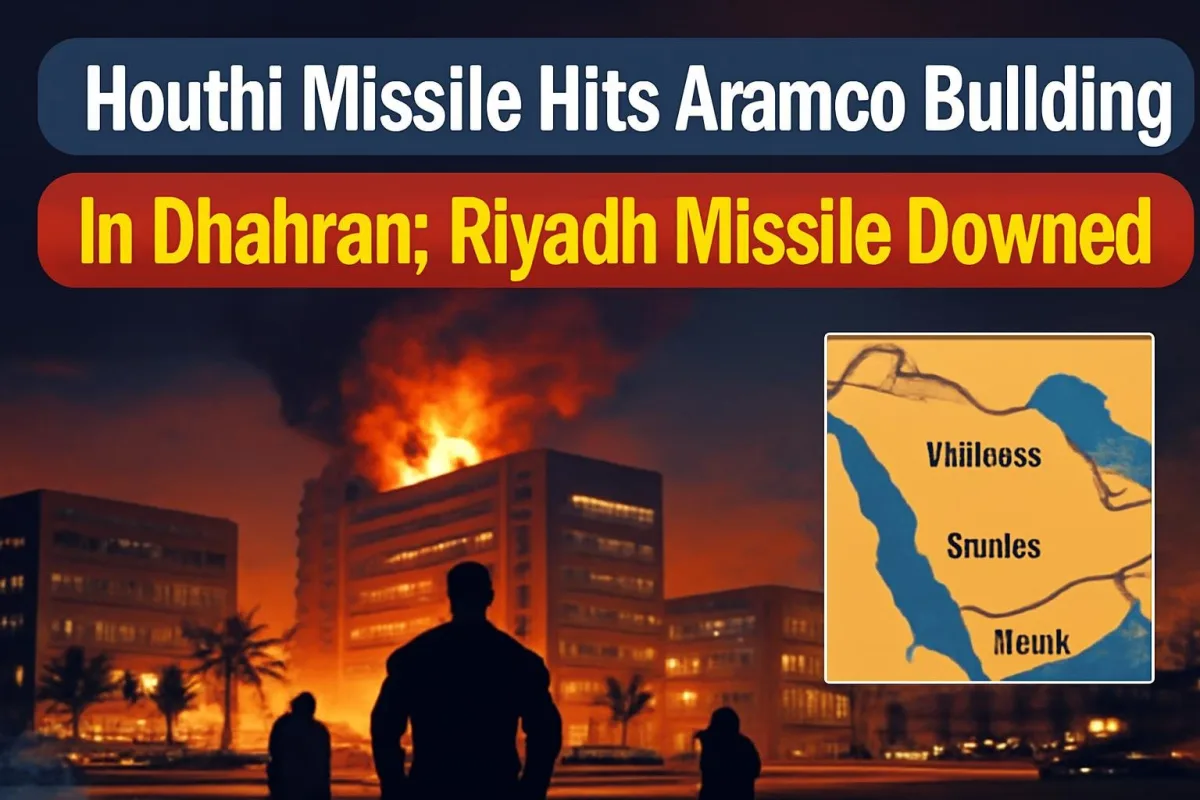
The war in Yemen has reached the heart of Saudi Arabia's oil industry. A Houthi missile attack on Tuesday night, October 13, set off a fire at Saudi Aramco's administrative complex in Dhahran, and the Saudi Ministry of Energy confirmed that an Aramco administrative building had been hit. The next day, the Saudi-led coalition said it had intercepted and destroyed another Houthi ballistic missile fired towards the capital, Riyadh.
No deaths or injuries were reported in Dhahran, according to the Saudi Press Agency, and the fire was later put out. But the strikes have rattled energy markets and raised fresh worries for the millions of Indians who live and work in the Gulf kingdom.
What Happened in Dhahran and Riyadh
Residents in Dhahran, in Saudi Arabia's Eastern Province, described a powerful blast followed by smoke and flames rising from the Aramco area. Bloomberg reported that the company's executive headquarters was struck, while a company source told Reuters it was a headquarters complex. The exact building and the cause of the fire – a direct hit or falling debris from an interception – have not been officially detailed.
The coalition said it intercepted a ballistic missile aimed at Dhahran, with debris landing in a residential area. Over Riyadh, debris from two intercepted cruise missiles injured four people – two women, a man and a child – and damaged 15 homes, according to Saudi Civil Defence. The coalition also reported intercepting a missile aimed at Haradh and three drones north of the capital.
On Wednesday, coalition spokesman Maj Gen Turki Al Malki announced that a further Houthi ballistic missile launched towards Riyadh had been intercepted. Civil Defence issued alerts for the capital and Al-Kharj governorate before declaring that the danger had passed.
Key Facts
| Main target | Aramco administrative complex, Dhahran, Eastern Province |
| When | Night of Tuesday, October 13, 2026 |
| Casualties in Dhahran | None reported (Saudi Press Agency) |
| Riyadh debris | 4 injured, 15 homes damaged |
| Wednesday | Coalition intercepts Houthi ballistic missile aimed at Riyadh |
| Coalition response | Strikes on fuel sites in Sanaa and Hodeidah port |
| Oil market | Prices rose on Wednesday on supply worries |
Coalition Hits Back in Yemen
The Saudi-led coalition responded with strikes on energy infrastructure in Houthi-held Yemen, including the Al Sabahah station in Sanaa and fuel-loading piers at the Red Sea port of Hodeidah. Al Malki said the Houthis were using civilian facilities and vital resources such as underground fuel reserves for their war effort. The coalition had warned civilians near the Sanaa oil site to leave before the strikes. The Houthis claimed their fuel reserves had been moved beforehand, a claim that could not be independently verified.
The Houthis, for their part, said they had targeted Aramco facilities in Dhahran, an Aramco refinery in Riyadh and King Khalid International Airport.
How the Conflict Escalated
Fighting between the Iran-aligned Houthis and Saudi-backed Yemeni government forces flared sharply last month, ending a UN-brokered truce that had largely held since 2022. Saudi-backed forces launched a counteroffensive to retake coastal areas near the Bab al-Mandeb strait, a vital chokepoint for Red Sea shipping.
Since then, the Houthis have repeatedly targeted Saudi territory. Strikes on King Khalid International Airport in Riyadh over the weekend killed 14 people and wounded more than 300, and attacks have also hit Abha airport. Aramco's Jazan refinery has been shut after an earlier strike, and a key cross-country pipeline was briefly closed in September after an attack launched from Iraq.
Why It Matters for India
India is one of the world's largest oil importers, and Saudi Arabia is among its biggest crude suppliers. Any threat to Aramco's facilities or export routes can push up global prices, which feeds into petrol, diesel and LPG costs and adds pressure on inflation at home. Oil prices rose on Wednesday as traders priced in the risk of further disruption.
There is also a human dimension. Saudi Arabia is home to a large Indian community, many of whom work in Riyadh, the Eastern Province and the oil sector. Indians were among the casualties in the recent Riyadh airport attack. Families back home in Kerala, Telangana, Andhra Pradesh, Uttar Pradesh and Bihar will be watching developments closely.
Indians in Saudi Arabia are advised to follow alerts from Saudi Civil Defence and advisories from the Indian Embassy in Riyadh and the Consulate in Jeddah.
What Happens Next
Analysts say the coalition's air campaign is intensifying, but a ground push to retake territory has not yet begun. With the Houthis showing they can reach targets deep inside Saudi Arabia, the risk to energy infrastructure and civilian sites remains high. Markets will be watching for any impact on Aramco's production and exports, details of which have not yet been disclosed.





Comments (0)