
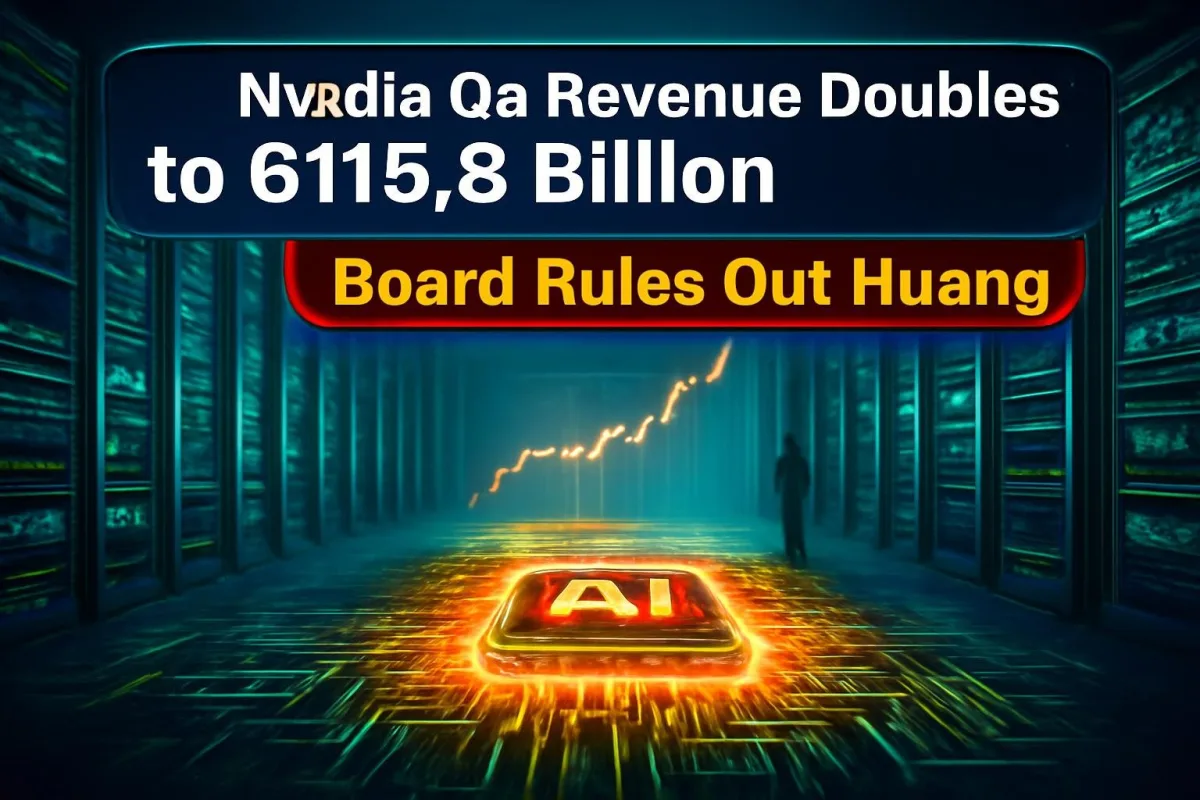
Nvidia has shown that its business is still running at full speed, even in the middle of a leadership crisis. The world's most valuable chipmaker reported revenue of $115.8 billion for the third quarter of fiscal 2027, more than double the figure a year ago, and forecast an even bigger fourth quarter. On the same day, its board made it clear that Jensen Huang, the co-founder who resigned as CEO last week, will not be coming back.
The results, announced in the US on Tuesday, November 17, cover the quarter that ended on October 25, 2026. They beat Wall Street estimates on almost every major measure.
Nvidia Q3 FY2027 results at a glance
| Total revenue | $115.8 billion (+103% YoY, +20% QoQ) |
| Data Center revenue | $107.6 billion (+110% YoY) |
| Edge Computing revenue | $8.2 billion (+42% YoY) |
| GAAP gross margin | 74.8% |
| Non-GAAP EPS | $2.68 (estimate: about $2.47) |
| GAAP net income | $65.3 billion |
| Q4 revenue outlook | $130 billion, plus or minus 3% |
| Interim CEO | Colette Kress |
AI data centres drive the growth
Almost all of Nvidia's money now comes from data centres. That segment brought in $107.6 billion, up 21 per cent from the previous quarter and 110 per cent from a year ago. Big cloud companies and AI labs continue to buy Nvidia's chips and networking gear as fast as it can make them. The company said its new Vera Rubin platform added close to $20 billion in sales during the quarter, and networking revenue alone topped $21 billion.
The company no longer reports gaming as a separate line. Its Edge Computing segment, which includes workstations and physical AI products such as robotics, earned $8.2 billion, up 42 per cent from a year earlier. Nvidia noted that rising memory and system prices had hurt demand for consumer PCs.
Profitability stayed remarkable. The GAAP gross margin was 74.8 per cent, and GAAP net income came in at $65.3 billion. Adjusted earnings of $2.68 per share were well above analyst estimates of around $2.47.
A bigger fourth quarter ahead
For the current quarter, Nvidia expects revenue of about $130 billion, plus or minus 3 per cent, which is above what analysts had expected. That quarter includes one extra week. The company said its forecast does not assume any data centre compute revenue from China, where US export rules continue to limit sales.
On the earnings call, Kress said the company now expects revenue growth of around 75 per cent in fiscal 2028, slightly higher than its earlier projection. Nvidia also added $150 billion to its share buyback programme.
Board shuts the door on Jensen Huang
The numbers were strong, but the earnings call opened with a different topic. Board chair Harvey Jones told analysts, "The Nvidia board does not intend to reinstate Jensen as CEO." He said the board had acted in the best interest of the company's employees, customers, partners and shareholders, and that it would not answer questions about the circumstances of Huang's exit.
Huang, who co-founded Nvidia in 1993 and led it for more than three decades, stepped down last week as president, CEO and board member. In a post on X, Huang said he had "made serious mistakes" in his personal life. Chief financial officer Colette Kress is serving as interim CEO. Jones said the board will consider both internal and external candidates for the permanent role.
Kress sounded confident in the results statement. "Our momentum is real. NVIDIA is an exceptional technology leader, powered by the relentless innovation of our people," she said.
What it means for India
Nvidia's results are watched closely in India for several reasons. The company's chips power most of the AI models and data centres being built around the world, including the growing number of AI computing projects in India. Its performance also sets the mood for technology and AI-linked stocks across Asia. On Thursday, Indian IT shares were already under pressure from worries about US interest rates, and global investors will be looking at whether Nvidia's strong outlook can steady sentiment in the tech sector.
Nvidia also has a large engineering workforce in India, with major centres in cities such as Bengaluru, Hyderabad and Pune, so stability at the top matters for thousands of employees here too.
What happens next
The biggest open question for Nvidia is no longer demand but leadership. Investors will watch how quickly the board names a permanent CEO and whether the company can keep up its pace of new product launches without its founder. For now, the order books suggest the AI boom is far from slowing down.





Comments (0)