
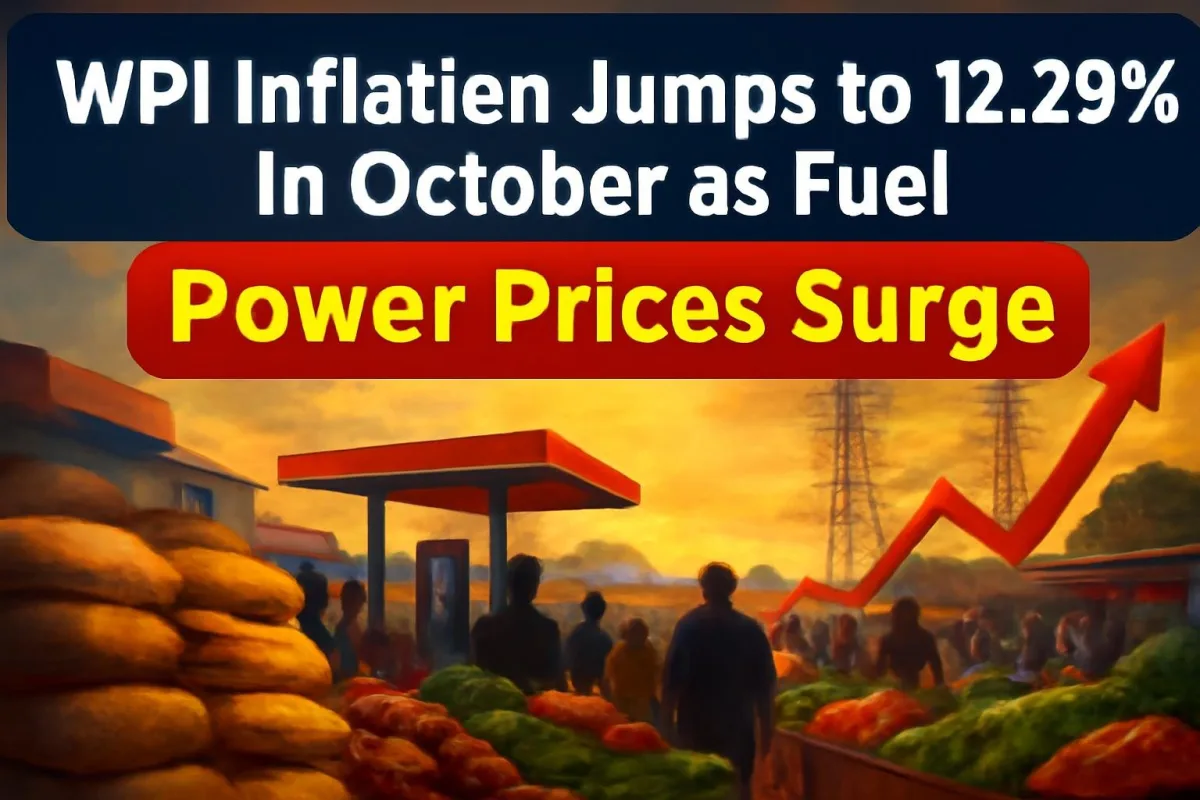
Prices at the factory gate and in wholesale markets climbed faster again in October. India's annual inflation based on the Wholesale Price Index (WPI) rose to 12.29% in October 2026, up from 11.39% in September, according to provisional data released by the Ministry of Commerce and Industry on Monday, November 16.
The main culprit is energy. Inflation in the fuel and power group shot up to 32.84% from 25.85% a month earlier, making it the single biggest contributor to the rise.
October WPI at a glance
| Indicator | October 2026 (September 2026) |
|---|---|
| Headline WPI inflation | 12.29% (11.39%) |
| Fuel and power | 32.84% (25.85%) |
| Primary articles | 9.24% (8.67%) |
| Manufactured products | 9.54% (9.76%) |
| WPI Food Index | 8.58% (8.66%) |
| All-commodities index | 113.3 (112.5) |
| Cumulative inflation, April–October | 10.14% |
| Next release (November data) | December 14, 2026 |
What pushed wholesale prices up
The ministry said the rise in October was mainly due to higher prices of mineral oils, crude petroleum and natural gas, electricity, food articles, basic metals, chemicals, food products, non-food articles, textiles, and rubber and plastic products.
In simple terms, almost everything that goes into making and moving goods became costlier. Fuel and power is the clearest example. A near-33% annual jump in this group means that diesel for trucks, furnace oil for factories and electricity for industrial units all cost far more than they did a year ago. Those costs eventually spread to finished goods.
Primary articles, which include food grains, vegetables, minerals and crude oil, also rose faster, to 9.24%. Manufactured products, which carry the largest weight in the index, eased marginally to 9.54% from 9.76%. Food inflation at the wholesale level softened slightly to 8.58%, though it remains high.
A steady climb through the year
The cumulative build-up rate for the financial year so far, from April to October, stands at 10.14% for all commodities, with fuel and power at 26.37%, primary articles at 7.15% and manufactured products at 8.37%. The final WPI number for August was confirmed at 9.92%, unchanged from its provisional estimate, which shows how quickly inflation has gathered pace over the past two months.
The October figure is provisional and is based on a response rate of 81.1%, so it may be revised when the final data is published.
Why this matters for households
WPI tracks prices at the wholesale level, not what you pay at the corner shop. But wholesale prices usually lead retail prices by a few weeks or months. When manufacturers and traders pay more for fuel, raw materials and transport, they tend to pass part of that cost on to consumers.
That pass-through is already visible. Retail inflation, measured by the Consumer Price Index, rose to 6.09% in October, crossing the Reserve Bank of India's upper tolerance limit of 6%. With wholesale inflation now above 12%, there is a real risk that retail prices of everyday items such as packaged food, clothing, soaps and transport services keep rising in the coming months.
Here is what the numbers could mean for different groups:
- Households: Higher bills for goods that depend heavily on fuel and transport, and possibly for electricity if state utilities revise tariffs.
- Small businesses: Input costs are rising faster than many can raise prices, which squeezes margins for MSMEs.
- Borrowers: Persistent inflation makes it harder for the RBI to cut interest rates, so home and car loan EMIs are unlikely to fall soon.
- Savers: Fixed deposit returns may struggle to beat inflation, which means real returns stay low or even negative.
What happens next
All eyes now turn to the Reserve Bank of India's Monetary Policy Committee, which will have to weigh this sharp rise in wholesale prices against the need to support growth. With both retail and wholesale inflation moving up together, economists will be watching whether the RBI signals a tighter stance in its next policy review.
Government action on fuel prices will also be key. Since fuel and power is driving most of the increase, any change in excise duty, crude oil prices or electricity tariffs will feed directly into the next set of numbers. The WPI data for November is scheduled for release on December 14, 2026.
For now, the message from October's data is clear: cost pressures in the Indian economy are building, and they are being led by energy.




Comments (0)