
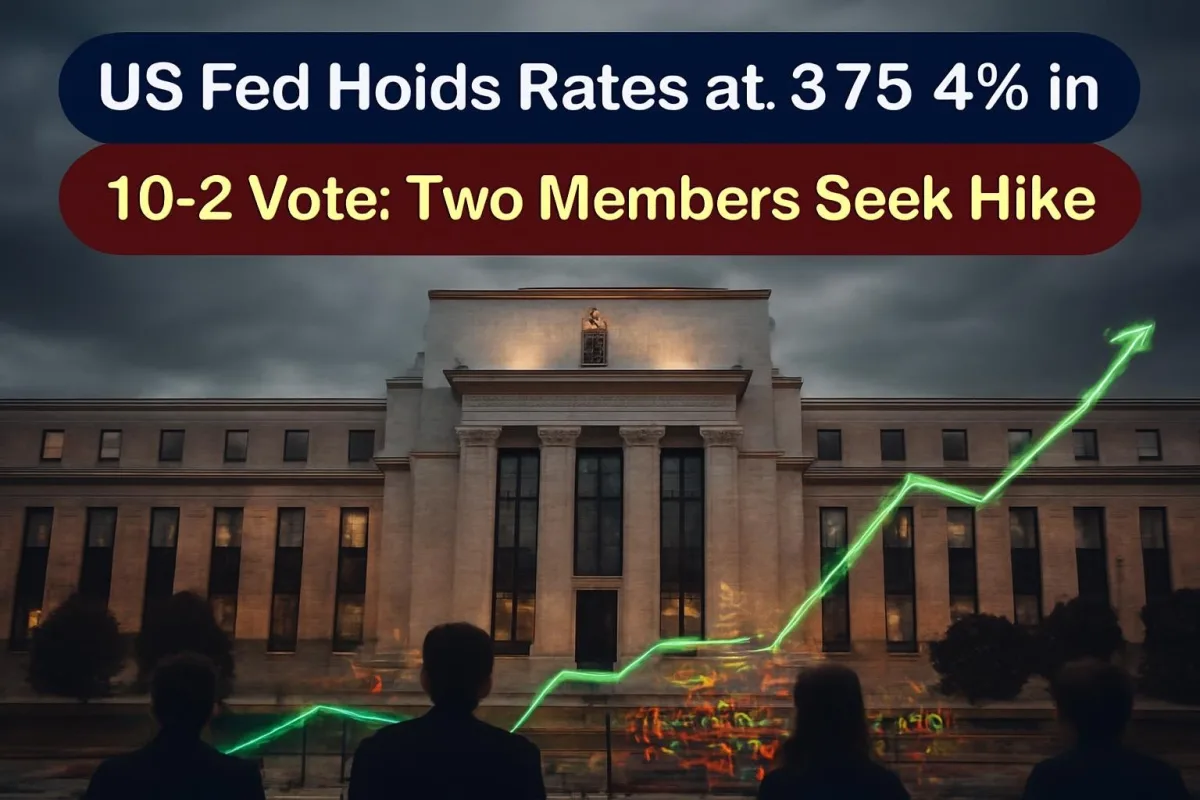
The US Federal Reserve kept its benchmark interest rate unchanged in the 3.75% to 4% range on Wednesday, October 28, 2026, but the decision was far from unanimous. Two members of the rate-setting Federal Open Market Committee voted for a quarter-point hike, a clear sign that the battle against rising inflation is not over.
For Indian investors, the message from Washington matters: US borrowing costs are likely to stay high, and possibly go higher, which can weigh on foreign fund flows into emerging markets like India.
What the Fed Decided
The FOMC voted 10-2 to hold rates. Governor Lisa Cook and Cleveland Fed President Beth Hammack dissented, saying they would have preferred a 25 basis point increase. That is a sharp change from the September meeting, when the committee voted 12-0 to raise rates by a quarter point, the Fed's first hike in about three years.
| Decision date | October 28, 2026 |
| Policy rate | 3.75% to 4% (unchanged) |
| Vote | 10-2 |
| Dissenters | Lisa Cook, Beth Hammack (both wanted a hike) |
| US CPI inflation (September) | 3.7% year-on-year |
| US jobs added (September) | 29,000 |
| Next FOMC meeting | December 8-9, 2026 |
Why the Fed Paused
US consumer prices rose 3.7% in September from a year earlier, a four-month high and well above the Fed's 2% target. Prices rose 0.6% from August alone, driven heavily by fuel costs as conflict in the Middle East pushed up oil prices. Core inflation, which excludes food and energy, came in at 2.6%, also slightly hotter than expected.
At the same time, the jobs market has cooled sharply. US employers added only 29,000 jobs in September, down from 162,000 in August and far below what economists were expecting. Faced with high inflation on one side and a weakening labour market on the other, most of the committee chose to wait for more data.
The Fed's statement reflected that shift. It upgraded its description of economic growth from "solid" to "strong", but replaced language about returning inflation to 2% with a line saying that "the accumulation of more information" would help the committee decide its next move.
What Warsh Said
Fed Chair Kevin Warsh, speaking after the meeting, insisted that the upcoming US midterm elections next week played "no role" in the decision. President Donald Trump has repeatedly criticised the Fed for raising rates, and after the September hike he publicly demanded that rates be lowered fast.
Warsh also announced a change to how the Fed manages its calendar. One of the eight scheduled meetings in 2027 and two in 2028 will be set aside for institutional issues rather than monetary policy decisions.
Markets Expect a December Hike
Wall Street ended higher after the decision as attention moved back to company earnings. However, futures markets still see a strong chance of a rate increase at the December 8-9 meeting, with the CME FedWatch tool showing odds of more than 80% before the decision. The 10-year US Treasury yield was trading around 5% on the day, a level that keeps pressure on borrowing costs worldwide.
The Fed was not the only central bank in action. On the same day, the Bank of Canada raised its key interest rate for the first time in more than three years and warned that more increases might be needed to contain energy-driven inflation.
What It Means for India
High US interest rates and bond yields near 5% tend to make American assets more attractive to global investors, which can pull money away from emerging markets including India. That can put pressure on the rupee and on Indian equities, especially in sectors that depend heavily on foreign portfolio investment.
Indian IT companies, which earn a large share of their revenue in the US, will watch the slowdown in American hiring closely, since weaker US demand can affect technology spending. On the other hand, a Fed that holds rather than hikes gives some breathing room to the Reserve Bank of India, which also has to balance inflation from high fuel prices against the need to support growth.
For ordinary borrowers in India, the Fed decision does not directly change home or car loan rates. But it shapes the global environment in which the RBI sets policy, so the December Fed meeting will be watched closely in Mumbai too.
What Happens Next
The next big data points are US inflation and jobs numbers for October, along with the outcome of the midterm elections. The December meeting will also bring fresh economic projections from Fed officials, which should give a clearer picture of how many more hikes, if any, are coming in 2027.



Comments (0)