
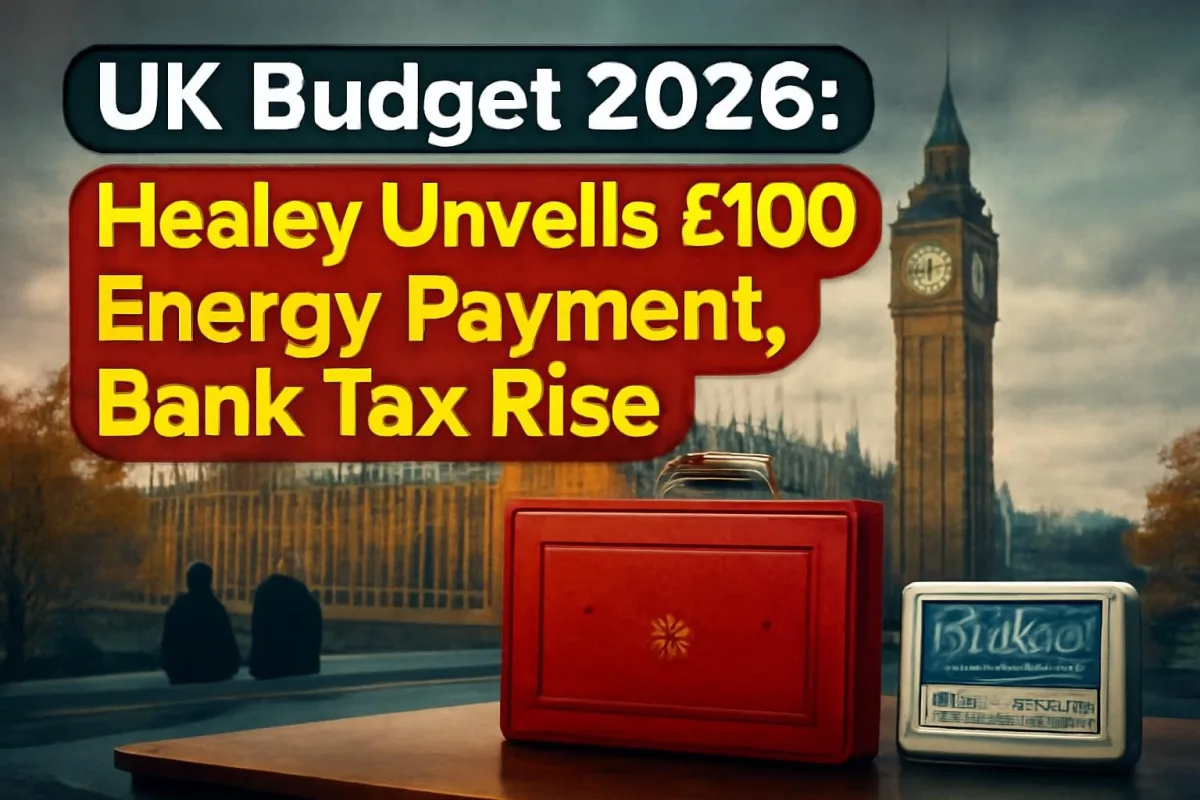
Britain's Chancellor John Healey presented his first Budget in the House of Commons on Wednesday, October 28, 2026, the first under Prime Minister Andy Burnham. The headline promise was help with soaring energy bills, including a £100 payment for around 20 million households, paid for in part by a sharply higher tax on bank profits.
The Budget comes at a difficult moment for the UK economy. Inflation has climbed again, household energy costs are rising, and government borrowing is running ahead of forecasts, leaving Healey with little room to manoeuvre.
The Backdrop: Energy Shock and Rising Debt
The conflict involving Iran and disruption to shipping through the Strait of Hormuz have pushed global oil and gas prices up sharply this year. In Britain, the energy price cap is expected to rise by about 16% in January, taking typical annual household bills to around £2,000.
At the same time, total UK public debt crossed £3 trillion for the first time in September, and debt interest now costs the Treasury roughly £100 billion a year. Both Healey and Burnham had promised to stick to the government's fiscal rules, so most analysts expected a cautious, "steady as she goes" package rather than big new tax-and-spend moves.
Key Announcements
| Household energy payment | £100 for about 20 million homes in council tax bands A to D in England, from January 2027 |
| Gas standing charges | Scrapped from next year; Treasury says 60% of households could save about £45 a year |
| VAT cut on electricity | Extended to July |
| Bank surcharge | Temporarily raised from 3% to 6% to help fund energy support |
| Fuel duty | Frozen at 52p a litre; January increase cancelled |
| Minimum wage | Up 3.9% to £13.20 an hour |
| State pension | Up 3.9%; full new state pension £250.70 a week |
| Cash ISA limit | Kept at £20,000; planned cut dropped |
Help With Energy Bills
Energy was the centrepiece. The one-off £100 Household Energy Payment, costing about £2.6 billion, will go to homes in the lower council tax bands in England from January. Gas standing charges, the fixed daily fee that households pay regardless of how much they use, will be scrapped, with those costs moved into the unit price instead. A temporary cut in VAT on electricity has also been extended to July.
Some experts quickly warned that moving fixed costs into unit prices could mean higher bills for people who use more energy at home, including many pensioners and disabled people, so the reform is likely to face scrutiny in the coming weeks.
Who Pays: Banks, Gamblers and Savers
To help fund the energy package, the bank surcharge, an extra tax on bank profits, will temporarily double from 3% to 6%. Britain's biggest banks made around £15 billion in profit in the first half of 2026, which the government argues gives them room to contribute.
Gambling taxes are also going up, with duty on higher-stakes gaming machines rising from 20% to 25%, and the money going towards a support package for high streets. Income tax on property and savings income will rise by a further two percentage points from April 2027.
Wages, Pensions and Savers
Workers on the lowest pay get a 3.9% rise in the minimum wage, and the government is ending the bigger increases that had been planned for 18 to 20-year-olds. The state pension will rise by the same 3.9%, and a new tax allowance will stop low-income pensioners from being dragged into paying income tax just because their pension went up.
Savers were spared a planned cut in the tax-free cash ISA limit, which stays at £20,000. Carers will benefit from the end of the so-called cliff edge in Carer's Allowance, which will be replaced by a gradual taper.
Defence and Growth Outlook
Healey, who was Defence Secretary before moving to the Treasury, said the government's Defence Investment Plan would be fully funded, with more detail on reaching NATO spending targets to come at next year's spending review. Businesses get £20.4 billion more for the National Wealth Fund and British Business Bank, and small shops, pubs and leisure firms will benefit from a higher threshold for business rates relief.
The Office for Budget Responsibility expects growth of 1.2% this year and 1.0% in 2027. It sees inflation averaging about 3.5% next year before falling back towards the 2% target in 2028. The Chancellor's spare fiscal headroom has been cut to £15 billion for 2029-30.
What It Means for India
The UK is one of India's most important economic partners, and the two countries' trade agreement has been bringing businesses closer. A slower British economy, higher taxes on banks and persistent inflation could affect Indian companies with large UK operations, especially in IT services, pharmaceuticals and steel. For the large Indian community in Britain and students living there, the energy payment and frozen fuel duty offer some relief, but higher living costs are likely to remain a concern through the winter.
What Happens Next
MPs will now debate the Budget measures, and the detailed legislation will go through Parliament in the coming months. With the US Federal Reserve and the Bank of England both watching inflation closely, the success of Healey's plan will depend heavily on where energy prices go next and whether the conflict in the Gulf eases.





Comments (0)