
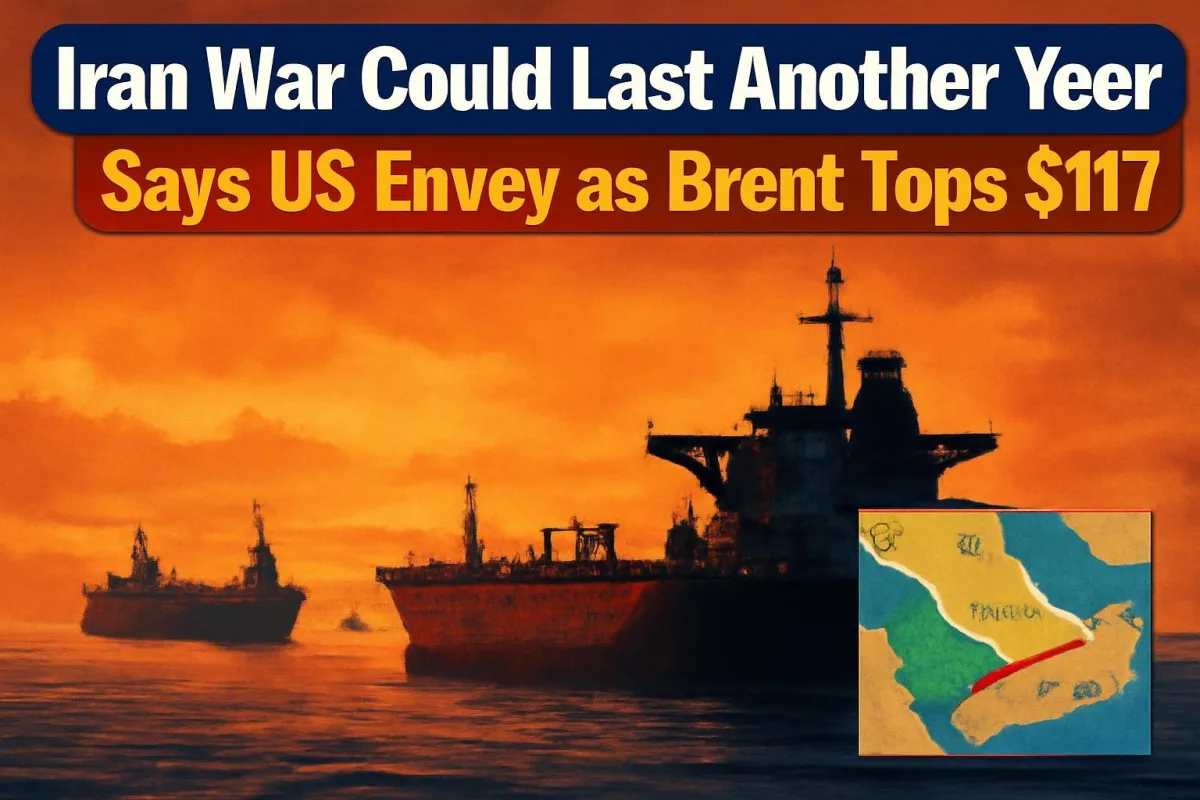
Hopes of a quick end to the war with Iran took a hit on Friday. Mike Waltz, the United States Ambassador to the United Nations, told the Financial Times that the conflict could go on for another year, while President Donald Trump hinted that fresh US strikes remained on the table. Oil markets reacted sharply: Brent crude briefly climbed above $117 a barrel on October 23, its highest level since the war began, after Iran claimed attacks on tankers in and around the Strait of Hormuz.
For India, which buys most of its crude from abroad, every dollar added to the oil price is a dollar added to the import bill, and that makes this war far more than a distant headline.
What Waltz and Trump said
In his interview, Waltz said the war could last another year, adding that he hoped Tehran would "come to the table in a meaningful way before that." He also said the US Navy could keep up its blockade of Iranian ports for the foreseeable future.
Trump, for his part, suggested Washington had options. "We may do another little Epic Fury, or they'll agree," he said on Friday, adding, "If they're smart, they'll just say, 'Let's get down to business.'" He said the US "could end it very quickly" but was weighing whether to finish the conflict or let Iran's economy weaken under sanctions.
The signals were mixed. A day earlier, the White House had said the US would not resume attacks before the November 3 midterm elections, though military options remained open. But Tom Barrack, the US envoy to Turkey, said on Friday that a strike as early as this weekend was possible, while stressing that Washington was still open to a deal. Reports say months of negotiations have stalled.
Oil price shock and the Strait of Hormuz
The spike in crude followed claims by Iran's Revolutionary Guard that it had disabled seven tankers. Iran said it struck four ships on Thursday and that three others hit mines, though these claims have not been independently verified. Iranian state television also claimed that the movement of "non-compliant" vessels through the strait had been completely halted. Trump accused Tehran of faking ship attacks to push up prices before the US elections.
The route itself has become contested. Iran is demanding that ships use a northern corridor under its authorisation, while Washington is encouraging a southern route closer to Oman. Saudi Aramco has sharply increased flows through its East-West pipeline, which bypasses the strait, from about 2 million to 7 million barrels a day. A tanker spill was also reported off the UAE coast, closing beaches at Umm Al Quwain.
Key numbers
| Brent crude peak (Oct 23) | Above $117 a barrel, wartime high |
| Brent at start of October | Below $97 a barrel |
| Brent on Thursday (Oct 22) | About $112, highest since May 18 |
| Ships Iran claims it hit | Seven (four struck, three hit mines), unverified |
| Saudi East-West pipeline flow | Raised from 2 to 7 million barrels per day |
| US midterm elections | November 3, 2026 |
Iran's diplomatic moves
Iranian Foreign Minister Abbas Araghchi lashed out at the US-Israel relationship, calling it "parasitic." He also said Iranian President Masoud Pezeshkian will meet Russian President Vladimir Putin in Moscow next week, a meeting that will be closely watched for any sign of Russian mediation or support.
The pressure is building on several fronts. Israel is heading towards elections, and an Iranian official has warned of a possible large-scale bombing before that vote. Houthi attacks on Saudi Arabia have also continued.
What it means for India
India imports more than 85% of the crude oil it consumes, and a large share of that has traditionally passed through the Strait of Hormuz. Higher crude prices hit the country in three ways:
- Import bill: India's crude import bill had already jumped 46% to $90.6 billion in April-September. A sustained rise above $110 would widen the trade deficit further.
- Fuel and inflation: Oil marketing companies absorb part of the shock, but prolonged high prices raise the risk of costlier petrol, diesel, LPG and freight, feeding into food and transport inflation.
- Rupee and markets: Expensive oil puts pressure on the rupee and on stock markets, which have already been weak this week.
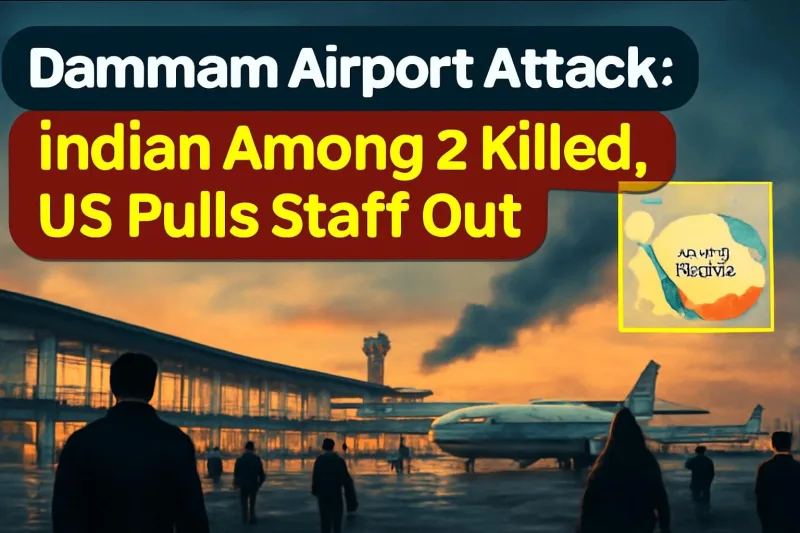
There is also a human dimension. Millions of Indians live and work in the Gulf, and the conflict has already claimed Indian lives, including in the recent attack on Dammam airport in Saudi Arabia.
What happens next
The coming weekend is the immediate flashpoint, given Barrack's warning about a possible strike. Beyond that, the November 3 US midterms, Pezeshkian's Moscow visit and the Israeli election will shape whether the war escalates or moves towards talks. For Indian consumers and businesses, the oil price chart will be the clearest signal of which way things are heading.


Comments (0)