
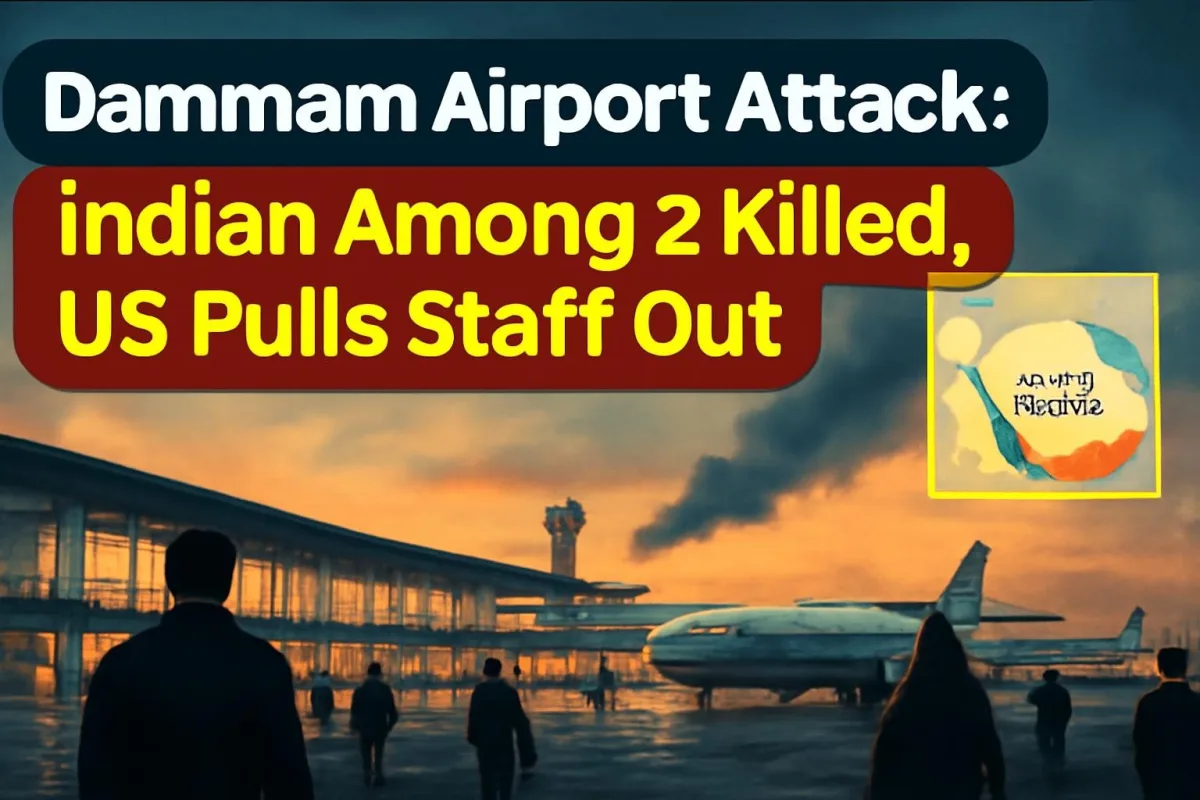
An Indian national was among two people killed in an attack on King Fahd International Airport in Dammam, Saudi Arabia, on Wednesday, October 21. Saudi Arabia's General Authority of Civil Aviation (GACA) said a Saudi citizen and an Indian resident died and eight others were injured, while the United States has now ordered its non-emergency government staff and their families to leave the kingdom.
What happened at Dammam airport
King Fahd International Airport serves Dammam and the oil-rich Eastern Province, home to a large community of Indian workers. GACA said the strike killed two people and wounded eight, and caused damage at the site. Flight-tracking data showed flights being diverted and operations halted for a period after the attack.
In a statement on Thursday, GACA said operations at the airport had resumed and air traffic had returned to normal. Saudi authorities have not publicly detailed what kind of weapon was used.
Indians among the casualties
The Indian Embassy in Riyadh, citing Saudi authorities, said one Indian national was killed and two Indians were among the injured, with injuries ranging from minor to severe. The embassy said it was ascertaining further details and contacting the affected families. The names of the victims have not been officially released.
Houthis claim wave of strikes
Yemen's Iran-aligned Houthi movement said on Thursday that it had carried out numerous attacks over the previous 48 hours, naming King Fahd airport, Abha International Airport, the Saudi defence ministry in Riyadh and Aramco facilities in Yanbu among its targets. The Saudi-led coalition said it intercepted and destroyed four drones over the Riyadh and Medina regions.
On the same day, Saudi Arabia's Energy Ministry said debris from an intercepted drone aimed at a facility in Aramco's Shaybah oilfield killed two people, a Filipino and a Nepali national. Reuters and AFP, citing sources, reported that Aramco had asked staff to evacuate its Dhahran headquarters.
Saudi Arabia has faced near-daily attacks this month after a four-year truce with the Houthis collapsed amid the wider conflict involving Iran. Riyadh's King Khalid International Airport was also struck earlier in October.
US orders diplomats to leave
US State Department spokesperson Tommy Pigott said non-emergency staff and their family members had been ordered to leave the US mission in Saudi Arabia. He blamed the Iranian-backed Houthis for attacks on civilian airports and critical infrastructure that had killed civilians and disrupted travel. The US embassy in Riyadh also issued a security alert warning of possible further attacks.
Some reports suggested similar orders for other Gulf missions, but Pigott called those reports inaccurate and said only Saudi-based employees were affected.
Key facts
| Location | King Fahd International Airport, Dammam, Saudi Arabia |
| Date | Wednesday, October 21, 2026 |
| Killed | 2 (one Saudi national, one Indian resident) |
| Injured | 8, including two Indians |
| Airport status | Operations resumed, traffic normal (GACA) |
| Claim | Houthis say airport was among their targets |
| US response | Ordered departure of non-emergency staff and families |
What it means for Indians in Saudi Arabia
Saudi Arabia hosts one of the largest Indian communities abroad, with lakhs of Indians working in construction, oil and gas, healthcare and services, many of them in the Eastern Province around Dammam, Al Khobar and Jubail. Thousands also travel through Dammam's airport every week on direct flights to several Indian cities.
For families back home, the immediate priority is information. Indians in the kingdom should follow advisories from the Indian Embassy in Riyadh and the Consulate General in Jeddah, keep their contact details registered with the mission, and check flight status with airlines before heading to the airport.
- Follow official updates from the Indian Embassy in Riyadh and Saudi authorities only.
- Keep passports, iqama and emergency contacts handy.
- Check with your airline before travelling to any Saudi airport.
- Avoid sharing unverified videos or casualty claims on social media.
What happens next
The Indian government is expected to coordinate with Saudi authorities on the repatriation of the deceased and treatment of the injured. With the Houthis threatening further strikes and the US scaling down its diplomatic presence, the risk to civilian infrastructure in the Gulf remains high, and New Delhi will be watching closely given the safety of its citizens and its energy imports from the region.





Comments (0)