
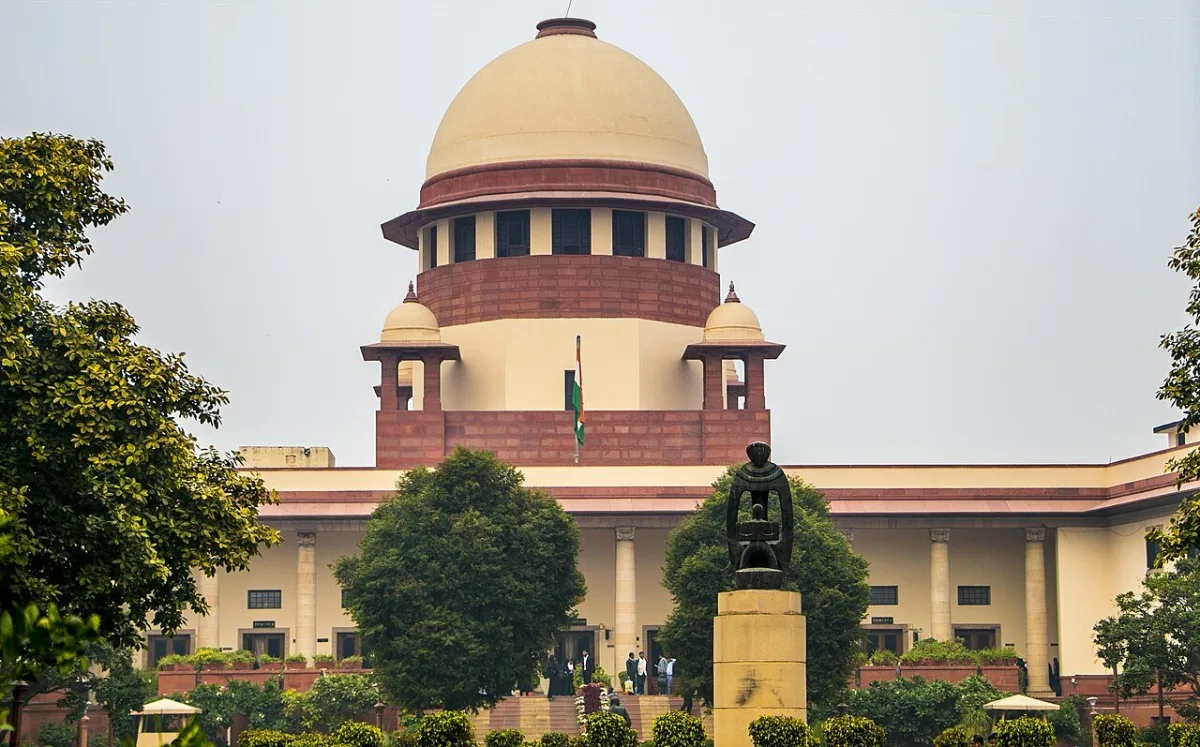
From today, November 2, senior advocates can no longer stand up in any courtroom of the Supreme Court of India and orally "mention" a case for urgent listing. A circular issued by the court's Registry on October 27 reserves that job for younger and junior lawyers, in a move aimed at giving the junior Bar more visibility in the country's top court.
The rule may sound procedural, but oral mentioning is one of the most visible moments in daily court life – the few minutes at the start of the day when lawyers request that urgent matters be heard quickly. Who gets to speak in those minutes matters.
What the Supreme Court circular says
The circular, numbered F.No. 25/Judl./2026, states that on the direction of the Competent Authority, no Senior Counsel will be permitted to make oral mentioning before any court with effect from November 2, 2026. It adds that younger and junior counsel may instead be encouraged to make such mentions.
| Detail | Information |
|---|---|
| Circular number | F.No. 25/Judl./2026 |
| Date issued | October 27, 2026 |
| Effective from | November 2, 2026 |
| Applies to | All courts (benches) of the Supreme Court |
| Who is barred | Senior Counsel (designated senior advocates) |
| Who is encouraged | Younger and junior counsel |
| Signed by | Registrars (Judicial) Vishal, Yashwinder Paul Singh and Rajesh Sharma |
| Circulated to | Supreme Court Bar Association, SC Advocates-on-Record Association, all notice boards |
What is "oral mentioning"?
Most cases in the Supreme Court are listed through the Registry's computerised system. But when a matter is genuinely urgent – a person facing imminent arrest, a demolition about to happen, a death sentence about to be carried out – lawyers can ask a bench to list it sooner. When they make that request in person, before the bench, it is called oral mentioning.
Because the request is short and happens in open court, it is often handled by whoever is leading the case. In high-profile matters, that has frequently meant well-known senior advocates, whose presence alone can carry weight. The new circular removes that option and places the responsibility squarely on the junior members of each legal team.
Not the first such step
The court has moved in this direction before. A Registry circular dated November 29, 2025, effective December 1, 2025, had also restricted Senior Counsel from mentioning and encouraged junior lawyers to do it. That earlier circular also set out a detailed procedure for mentioning, which the new order does not change.
How mentioning works under the existing procedure
- Automatic listing first: Urgent categories such as regular and anticipatory bail, cancellation of bail, death penalty, habeas corpus, eviction and demolition are listed automatically within two working days after defects are cured, so they cannot be mentioned just to get a listing.
- Fresh matters needing urgent relief: The case must first be registered and verified. A mentioning proforma and a letter of urgency must reach the Mentioning Officer by 3 pm on the previous working day, or by 11:30 am on Saturday.
- Exceptionally urgent cases: For matters such as anticipatory bail, death penalty, habeas corpus, eviction or demolition, papers can be submitted before 10:30 am with a letter explaining why the case cannot wait. The Registrar (Judicial Listing) then seeks the Chief Justice's orders.
- After-notice matters: The proforma and letter go in by 3 pm on the day before. Only cases that appear in the published mentioning list can be mentioned.
- Regular hearing matters: Mentioning merely for listing is not allowed, but an application seeking urgent relief or early hearing can be mentioned.
What it means for lawyers and litigants
For young advocates, the change is an opportunity. Standing before a Supreme Court bench, even for two minutes, builds confidence and visibility, and many junior lawyers have long complained that such chances are rare in a courtroom dominated by famous names.
For litigants, the practical effect should be limited. Urgent matters will still be mentioned – only by a different member of the legal team. Since the Registry's written procedure remains the main route to urgent listing, the quality of the urgency letter and paperwork arguably matters more than who speaks in court.
Legal commentators have also asked whether high courts will follow the Supreme Court's lead. No such direction has been issued for high courts so far, and each high court frames its own listing rules.
What happens next
The rule is in force from Monday's sitting. Bar bodies have received copies, and the circular is displayed on the court's notice boards. How strictly benches enforce it – and whether any exceptions emerge in practice – will become clear over the coming weeks.



Comments (0)