
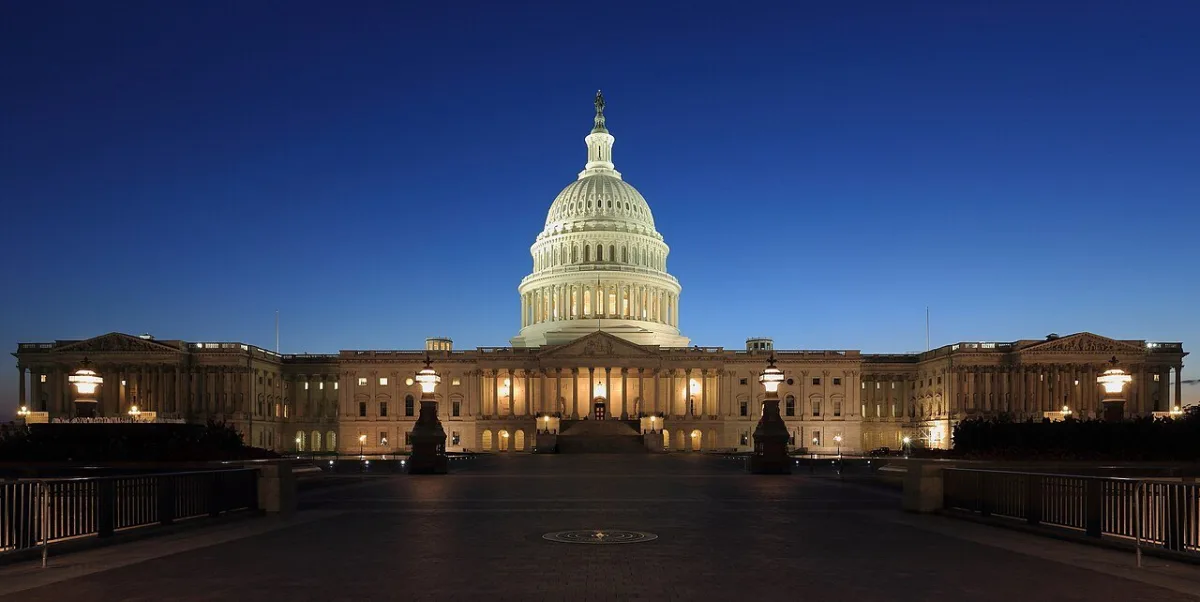
Americans vote on Tuesday, November 3, in midterm elections that will decide control of the US Congress for the second half of Donald Trump's term. All 435 seats in the House of Representatives, 35 Senate seats and 36 governorships are on the ballot, and for viewers in India, the first results will start arriving early on Wednesday morning, November 4.
Midterms are often read as a verdict on the sitting president. This year's contest, fought over prices, immigration, tariffs and even the electricity demands of AI data centres, could determine how much of Trump's agenda survives until 2028.
US midterms 2026: what is on the ballot
| Contest | Key facts |
|---|---|
| Election day | Tuesday, November 3, 2026 |
| House of Representatives | All 435 seats; two-year terms |
| Senate | 35 of 100 seats, including two special elections |
| Current Senate split | 53 Republicans, 45 Democrats, 2 independents who caucus with Democrats |
| Governors | 36 states plus three territories; Republicans hold 26 governorships, Democrats 24 |
| Ballot measures | About 145 statewide measures |
| New Congress sworn in | January 3, 2027 (120th Congress) |
| First polls close | 6 pm ET (4:30 am IST, November 4) in parts of Kentucky and Indiana |
The battle for the House
Republicans currently hold narrow majorities in both chambers. History is not on their side in the House: the president's party lost House ground in 20 of the 22 midterms between 1938 and 2022. Republicans gained 63 seats in Barack Obama's first midterm in 2010, and Democrats gained 40 during Trump's first term in 2018.
Forecasts this year point in the same direction. Fox News' election analysis rates Democrats as favourites to win the House, with at least 223 seats in its projections – more than the 218 needed for a majority – and possibly considerably more on a strong night.
The Senate is the closer fight
The Senate is far tighter. Democrats need a net gain to take control, while Republicans need to hold at least 50 seats, since Vice President JD Vance would break a 50-50 tie. Fox News rates overall Senate control a toss-up.
Races to watch include Kansas and South Carolina, both rated toss-ups, along with Alaska, Iowa, Nebraska, Ohio and Texas. Maine is competitive, and contests in Minnesota and New Hampshire could also matter. In Michigan, Democratic Representative Haley Stevens drew attention on the eve of the vote by endorsing Republican Senate nominee Mike Rogers over Democrat Abdul El-Sayed. Trump himself campaigned in Iowa and Kansas on Sunday.
Governors and ballot questions
Governor races in Alaska, Nevada, Georgia and Wisconsin are seen as toss-ups. Voters will also decide on high-profile ballot measures – among them California's Proposition 40, a proposed one-time tax of up to 5% on billionaires, a Washington initiative to repeal a tax on income above $1 million, abortion-related measures in several states, and voter ID or citizenship rules in 11 states.
What it means for India
A change in Congress does not directly alter US foreign policy, which the president largely steers. But it can shape the environment in which India–US ties operate:
- Trade and tariffs: Congress can influence tariff policy and trade deals that affect Indian exporters.
- H-1B visas: Skilled-worker visa debates are likely to stay heated, though a new Congress would not automatically reverse existing rules.
- Defence ties: Lawmakers control defence budgets and oversee strategic partnerships.
- Technology: Policy on AI, semiconductors and supply chains could affect Indian IT firms and professionals.
If Democrats win the House, they could slow Trump's legislative agenda and launch more investigations. A Democratic Senate could also hold up his nominees, including judges and Cabinet picks. Trump keeps his veto, and overriding it needs a two-thirds majority in both chambers.
When to expect results in India
With the US back on standard time from November 1, Eastern Time is 10.5 hours behind IST. Polls in Georgia, South Carolina, Virginia and most of Florida close at 7 pm ET (5:30 am IST), North Carolina and Ohio at 7:30 pm ET (6 am IST), Pennsylvania, Michigan and much of the East at 8 pm ET (6:30 am IST), and California at 11 pm ET (9:30 am IST). The last polls in Alaska close at 1 am ET – 11:30 am IST on Wednesday.
Close races may take days to call because of mail ballots, recounts or legal challenges, so the final picture of the Senate in particular may not be clear on Wednesday itself.






Comments (0)