
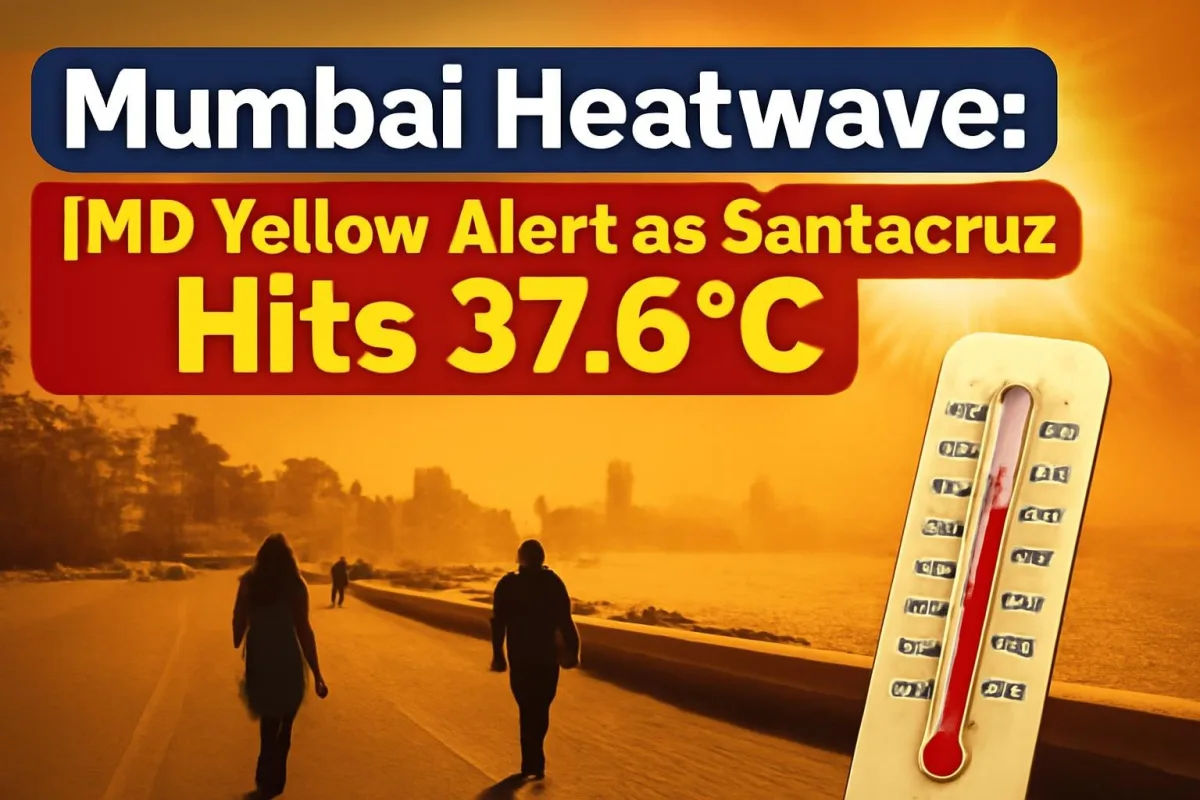
Mumbai heatwave conditions have tightened their grip on the city this week, with the India Meteorological Department (IMD) keeping a yellow alert in force for Mumbai and nine other Maharashtra districts on Friday, October 9. The Santacruz observatory recorded 37.6°C, a full 4.5°C above normal for this time of year, barely a week after the monsoon pulled out of the city.
The yellow alert, classed as "Watch – Be Aware", is the IMD's way of telling residents that the heat is unusual enough to take precautions. Relief is expected only by the weekend.
How hot is it in Mumbai?
The Santacruz reading of 37.6°C is high for any month in Mumbai, and particularly so in October, when the city is usually transitioning from the monsoon into milder winter months. The heat had already set a marker earlier this month: on October 3, the Colaba observatory in South Mumbai logged 37.4°C, 5.6°C above normal and the highest October reading there since 2012, according to local reports citing the IMD.
What makes the heat harder to bear is the humidity. Mumbai's sea air keeps moisture levels high, and when that combines with temperatures in the high 30s, the "feels like" heat index climbs sharply.
Districts under yellow alert
| Friday, October 9 | Palghar, Thane, Mumbai, Raigad, Ratnagiri, Sindhudurg, Kolhapur and its ghats, Satara and its ghats, Sangli, Solapur |
| Saturday, October 10 | Thane, Raigad, Ratnagiri, Sindhudurg, Kolhapur and its ghats, Satara ghats, Sangli |
| Sunday–Monday, October 11–12 | Green warning expected across Maharashtra (no action needed) |
| Santacruz maximum | 37.6°C (4.5°C above normal) |
| Colaba, October 3 | 37.4°C, highest October reading since 2012 |
| Monsoon withdrawal from Mumbai | October 3, 2026 |
Why is Mumbai so hot in October?
October heat is a familiar phenomenon in Mumbai, often called "October heat" by locals. Once the southwest monsoon withdraws, the cloud cover and rain that kept temperatures in check disappear. Skies turn clear, the sun is still strong, and the land heats up quickly.
This year the IMD announced the monsoon's withdrawal from Mumbai on October 3. Reports since then have pointed to dry northeasterly winds and a late-arriving sea breeze, which normally cools the island city in the afternoon. When the sea breeze sets in late, the city stays hot for longer during the day. Dry conditions are expected to continue through the forecast period.
Is relief coming?
The alert narrows on Saturday, with Mumbai itself dropping off the list, and the IMD expects green warnings across Maharashtra on Sunday and Monday. That said, some forecasts suggest the city could stay warmer than usual until around October 14, so the change may feel gradual rather than sudden.
How to stay safe in the heat
Doctors and weather officials repeatedly stress a few simple steps during spells like this:
- Drink water regularly, even if you do not feel thirsty. Add buttermilk, lemon water or coconut water if you are outdoors for long.
- Avoid the midday sun between about 12 pm and 4 pm where possible, especially for children and older people.
- Wear light, loose cotton clothes and carry a cap, umbrella or scarf when stepping out.
- Watch for warning signs such as dizziness, headache, nausea or very high body temperature, and seek medical help quickly if they appear.
- Look out for others who work outdoors, such as delivery workers, traffic police and construction labourers, and keep water available for pets and stray animals.
Wider impact
The heat is not just a matter of comfort. Higher temperatures push up electricity demand for fans and air conditioners, and unusual weather can also affect farm output. CRISIL chief economist Dharmakirti Joshi has said food inflation risks are tilted to the upside, linking them to a strengthening El Niño that could disrupt weather patterns and harvests in the months ahead.
For now, Mumbaikars have a couple more uncomfortable days before the weekend. Keep an eye on IMD updates and plan outdoor work for the early morning or evening.





Comments (0)