
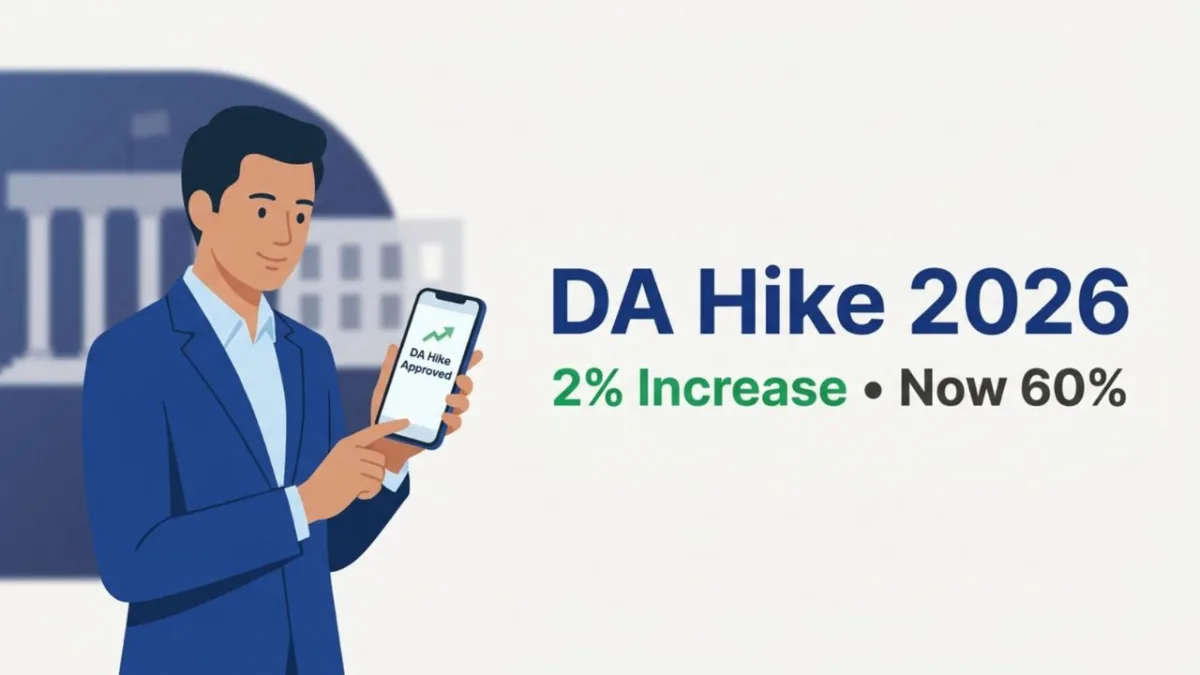
📰 Cabinet Approves 2% DA Hike for Central Government Employees: What It Means
In a move aimed at providing relief against rising inflation, the Union Cabinet led by Narendra Modi has approved a 2% increase in Dearness Allowance (DA) for central government employees and pensioners. With this latest revision, the DA has been increased from 58% to 60% of basic pay, benefiting nearly one crore employees and pensioners across the country.
The decision reflects the government’s continued effort to support its workforce amid fluctuating cost-of-living conditions and rising retail inflation.
📊 What is Dearness Allowance (DA)?
Dearness Allowance is a cost-of-living adjustment allowance paid to government employees and pensioners. It is revised periodically to offset the impact of inflation on salaries and pensions.
The calculation of DA is primarily based on the All India Consumer Price Index (AICPI), which tracks changes in retail prices. As inflation rises, DA is adjusted upward to ensure that employees’ purchasing power is not significantly eroded.
📈 Key Highlights of the DA Hike
- ✅ DA increased by 2% (from 58% to 60%)
- ✅ Applicable to central government employees and pensioners
- ✅ Effective from January 2026
- ✅ Expected to benefit over 1 crore individuals
- ✅ Financial burden on government likely to increase significantly
This increase, though modest compared to previous hikes, still provides incremental financial support to millions of households.
💰 Impact on Salaries and Pensions
Even a 2% rise in DA can make a noticeable difference in monthly income, especially for employees with higher basic pay. For example:
- An employee with a basic pay of ₹50,000 will see an increase of ₹1,000 per month
- Pensioners will also receive a proportional increase in Dearness Relief (DR)
While the absolute increase may vary depending on pay level, the cumulative effect across the workforce is substantial.
🧾 Why Only 2% This Time?
In recent years, DA hikes have often ranged between 3% and 4%. The relatively smaller 2% increase this time is largely attributed to moderate inflation trends reflected in the AICPI data.
Economic analysts suggest that:
- Inflation has shown signs of stabilization
- The index growth did not justify a larger increase
- The government is balancing fiscal discipline with employee welfare
Despite the smaller hike, it remains an important adjustment aligned with economic indicators.
🏛️ Government’s Perspective
The decision by the Union Cabinet underscores the government’s intent to maintain a balance between fiscal responsibility and employee welfare. With a large number of beneficiaries, even a small percentage increase translates into a significant financial commitment for the government.
Officials indicate that DA revisions will continue to be guided by inflation data and economic conditions, ensuring that adjustments remain sustainable.
👨👩👧👦 Who Benefits?
The DA hike directly benefits:
- Central government employees across ministries and departments
- Pensioners receiving Dearness Relief
- Families dependent on government salaries and pensions
Indirectly, the move can also boost consumer spending, as increased income leads to higher purchasing power, especially in urban and semi-urban areas.
📉 Economic and Market Impact
While the DA hike is primarily a welfare measure, it also has broader economic implications:
- Increased consumption: Higher disposable income may boost demand in sectors like retail, housing, and services
- Fiscal impact: The government’s expenditure will rise due to increased salary payouts
- Inflation effect: In the short term, the impact on inflation is expected to be limited
Overall, the move is seen as supportive for both employees and the economy.
🔄 What About Future DA Hikes?
DA is typically revised twice a year—in January and July. The next revision will depend on:
- Future inflation trends
- Movement in the AICPI index
- Broader economic conditions
Employees and pensioners will be closely watching upcoming data to anticipate the next adjustment.
🧠 Conclusion
The Cabinet’s approval of a 2% DA hike may appear modest at first glance, but it plays a crucial role in maintaining the financial stability of millions of government employees and pensioners. By raising the DA to 60%, the government continues its policy of aligning wages with inflation, ensuring that incomes remain resilient in changing economic conditions.
While the increase reflects relatively stable inflation levels, it still offers meaningful support and reinforces the importance of periodic salary adjustments in a dynamic economy.
As India navigates evolving economic challenges, such measures remain essential in sustaining both employee welfare and overall economic momentum.






Comments (0)