
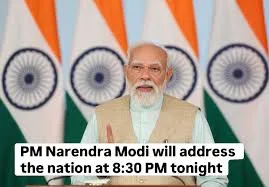
📰 PM Narendra Modi Addresses Nation on April 18, 2026: Full Speech Context, Key Highlights, and National Significance
On April 18, 2026, Prime Minister Narendra Modi addressed the nation in a nationally televised speech that immediately drew widespread attention across India. The announcement of the address had already created strong anticipation, as it came after a series of high-level government meetings focused on national security, economic stability, and global geopolitical developments.
Although the government did not officially disclose the subject of the address beforehand, the timing and context suggested that the speech would carry important national relevance. Citizens, analysts, and political observers closely followed the live broadcast, expecting clarity on key policy directions and current national concerns.
📢 A National Address That Drew Attention
Prime Minister Modi’s address began at 8:30 PM and was broadcast across major television networks, digital platforms, and official government channels. The format of the speech followed the tradition of previous national addresses, where the Prime Minister speaks directly to citizens on issues of national importance.
The anticipation around the speech was driven by recent developments in both domestic and international spheres. Government meetings in the days leading up to the address had reportedly focused on India’s preparedness in areas such as energy supply, economic resilience, and security monitoring. This led to speculation that the speech would provide direction or reassurance on one or more of these fronts.
🌍 Background: Global and Domestic Context
The timing of the address is significant when viewed in the broader context of current global conditions. Rising geopolitical tensions in different parts of the world, especially in West Asia, have raised concerns about their impact on global markets, fuel prices, and supply chains. For a growing economy like India, such developments often require careful planning and policy adjustments.
In the days before the address, government officials were reportedly reviewing strategies related to:
- Energy security and fuel availability
- Inflation control and supply chain stability
- National preparedness for global economic fluctuations
- Internal security monitoring and coordination
These discussions suggested that the Prime Minister’s address was not routine, but instead part of a larger strategic communication effort.
🏛️ Domestic Political Environment
Alongside global concerns, India’s domestic political environment also formed an important backdrop to the speech. The country has been witnessing active political debates, parliamentary discussions, and policy-related exchanges between ruling and opposition parties.
Recent legislative developments and public policy discussions have further intensified political engagement across the country. In such situations, a national address by the Prime Minister often serves as a way to clarify government positions, reassure citizens, and outline future priorities.
Observers noted that the speech came at a time when public attention was particularly focused on governance, economic performance, and long-term national planning.
📺 Nationwide Broadcast and Public Attention
As expected, the Prime Minister’s address received extensive coverage. Major news channels broadcast the speech live, while digital platforms provided simultaneous streaming for online audiences. Social media platforms also saw high levels of engagement as citizens discussed key points and shared reactions in real time.
The widespread viewership reflects the importance of such national addresses in India’s political communication landscape. When the Prime Minister directly addresses the nation, it often becomes a focal point for public discussion and media analysis for several days afterward.
🔍 Why This Address Was Important
Prime Minister Narendra Modi’s national addresses are typically associated with significant announcements, policy direction, or responses to major national developments. Even when details are not revealed in advance, such speeches tend to carry symbolic and practical importance.
This particular address stood out for several reasons:
- Timing: Delivered during a period of global uncertainty and domestic political activity.
- Expectation: High public anticipation due to prior government meetings.
- Context: Linked to economic and security-related discussions at the national level.
- Reach: Broadcast across all major media platforms, ensuring nationwide accessibility.
Such addresses often aim to provide clarity, reinforce government priorities, and communicate directly with citizens in moments of significance.
🧠 Public and Analytical Reactions
Following the speech, early reactions from analysts focused on interpreting its broader implications. While different sections of society viewed the address through various lenses—political, economic, and social—the overall attention highlighted the continued importance of direct communication from national leadership.
Experts often analyze such speeches for signals about future government policy, especially in areas like:
- Economic reforms
- Foreign policy direction
- National security strategy
- Welfare and development initiatives
The interpretation of this particular address is expected to evolve further as official statements and follow-up actions become clearer.
🏁 Conclusion
Prime Minister Narendra Modi’s address to the nation on April 18, 2026, was a significant moment in India’s ongoing political and economic narrative. While the full impact of the speech will become clearer in the coming days, its timing and context suggest that it was delivered during a period of heightened national and global attention.
With issues such as economic stability, global uncertainty, and domestic policy development shaping the backdrop, the address served as an important communication moment between the government and the people.
As India continues to navigate complex challenges and opportunities, such national addresses remain a key tool in shaping public understanding and outlining the country’s direction forward.


Comments (0)