
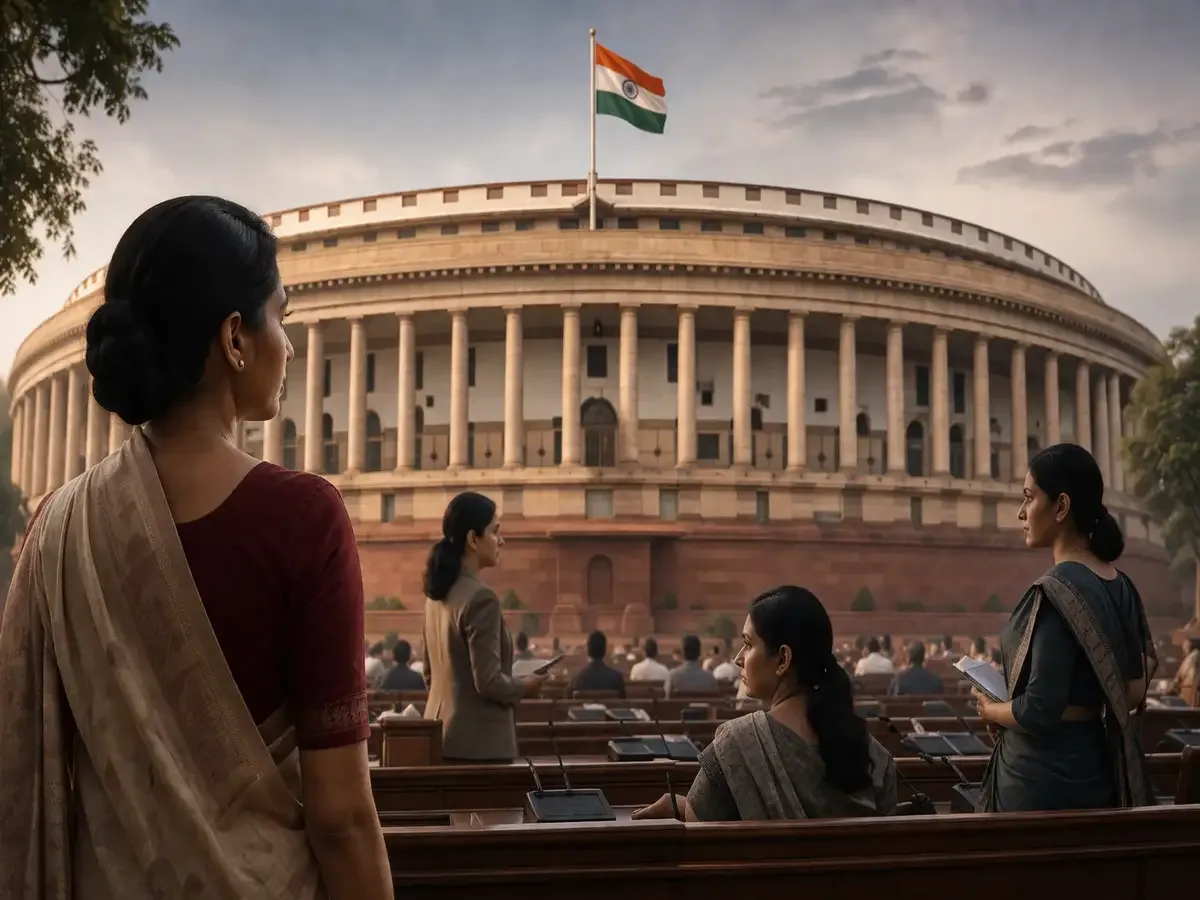
The Women’s Reservation Bill has triggered a political storm in the Lok Sabha, and the debate is getting sharper by the hour. What was expected to be a landmark moment for women’s empowerment has quickly turned into a heated face-off between the government and the opposition.
While the bill promises 33% reservation for women in Parliament and state assemblies, the real controversy lies in when it will actually be implemented. The government has made it clear that the rollout will happen only after delimitation and census exercises are completed—something that could push the impact to the 2029 elections. That delay hasn’t gone down well with several opposition leaders, who are calling it a “promise pushed into the future.”
Inside the Lok Sabha, the atmosphere has been anything but calm. Sharp remarks, political digs, and strong reactions have dominated the discussion. Some leaders have even questioned whether the bill is being used as a political tool rather than a genuine reform.
Despite the clashes, there is one thing almost everyone agrees on—India needs more women in politics. The numbers today remain low, and many believe this bill could change that in a big way. But the big question still remains: why wait?
Adding another twist to the story is the link between the bill and delimitation. With constituency boundaries set to change in the future, concerns are growing about how political power could shift across states. This has made the debate even more complex than it first appeared.
For now, the Women’s Reservation Bill has done what few issues manage to do—bring both unity and division at the same time. It has united leaders in principle, but divided them sharply on execution.
And as the debate continues, the country is watching closely, wondering whether this will become a true turning point—or just another delayed reform.




Comments (0)