
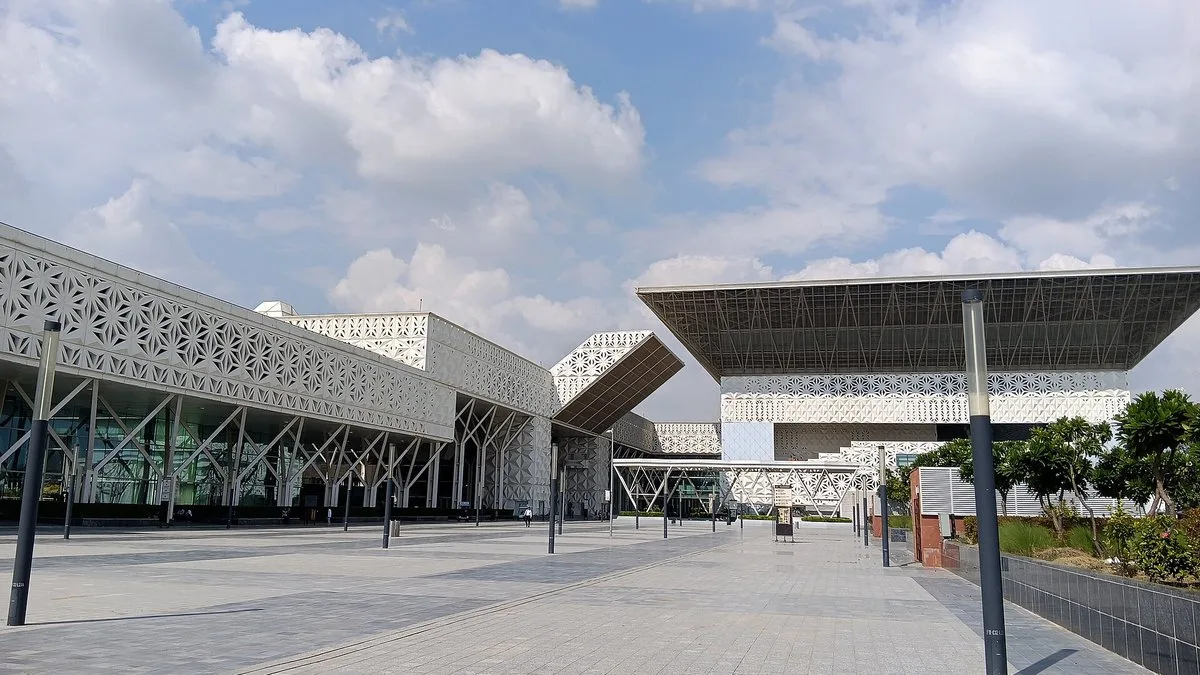
The 10th edition of the India Mobile Congress opened its doors on Wednesday, October 7, at Yashobhoomi in New Delhi's Dwarka, and for the next four days the country's biggest telecom and tech show will try to answer one question: what comes after 5G for a billion Indian phone users? Prime Minister Narendra Modi is scheduled to formally inaugurate IMC 2026 on Thursday, October 8, a day after he met the global telecom industry body GSMA and called for clear labelling of deepfakes and AI-generated content.
This year's theme is "Scale Without Boundaries", and the agenda leans heavily on 6G, AI-native networks, satellite internet and cybersecurity. If you have ever wondered why your network suddenly talks about "5G Plus" or why satellite broadband keeps making headlines, much of that conversation starts on the floor of this event.
What is India Mobile Congress?
India Mobile Congress is organised every year by the Department of Telecommunications (DoT) and the Cellular Operators Association of India (COAI). Over a decade it has grown from an industry gathering into one of Asia's largest showcases for telecom, devices and digital infrastructure. Operators, handset makers, chip companies, startups and policymakers all share one venue, which is why announcements on network rollouts, new devices and government policy often land during IMC week.
The 2026 edition runs from October 7 to October 10 at Yashobhoomi, the India International Convention and Expo Centre. Organisers say the theme reflects India's growing strength in digital innovation and next-generation connectivity.
IMC 2026 in numbers
The scale of this year's event is bigger than most previous editions. Here is a quick look at what organisers expect:
| Detail | IMC 2026 |
|---|---|
| Edition | 10th |
| Dates | October 7 to 10, 2026 |
| Venue | Yashobhoomi (IICC), Dwarka, New Delhi |
| Theme | Scale Without Boundaries |
| Organisers | Department of Telecommunications and COAI |
| Expected visitors | Over 1.5 lakh |
| Countries represented | 100+ |
| Partners and exhibitors | 500+ |
| Startups | 600+ |
| Speakers and thought leaders | 900+ across 120+ sessions |
| Technology use cases on show | 2,000+ |
The four pillars: Srishti, Samvardhan, Sashakt and Suraksha
Instead of one sprawling agenda, IMC 2026 is organised into four tracks, each with a Sanskrit name.
Srishti (building the future)
This is where the futuristic stuff lives: 6G research, intelligent radio networks, AI-native networks, edge computing, quantum communication and semiconductors. The third Bharat 6G Symposium is part of this year's programme, alongside an international 6G symposium.
Samvardhan (fuelling growth)
This track is about money and adoption. Telecom companies have spent heavily on 5G, and the big question now is how to earn from it. Expect sessions on 5G monetisation, satellite communications, network-as-a-service and industrial automation.
Sashakt (expanding opportunities)
The focus here is sustainability and inclusion, from green telecom and energy-efficient towers to circular-economy ideas for devices and network equipment.
Suraksha (strengthening trust)
With UPI fraud, spam calls and fake videos part of daily life, this track deals with cybersecurity, digital trust, responsible AI, data privacy and protection of critical infrastructure. A dedicated Cybersecurity Summit sits under this banner.
Apart from the nine sectors the show has traditionally covered, organisers have added four new areas this year: smart mobility, stadium experiences, industrial robotics and transport technology. There is also a Satcom Summit, a Quantum Summit, a Smart Mobility Summit and the Startup World Cup.
PM Modi's deepfake message before the show
The mood for IMC was set a day earlier. On October 6, Prime Minister Modi met board members of the GSMA, the global association that represents mobile operators, at Seva Teerth in Delhi. Communications Minister Jyotiraditya Scindia was also present.
According to reports of the meeting, the Prime Minister pushed for technology and digital services to be made affordable for the Global South, and described India's Digital Public Infrastructure as a springboard for developing countries. He also called for global standards for emerging technologies and for mechanisms that let users quickly identify where a deepfake or a piece of AI-generated content came from. Summing up the meeting, he spoke of as global standards for emerging tech and clear identification of AI-generated and deepfake content, adding that India's digital future must expand opportunity while strengthening trust.
GSMA board members, for their part, pointed to India's fast 4G and 5G rollout, the scale of its digital public infrastructure and growth in telecom manufacturing, and flagged room for cooperation in 5G, 6G, AI, cybersecurity and satellite connectivity.
What it means for you
Big tech expos can feel distant, but what is discussed at IMC tends to show up in your phone bill and on your screen within a year or two. A few things to watch this week:
- 5G pricing and plans: Talk of "5G monetisation" usually means operators want to earn more from 5G users. Watch for hints on tariff changes or premium 5G plans.
- Satellite internet: Satcom is a major focus. For people in remote villages, hill states and islands, satellite broadband could be the first reliable connection they get.
- Fraud and deepfakes: With the PM himself raising deepfakes, expect announcements or demos on spam call blocking, fraud detection and AI content labelling.
- Made-in-India gear: Indian startups and manufacturers use IMC to show home-grown network equipment and devices, which matters for jobs and for cheaper hardware.
- 6G timeline: India wants to be among the early leaders in 6G. Sessions this week will give a sense of how realistic that goal is.
What happens next
The formal inauguration by Prime Minister Modi on October 8 is usually the moment for headline announcements from both the government and the big operators. The exhibition and sessions continue until Friday, October 10. ViralDose will track the key launches, policy signals and anything that changes how ordinary users pay for or use mobile data.
For students, developers and startup founders in particular, IMC is also a hiring and networking ground. If you are in Delhi-NCR, Yashobhoomi is connected by the Delhi Metro's Airport Express extension, which makes the venue relatively easy to reach.

Comments (0)