
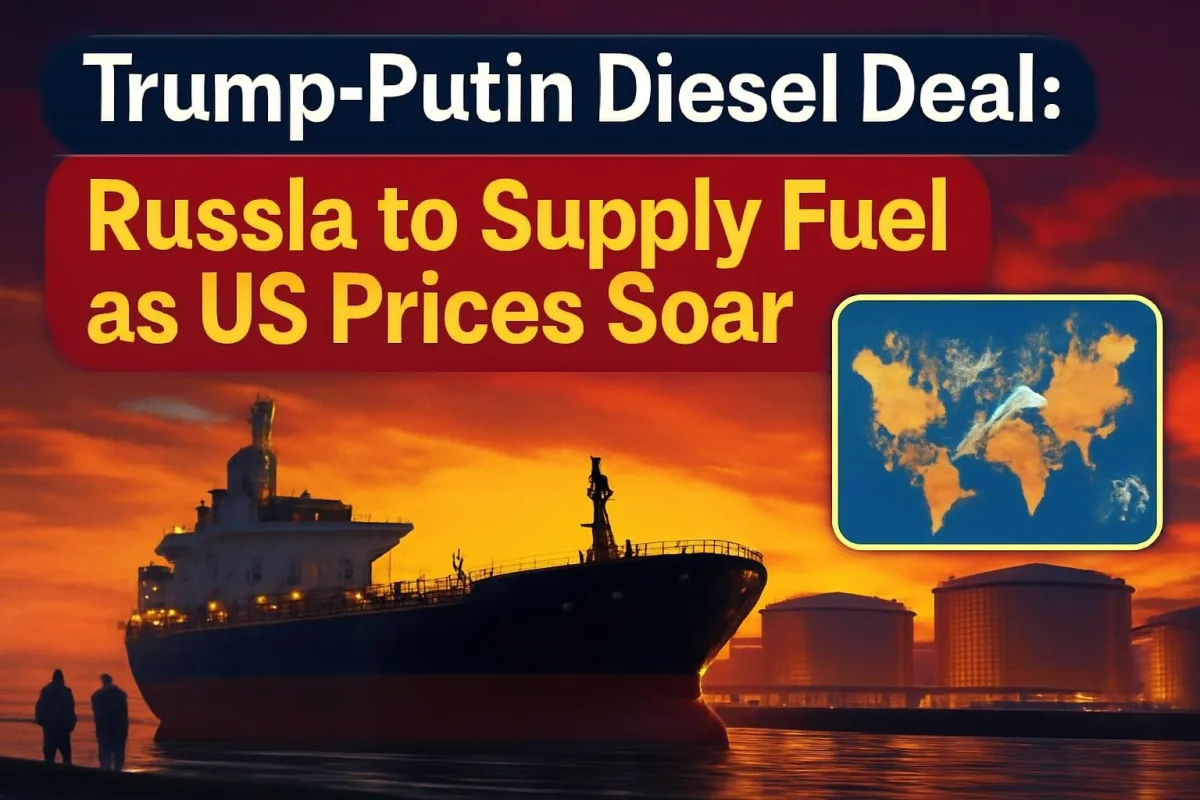
Barely a month after signing one of the toughest Russia sanctions laws in years, US President Donald Trump announced on Friday, October 9, that Russia will supply diesel to the United States and world markets. The announcement followed a roughly 90-minute phone call with Vladimir Putin and comes as American diesel prices hover near record highs ahead of the November 3 midterm elections. Ukraine's President Volodymyr Zelenskyy called it "a weak decision".
What Trump Announced in the Diesel Deal
In a post on social media, Trump described a "highly successful discussion" with Putin and laid out a delivery schedule. According to the post, Russia will immediately supply more than 300,000 tons of diesel, followed by 500,000 tons in November and 1 million tons "immediately thereafter", with a further 3 million tons promised "within a short period of time". Trump said lowering prices for Americans, especially farmers, ranchers and truckers, was his "Greatest Priority".
The White House did not say who would pay for the fuel, when exactly it would arrive, or whether November's shipments would land before Election Day. The Kremlin's readout said Russia "confirmed its readiness to supply oil and oil products" to the US and global markets, and that the two leaders also discussed Ukraine, Iran and bilateral ties.
Treasury Eases Sanctions on Russian Diesel
The US Treasury Department moved quickly, issuing a temporary general licence that allows Russian diesel to be supplied to the global market. Under the licence, US sanctions will not apply until April 2027 to Russian diesel loaded onto tankers as of Friday. Reports noted that it is the first such easing on diesel to run longer than the standard 30-day window since Russia's invasion of Ukraine began.
| Key Fact | Details |
|---|---|
| Announced | October 9, 2026, after a Trump-Putin phone call |
| Immediate supply | Over 300,000 tons of diesel |
| November supply | 500,000 tons |
| Next tranche | 1 million tons, plus 3 million tons later (as per Trump) |
| US diesel price | About $6.23 per gallon (AAA), record $6.52 on Sept 22 |
| Sanctions relief | Treasury licence valid until April 2027 for diesel loaded by Oct 9 |
| Ukraine's reaction | Zelenskyy: "a weak decision" |
| US midterm elections | November 3, 2026 |
Why Diesel Prices Are So High
Diesel is the fuel that moves trucks, tractors and freight trains, so its price feeds directly into the cost of food and goods. In the US, the national average stood at about $6.23 a gallon according to motoring body AAA, after touching a record $6.52 on September 22. Prices have climbed sharply since the US-Israel war on Iran began this year, which disrupted energy flows from the Gulf. A week before Trump's announcement, G7 countries agreed to release 100 million barrels of oil and diesel from emergency stocks.
There is also a question mark over how much Russia can actually ship. Moscow has banned diesel exports since July because of domestic shortages caused by Ukrainian drone strikes on its refineries, and the International Energy Agency estimates Russian diesel output has fallen by about 30%.
Clash With the New Sanctions Law
The diesel deal sits awkwardly with the sweeping sanctions law Trump signed in September. That law targets Russian officials, banks and the "shadow fleet" of tankers used to move Russian oil, bans new US investment in Russia, and directs tariffs of up to 100% on the top importers of Russian oil or gas, with certain exceptions. Critics in Washington were quick to point out the contradiction. Democratic Representative Don Beyer called the announcement "infuriating".
Zelenskyy was blunter. He said Putin was seeking "backroom deals" to buy time and warned that "gifts to Putin will not bring peace or any benefit to the civilized world".
What It Means for India
For Indian readers, the story matters on two fronts. First, any extra diesel reaching world markets could cool global fuel prices, which helps a country like India that imports most of its crude oil and is sensitive to every swing in international rates. Lower global prices ease pressure on inflation, the rupee and the government's fuel subsidy calculations.
Second, the episode shows how fluid Washington's stance on Russian energy has become. India has been one of the largest buyers of Russian crude since 2022 and has repeatedly faced US pressure over those purchases, including the tariff threat built into the new sanctions law. A US administration that is itself now buying Russian diesel may find it harder to press other countries on the same issue, though how this plays out in trade talks remains to be seen.
What Happens Next
Markets will watch for details on shipping schedules and pricing, and for whether Congress pushes back against the Treasury licence. Trump and Putin are both expected at the APEC summit in China in November, according to the Kremlin. Diesel futures dipped after the news, but any real relief at the pump will depend on whether Russian cargoes actually start moving.





Comments (0)