
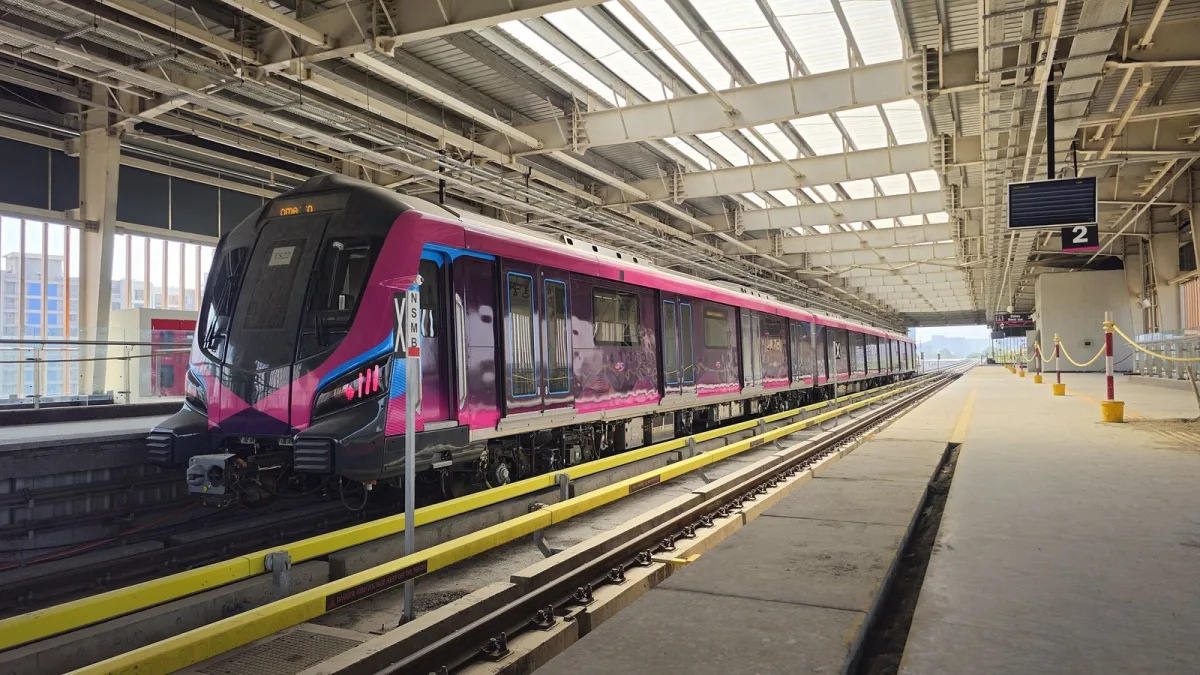
Pune's long-awaited Hinjawadi–Shivajinagar metro opens to passengers today, November 4, a day after Prime Minister Narendra Modi inaugurated the 23-km elevated Line 3 by video conference. For lakhs of IT employees who spend an hour or more crawling through Baner, Aundh and Wakad every morning, the new Pink Line promises a 40–45 minute ride from Maan to the District Court for a maximum fare of Rs 62.
The inauguration was part of a larger package of Pune Metro projects worth around Rs 21,800 crore. Alongside opening Line 3, the Prime Minister laid the foundation stone for Phase II of the city's metro network, which will add new corridors linking the older and newer parts of Pune.
Why Line 3 matters for Pune
Hinjawadi is one of India's biggest IT clusters, but getting there has been a daily ordeal. The road corridor from Shivajinagar through University Circle, Aundh, Baner and Balewadi is among the most congested in the city, and commuters have waited years for a rail option. Line 3 runs straight through this belt on an elevated viaduct, which is why its opening has been watched so closely by residents and companies alike.
The line has been built at an estimated cost of about Rs 8,313 crore under a public-private partnership on a design-build-finance-operate-transfer (DBFOT) model. According to the Prime Minister's Office, around 30% of the line's electricity needs are expected to come from solar power. The Pune Metropolitan Region Development Authority (PMRDA) has also said all train operators on the line will be women.
Pune Metro Line 3: key facts at a glance
| Route | Maan (Hinjawadi) to District Court (Shivajinagar) |
| Length | About 23 km, fully elevated |
| Inaugurated | November 3, 2026, by PM Narendra Modi via video conference |
| Passenger service from | November 4, 2026 |
| Operating hours | From 6 AM, with the last services running until about 11:40 PM |
| Frequency | Roughly every 5.5–6 minutes at peak hours, about every 10 minutes otherwise |
| Fare range | Rs 12 to Rs 62 |
| Stations open now | 17 of 23 |
| Full-line travel time | About 40–45 minutes |
| Estimated cost | About Rs 8,313 crore (PPP, DBFOT model) |
Fares: how much will you pay?
Fares on the Pink Line are distance-based. As per the fare structure shared by officials and reported locally, the slabs are:
- Up to 2 km – Rs 12
- 2 to 4 km – Rs 25
- 4 to 8 km – Rs 37
- 8 to 12 km – Rs 43
- 12 to 18 km – Rs 49
- Above 18 km, including the full Maan–District Court trip – Rs 62
A detailed fare chart is expected to be displayed at every station, so check the board before you travel.
Timings and frequency
Trains start at 6 AM from both ends of the line. PMRDA Commissioner Abhijeet Chaudhari has said the line will run daily between 6 AM and 11:40 PM. Reports differ slightly on the exact departure time of the last train from each terminal, so late-evening travellers should confirm the last train timing on the metro app or at the station.
During the morning and evening rush, trains are expected roughly every five and a half to six minutes. Outside peak hours, the gap widens to around 10 minutes. Officials have said frequency may be adjusted as ridership picks up.
Which stations are open – and which are not
Only 17 of the 23 stations are open at launch. The open stations include Maan, Hinjawadi Phase I and Phase II stops, Wakad Chowk, Mhalunge, Aundh, Savitribai Phule Pune University, Agriculture College and District Court.
Some important stops are still under work:
- Balewadi High Street and Balewadi Phata – expected by the end of November or early December
- Baner Gaon, Baner–Pashan Link Road, Bhosale Nagar and Shivajinagar – expected in phases by January 2027
Until then, commuters heading to Baner can get off at Aundh, those going to Balewadi High Street can use the R K Laxman Museum station, and Shivajinagar-bound passengers can use Agriculture College or District Court and arrange onward travel.
How to buy tickets
- Book a QR ticket on the Pune Metro mobile app.
- Or get a QR ticket through WhatsApp ticketing.
- Buy at the station ticket counter or a ticket vending machine.
- Use your NCMC (National Common Mobility Card) or existing Maha Metro card at the gates.
App and WhatsApp tickets must be scanned at the entry gates. One thing to note: an integrated single ticket for Line 3 and the existing Maha Metro lines is still being developed. For now, if you change lines at District Court, you will need a separate QR ticket, though NCMC cards work on both sides.
Interchange with Lines 1 and 2
The District Court station is the big connection point. A footover bridge of about 150 metres links Line 3 with Line 1 (PCMC–Swargate) and Line 2 (Vanaz–Ramwadi). This means a commuter from Pimpri-Chinchwad or Kothrud can now reach Hinjawadi entirely by metro, with one change.
Phase II: what else was announced
The foundation stone laid on November 3 covers Phase II of the Pune Metro, estimated at about Rs 13,500 crore. It includes:
- Line 2A: Vanaz to Chandani Chowk and Line 2B: Ramwadi to Vitthalwadi (about 12.75 km together)
- Line 4: Kharadi to Khadakwasla (about 25.52 km)
- Line 4A: Nal Stop to Manik Baug (about 6.12 km)
Swargate, Nal Stop and Kharadi Bypass are planned as interchange points with buses and the existing network.
What PM Modi said
Speaking at the event, the Prime Minister said India's metro network now covers about 1,200 km across 26 cities and carries over one crore people daily. "Today the Indian metro network is counted among the top three metro networks in the world," he said. He noted that Maharashtra had only about 10–11 km of metro in 2014 and now has around 175 km running, with more than 680 km under construction. He also expressed concern for farmers in Maharashtra hit by bad weather, saying, "Do not worry at all, we are all with the farmers."
What happens next
The first few weeks will show how quickly Hinjawadi's workforce shifts from cars and cabs to the metro. Parking is currently limited to a couple of sites near Balewadi and Baner, and feeder bus routes have not been fully announced, so last-mile connectivity will be the key test. With the remaining six stations due by January 2027, the full benefit of Line 3 will be felt early next year.




Comments (0)