
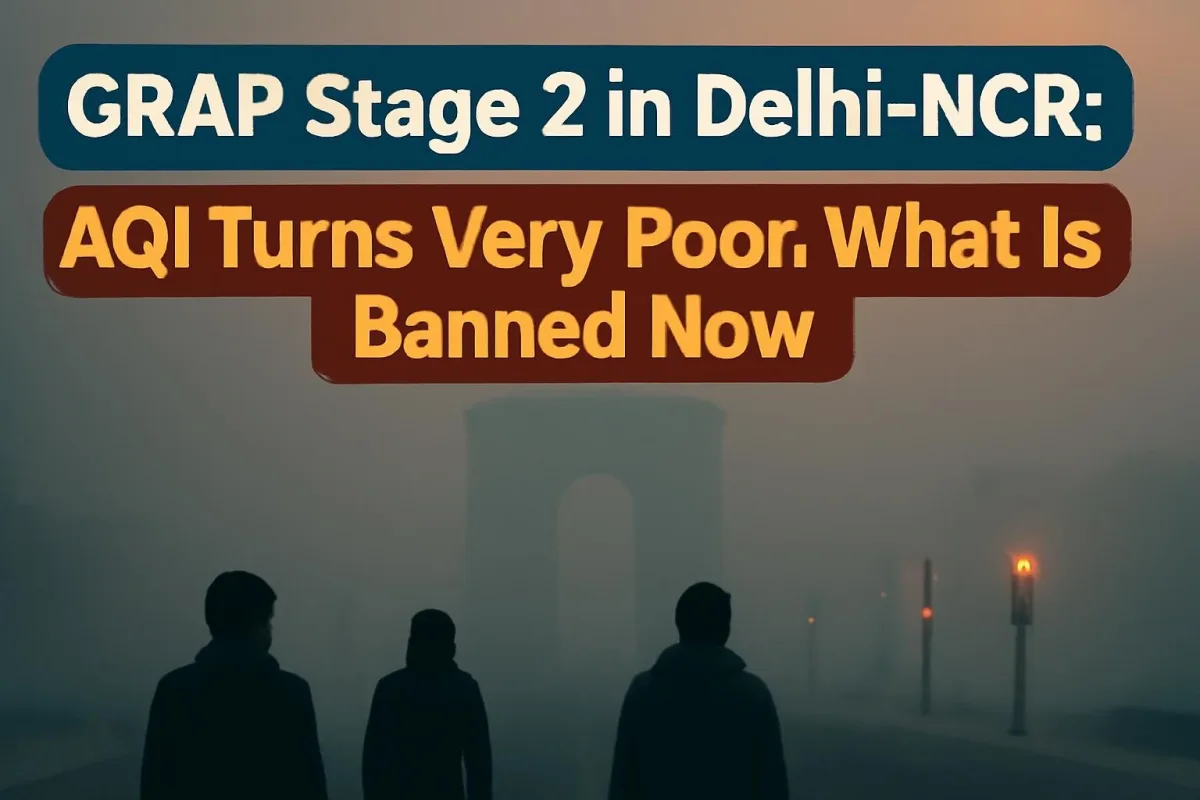
Delhi woke up to hazy skies and a familiar warning this week. The capital's air quality slipped into the "very poor" category for the first time this season on Monday, November 2, and the Commission for Air Quality Management (CAQM) immediately switched on Stage 2 of the Graded Response Action Plan (GRAP) across Delhi-NCR. The new curbs sit on top of the Stage 1 measures already in place, and they will touch everything from your local dhaba's tandoor to how much you pay for parking.
How Quickly the Air Turned Bad
The jump was sharp. According to CAQM, Delhi's average AQI stood at just 117 on October 31, a "moderate" reading that most residents barely noticed. By November 1 it had climbed to 261, in the "poor" band. On Monday, it crossed the 300 mark, with the CAQM order citing a reading of 324, which falls in the "very poor" range on the Central Pollution Control Board scale.
The commission flagged the "sharp rise" over three days as the reason for acting quickly. Its sub-committee also noted that forecasts from the India Meteorological Department (IMD) and the Indian Institute of Tropical Meteorology (IITM) expect the AQI to stay "very poor" in the coming days. Calm winds, falling temperatures and smoke from farm fires are the usual culprits at this time of year, trapping pollutants close to the ground.
What Is Banned or Restricted Under GRAP Stage 2
GRAP is a ladder of measures that kicks in as pollution worsens. Stage 2 is meant for "very poor" air, with AQI between 301 and 400. Here is what it means on the ground:
- No coal or firewood in hotels and eateries: Restaurants, hotels and open eateries cannot use coal or firewood, and that includes tandoors.
- Diesel generators regulated: DG sets cannot run freely. They can be used only under the conditions laid down for essential and emergency services.
- Costlier parking: Parking fees are to be raised to nudge people away from private cars and towards public transport. The order does not set a single new rate, so the hike will vary by agency.
- More road cleaning: Civic bodies must step up mechanical and vacuum sweeping and water sprinkling, using dust suppressants on roads, with extra attention to pollution hotspots.
- Stage 1 stays on: All earlier measures, such as dust control at construction sites and action against visibly polluting vehicles, continue alongside.
Vehicle Entry Rules for Delhi
Revised entry rules for vehicles came into effect in Delhi on November 1. In September, CAQM had also reworked the GRAP schedule, moving some steps, including the ban on BS-IV and older buses from NCR and neighbouring states, from Stage 2 to Stage 1. That means these restrictions now apply even earlier in the pollution season.
As per the Delhi Traffic Police advisory, BS-VI vehicles, CNG vehicles, electric vehicles and vehicles with official exemptions can enter the city, subject to the rules. Petrol and diesel vehicles below BS-VI, vehicles without a valid Pollution Under Control Certificate (PUCC), non-compliant interstate buses, and goods trucks not bound for Delhi face restrictions. Trucks passing through are expected to use the peripheral expressways.
| Key Fact | Details |
|---|---|
| Stage invoked | GRAP Stage 2 ("very poor" air) |
| Date | Monday, November 2, 2026 |
| Area | Entire Delhi-NCR |
| AQI trend | 117 (Oct 31) to 261 (Nov 1) to 324 (Nov 2) |
| Main curbs | Coal and firewood ban, DG set limits, higher parking fees, more road sweeping |
| Vehicles allowed | BS-VI, CNG, electric and exempted vehicles |
| Forecast | AQI expected to stay "very poor" in coming days |
What It Means for People in Delhi-NCR
For daily commuters, the biggest change will be felt at parking lots and city borders. If you drive into Delhi from Gurugram, Noida, Faridabad or Ghaziabad, check your vehicle's emission category and keep a valid PUC certificate handy. Traffic police have advised motorists to confirm eligibility before setting out to avoid being stopped or fined.
Restaurant owners who rely on tandoors will have to switch to electric or gas-based options for now, which could change the menu at some roadside eateries during the festive season. Housing societies and offices that run diesel generators during power cuts will also need to follow the conditions in the order.
The timing is tough. Diwali falls this weekend, and the Supreme Court has already allowed green crackers for a limited window in Delhi-NCR. With the air already "very poor", doctors routinely advise children, the elderly and people with breathing problems to limit time outdoors, avoid early morning walks when smog is thickest, and use masks when stepping out.
What Happens Next
CAQM's sub-committee will keep reviewing air quality and weather forecasts every day. If the AQI crosses 400 and enters the "severe" zone, Stage 3 can be invoked, which brings tighter curbs, including wider restrictions on construction activity and on more categories of vehicles. Stage 4, for "severe plus" air, is the strictest level.
The flip side is also possible. If winds pick up and the air clears, the commission can roll back Stage 2, as it has done in past seasons. For now, though, Delhi-NCR heads into the Diwali week with the second rung of the pollution ladder firmly in place.





Comments (0)