
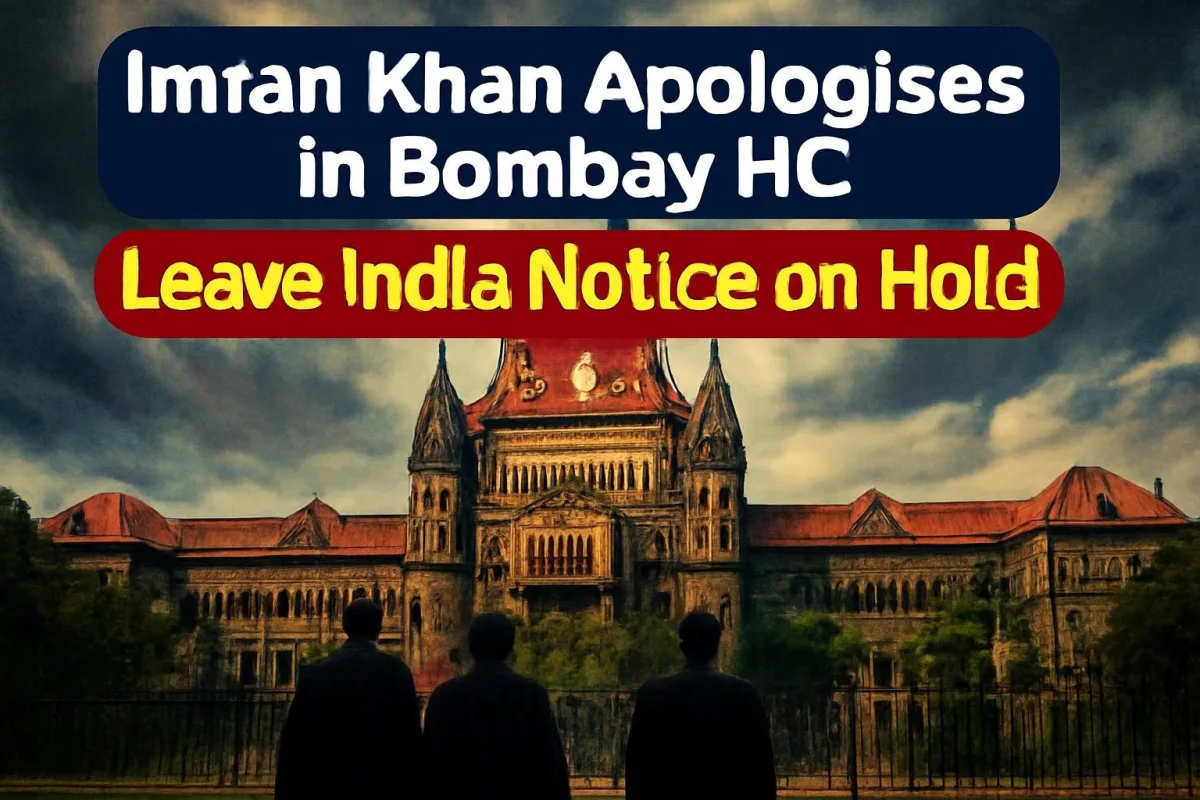
Actor Imran Khan, best known for films like Jaane Tu... Ya Jaane Na and Delhi Belly, has tendered an unconditional apology before the Bombay High Court for taking part in a protest in Mumbai last month. During the hearing on Monday, November 2, the court made it clear that Overseas Citizen of India (OCI) cardholders are not on par with Indian citizens and cannot claim a right to protest, but it also extended the interim relief that keeps his "Leave India" notice on hold for now.
How the Case Began
Imran Khan is a US citizen who holds an OCI card and has lived in India since early childhood. On October 10, he joined a protest near August Kranti Maidan in Mumbai demanding the resignation of Chief Election Commissioner Gyanesh Kumar over the Special Intensive Revision (SIR) of electoral rolls. Mumbai Police took him into custody at the protest.
A complaint was filed against him by BJP leader and former MP Kirit Somaiya. Soon after, the Foreigners Regional Registration Office (FRRO) in Mumbai issued a Leave India Notice directing him to leave the country by October 28, citing provisions of the Immigration and Foreigners Act, 2025, that bar foreign nationals from unauthorised political activity.
Khan moved the High Court against the notice. In his petition, he said it was issued without an inquiry or a show-cause notice, that he did not break any police barricade, and that removing someone who has no criminal record on the basis of unproven allegations would be an "extreme and disproportionate measure." Before Monday's hearing, the FRRO had assured the court that no coercive action would be taken until November 2.
What the High Court Said
The matter was heard by a division bench of Chief Justice Mahesh Chandra Tripathi and Justice Advait Sethna. The bench was firm on the limits of OCI status. It said OCI cardholders must stay within the law and do not have the right to vote, contest elections or protest the way citizens can. It told the actor, "You cannot behave in this country as if you were an Indian citizen."
The judges also asked why a public figure who cannot vote would attend a protest about the SIR, and called his claim that he was just about to leave a "disingenuous pretext." They questioned why he had never applied for Indian citizenship despite living here for most of his life.
At the same time, the bench asked whether such a notice could stand without first hearing a person who has lived in India for so long. The Chief Justice spoke of the idea of Vasudhaiva Kutumbakam and urged a generous approach towards someone who has lived and worked in the country for years.
The Apology and Undertaking
Senior Advocate Venkatesh Dhond, appearing for Khan, offered an unconditional apology and an undertaking that the actor would not join any such protest in future. He also denied that Khan had any links with the organisers. The court recorded the apology and asked for a formal written undertaking to be filed.
The Centre's Stand
Additional Solicitor General Anil Singh opposed the plea. He argued that OCI status carries limited rights, that the Centre has the sovereign power to ask a foreign national to leave, and that Khan had encouraged participation through social media. The Centre will file its reply.
| Key Fact | Details |
|---|---|
| Petitioner | Actor Imran Khan (US citizen, OCI cardholder) |
| Bench | Chief Justice Mahesh Chandra Tripathi, Justice Advait Sethna |
| Protest date | October 10, 2026, near August Kranti Maidan, Mumbai |
| Notice issued by | FRRO Mumbai (deadline to leave was October 28) |
| Court's view | OCI holders cannot claim a right to protest like citizens |
| Khan's response | Unconditional apology, undertaking not to join protests |
| Interim relief | Leave India notice remains suspended |
| Next hearing | December 7, 2026 |
What It Means for Imran Khan and OCI Cardholders
For now, Imran Khan does not have to leave India. The court has kept the notice suspended until the FRRO considers his reply and decides the matter in line with the law. He has been given four weeks to present his side and file the undertaking.
The case is also being watched closely by India's large OCI community, which includes many people who have grown up or work here. The court's remarks are a clear reminder that an OCI card gives the right to live, work and travel in India, but not the political rights of a citizen. Joining political protests can put that status at risk.
On the career front, his counsel told the court that Khan currently has no film projects in hand. The actor, who is Aamir Khan's nephew, has spent most of his life in Mumbai, a point his lawyers stressed while arguing against his removal.
What Happens Next
The next hearing is on December 7. Before that, Khan must file his written apology and undertaking, and the Centre is expected to file its response. The final outcome will depend on how the FRRO deals with his reply and what the court decides after hearing both sides.




Comments (0)