
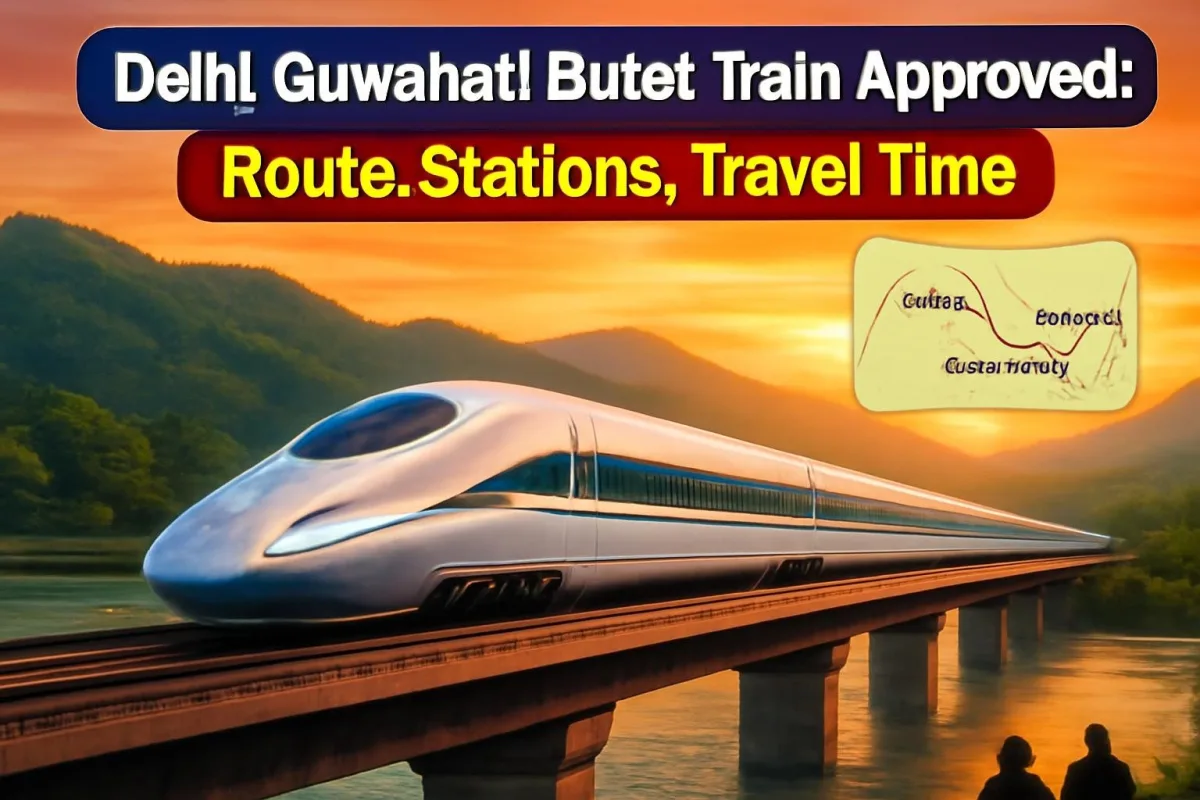
The Northeast is finally on India's bullet train map. Prime Minister Narendra Modi has approved the Northern Corridor of the proposed high-speed rail network, which will now run from Delhi all the way to Guwahati via Siliguri. Railway Minister Ashwini Vaishnaw disclosed the decision on Saturday, October 31, in Varanasi, and Assam Chief Minister Himanta Biswa Sarma confirmed the Guwahati extension on Sunday, November 1.
The roughly 1,500-km route will pass through Uttar Pradesh, Bihar and West Bengal before entering Assam, linking some of the most crowded rail routes in the country with high-speed tracks.
From Siliguri to Guwahati: How the Plan Grew
The corridor was originally planned to end at Siliguri, the gateway town in north Bengal that connects the rest of India to the Northeast through the narrow "Chicken's Neck". That left Guwahati, the region's biggest commercial and transport hub, out of the picture.
Sarma took up the issue directly. In a letter to Vaishnaw dated June 7, 2026, he formally asked for the line to be extended to Guwahati, calling the city's exclusion "a matter of concern". After a meeting in July, the Railway Minister agreed that the proposal had merit. The approval announced this weekend closes that loop.
Vaishnaw made the announcement while in Varanasi to flag off the new Varanasi-New Delhi Vande Bharat Sleeper Express. Sarma later posted on X, thanking the Prime Minister and the Railway Minister and describing the move as "a pivotal moment for East India".
Route and Proposed Stations
As per the details shared so far, the corridor will stop at ten major cities, many of them big pilgrimage, tourism and industrial centres:
- Delhi
- Agra
- Kanpur
- Lucknow
- Ayodhya
- Varanasi
- Prayagraj
- Patna
- Siliguri
- Guwahati
The final alignment, exact station locations and any intermediate halts will become clearer once detailed project reports and land surveys move ahead.
Key Facts at a Glance
| Corridor | Northern Corridor, high-speed rail network |
| Route | Delhi to Guwahati via Siliguri |
| Approximate length | About 1,500 km |
| States covered | Delhi, Uttar Pradesh, Bihar, West Bengal, Assam |
| Delhi-Siliguri travel time | About 6 hours (currently around 20 hours) |
| Delhi-Varanasi travel time | About 3 hours 33 minutes (projected) |
| Delhi-Guwahati travel time | Under 8 hours, as per Assam CM |
| Fares | To be "economical", below airfares (Railway Minister) |
| Announced by | Ashwini Vaishnaw (Oct 31); Guwahati extension confirmed by Himanta Biswa Sarma (Nov 1) |
How Much Time Will It Save?
This is where the corridor could change everyday life. A Delhi-Siliguri journey that takes around 20 hours by train today could shrink to about six hours, according to the Railway Ministry. Vaishnaw has projected roughly three and a half hours between Delhi and Varanasi. Sarma says Guwahati to Delhi could be covered in under eight hours, a trip that currently means either a long overnight train ride or a flight.
On fares, Vaishnaw has said tickets will be economical and well below airfares. No official fare chart or project cost for the extended corridor has been announced yet.
What It Means for Readers
For students, job-seekers and migrant workers who travel between Bihar, Bengal, the Northeast and Delhi, faster and cheaper-than-flight travel could be a genuine game-changer. Pilgrims heading to Ayodhya, Varanasi and Prayagraj would also benefit from a single high-speed line linking all three.
The Railway Minister has said the network is meant to support small industries, local artisans, young people and middle-income families along the route. Sarma has pitched the Guwahati link as a boost for Assam's industry, trade, tourism and investment, with the city acting as a springboard for the wider Northeast.
There is also a strategic angle. A high-capacity, high-speed line through the Siliguri corridor strengthens the region's connection with the rest of the country, something that has long been a priority for planners.
What Happens Next
Approval at the top is only the first step. Before trains run, the project will need detailed design, cost estimates, land acquisition across five states and years of construction. Officials have not yet shared a completion timeline. India's first bullet train project, between Mumbai and Ahmedabad, is still under construction, so the Northern Corridor is very much a long-term plan.
Still, for a region that has often felt left out of big infrastructure announcements, getting Guwahati on the map is a major symbolic and practical win. Expect more details on alignment, stations and costs in the coming months.





Comments (0)