
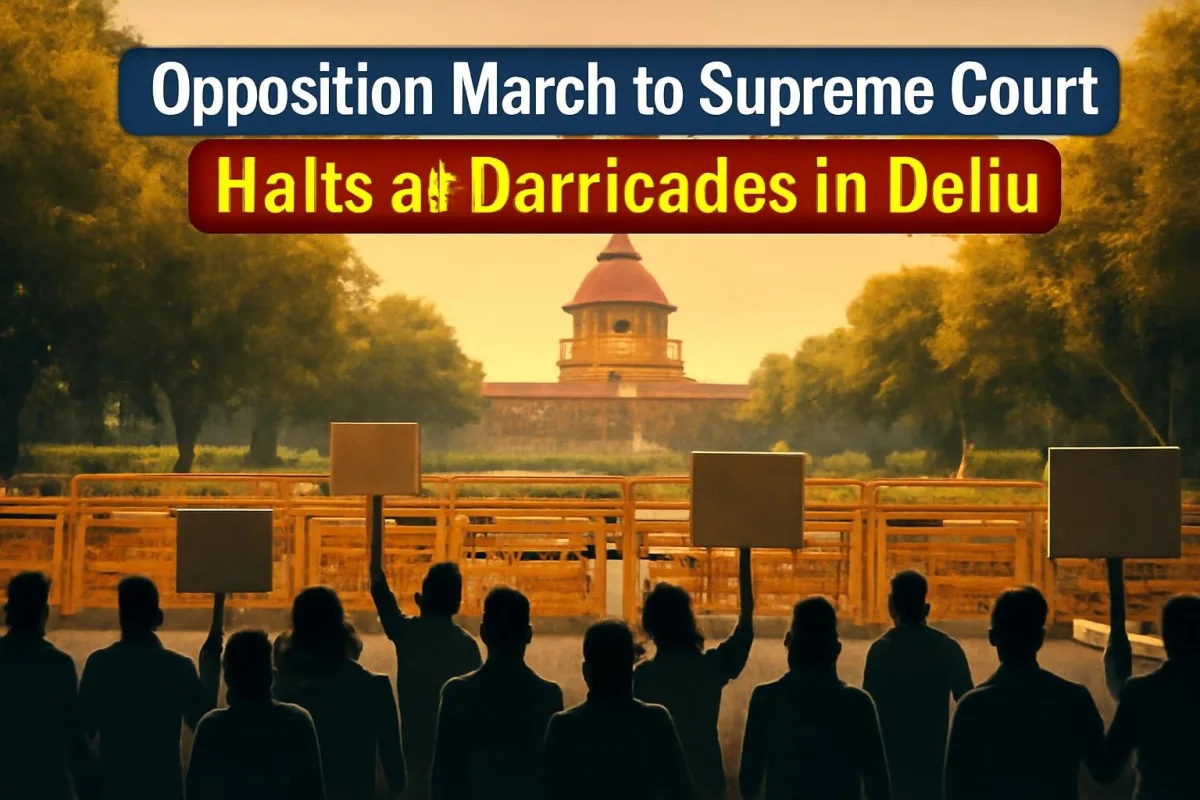
The opposition's much-hyped march to the Supreme Court ended at a wall of police barricades in central New Delhi on Monday, October 12. Leader of Opposition Rahul Gandhi, riding a slow-moving truck with Priyanka Gandhi Vadra, led dozens of MPs and thousands of party workers towards the court to press their demand for the removal of Chief Election Commissioner Gyanesh Kumar. After a tense standoff at the second line of barricades, Congress leaders announced that their petition had been submitted to the court, and the truck turned back.
What Happened on the Streets
The capital had been preparing for the march for days. More than 30,000 police personnel were deployed across New Delhi, according to Al Jazeera, and six Delhi Metro stations were shut on Monday as authorities warned of traffic disruption, the Associated Press reported. Security personnel in riot gear lined the route as Congress workers gathered.
Police had set up several layers of barricades. Some Congress supporters climbed over the first set, but at the second barrier police pushed back and the situation looked close to turning into a clash. At that point, Congress leaders told the crowd that the petition had been lodged with the court, though it was not handed over in person, and the procession turned around.
The march came after a weekend crackdown. Police detained thousands of demonstrators in Delhi over Saturday and Sunday, including leaders of the youth-led "Cockroach" movement that has been at the forefront of the protests against the Election Commission.
What Rahul Gandhi Said
Speaking to reporters, Rahul Gandhi described the agitation as a fight to defend the Constitution. "We will not back down," he said. At a press briefing, he accused the Modi government of putting the capital "in jail" and alleged that protesters had been beaten at a Saturday protest. On X, he wrote that Prime Minister Narendra Modi "cannot silence India's voice."
Prime Minister Modi has not publicly commented on the protests. BJP leaders have dismissed the agitation, with some calling the activists "anarchists." The BJP and the Election Commission deny any manipulation of voter rolls.
Background: Why the Opposition Is Targeting the CEC
At the heart of the row is the Election Commission's revision of voter lists, which began last year. More than 130 million names have been removed from electoral rolls across states during the exercise. The commission says the clean-up is necessary to weed out duplicate, dead and ineligible voters.
Opposition parties and civil society groups argue the process has been rushed and politically motivated, and that it risks disenfranchising genuine voters, especially from poorer and vulnerable communities. Their key demand is the exit of CEC Gyanesh Kumar. Earlier this month, INDIA bloc leaders met President Droupadi Murmu seeking his removal.
| Key Fact | Detail |
|---|---|
| Date of march | Monday, October 12, 2026 |
| Led by | Rahul Gandhi, with Priyanka Gandhi Vadra and opposition MPs |
| Destination | Supreme Court of India, New Delhi |
| Main demand | Removal of CEC Gyanesh Kumar |
| Police deployment | Over 30,000 personnel (Al Jazeera) |
| Metro impact | Six stations closed |
| Names removed in roll revision | Over 130 million |
| Outcome | Stopped at barricades; Congress says petition filed |
The CJI's Position
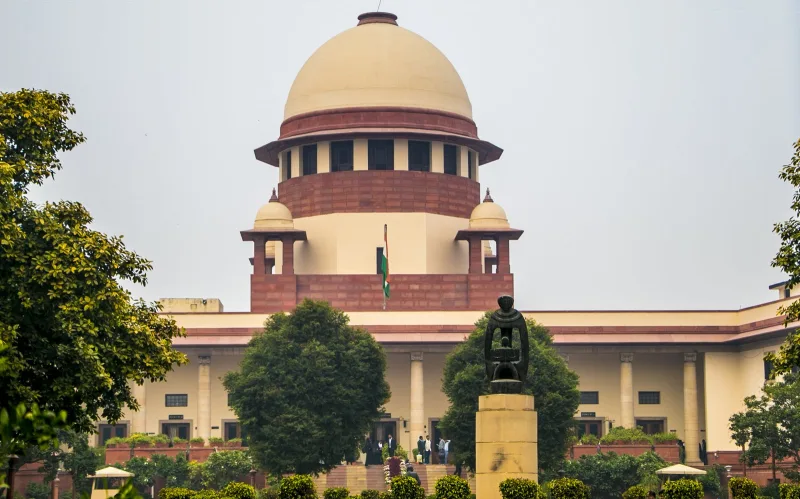
The march followed Chief Justice of India Surya Kant's decision not to meet Rahul Gandhi and Congress president Mallikarjun Kharge. In a letter to the two leaders, the CJI said matters that are pending before the court should be raised through judicial proceedings rather than meetings. That effectively pushed the opposition towards the formal petition route, which Congress now says it has taken.
On Sunday, the Supreme Court had also held a special hearing on the detention of protesters in Delhi, which is now part of the wider legal battle surrounding the agitation.
What It Means for Voters
For ordinary voters, the dispute is about one simple thing: whether their name is on the electoral roll. Anyone worried should check their status on the Election Commission's voter services portal or with their local Booth Level Officer, and file a claim if their name is missing. Claims and objections windows are announced state by state during revisions.
What Happens Next
Congress, its allies and the youth groups behind the protests have not announced their next step, but they say their demand for the CEC's resignation stands. All eyes now turn to whether the Supreme Court lists the opposition's petition for hearing, and how the government responds if protests continue in central Delhi.


Comments (0)