
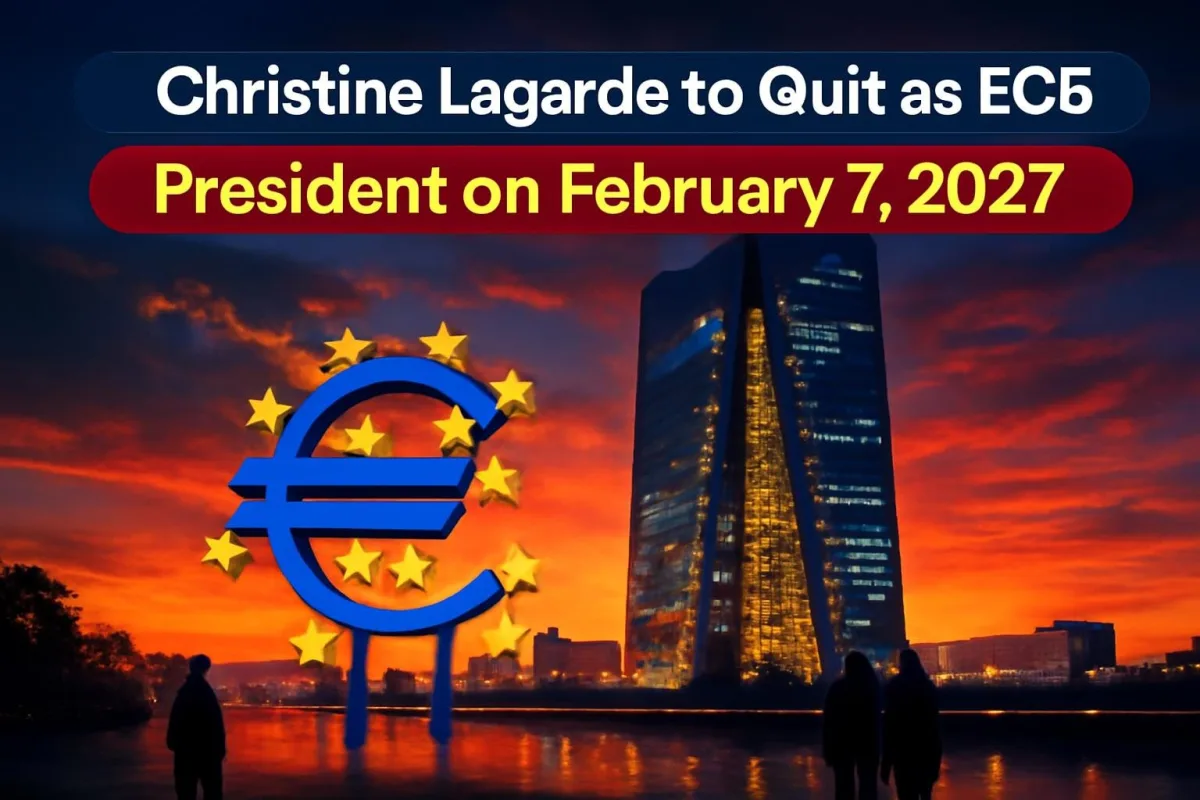
Christine Lagarde will step down as President of the European Central Bank on February 7, 2027, roughly nine months before her eight-year term was due to end. The ECB said Lagarde informed its Governing Council and European Council President Antonio Costa of her decision on Thursday, October 29, in Frankfurt, and that the council members thanked her with a long standing ovation. The move kicks off an early race to lead the central bank that sets interest rates for the 20-plus countries that use the euro.
Lagarde confirmed the news herself on X, saying it had been a source of great pride to serve the institution and thanking those who had supported her over the past seven years.
Why is Lagarde leaving early?
The ECB's official announcement did not give a reason. But the timing has been the subject of speculation in Europe since February, when reports first suggested that Lagarde wanted her successor chosen while French President Emmanuel Macron and German Chancellor Friedrich Merz were still in office and able to steer the decision.
France votes for a new president in April 2027. Macron cannot run again, and the far-right Rassemblement National has been polling strongly. A eurosceptic government in Paris could make the appointment of a new ECB chief far messier. By leaving in February, Lagarde gives European leaders a window to settle the question before that vote.
At her press conference, Lagarde said she wanted more freedom to speak her mind and suggested she could not stay neutral about developments in France and around the world. That remark immediately fuelled talk in European media about what role she may take on next, though she has not announced any plans.
Key facts at a glance
| Who | Christine Lagarde, President of the European Central Bank |
| Announced | October 29, 2026, to the ECB Governing Council |
| Last day | February 7, 2027 |
| In office since | November 2019 |
| Original term | Eight years, ending in late 2027 |
| ECB deposit rate | Held at 2.5% on October 29 |
| Who picks the successor | European Council, by qualified majority |
| Names in the frame | Pablo Hernandez de Cos, Klaas Knot, Joachim Nagel |
Who could replace her?
European media have identified a few front-runners. Pablo Hernandez de Cos, the former governor of the Bank of Spain who now heads the Bank for International Settlements, is Spain's first-ever bid for the top ECB job. Klaas Knot, who ran the Dutch central bank from 2011 to 2025, is widely seen as a consensus-builder and his main rival. Bundesbank President Joachim Nagel has also been mentioned, although no German has ever held the post.
Under EU rules, the European Council appoints the ECB President by qualified majority, acting on a recommendation from EU finance ministers and after consulting the European Parliament and the ECB's Governing Council. The ECB said the successor would be named through that treaty process.
A bigger reshuffle at the top
Lagarde's exit is not the only change coming. Executive Board member Isabel Schnabel leaves on January 3, 2027, to join the International Monetary Fund, and chief economist Philip Lane's term ends on May 31, 2027. The three posts are expected to be negotiated as a package, which means 2027 could see the most significant turnover in the ECB's leadership in years.
Lagarde's seven years at the ECB
Lagarde, a former French finance minister and IMF managing director, took charge of the ECB in November 2019. Her tenure was dominated by crisis management: the pandemic shock of 2020, the energy price surge after Russia's invasion of Ukraine, and the sharpest burst of eurozone inflation since the single currency was created. The ECB raised rates aggressively from 2022 and later began cutting as inflation eased.
On the same day she announced her departure, the ECB kept its deposit rate unchanged at 2.5%. Bond market turbulence in France has been pushing up borrowing costs across the eurozone, adding to the challenges her successor will inherit.
What it means for India
The ECB may seem far away, but its decisions reach Indian markets. The euro area is one of India's largest trading partners, and changes in eurozone interest rates affect the euro-rupee exchange rate, the cost of borrowing for Indian companies that raise money in Europe, and the flow of foreign investment into Indian stocks and bonds.
Indian exporters of textiles, engineering goods, chemicals and IT services to Europe watch the euro closely, since a weaker or stronger currency changes how competitive their prices are. A change in ECB leadership can shift expectations about the future path of rates, so investors will be paying attention to who emerges as Lagarde's successor and what views that person holds on inflation and growth.
What happens next
The next step is for EU finance ministers to agree on a recommended candidate before EU leaders take the final call. The deadline for applications for Schnabel's board seat has already been extended to November 27. Lagarde will continue to chair ECB policy meetings until she leaves in February, so markets will also be watching her final rate decisions closely for any parting signals.






Comments (0)