
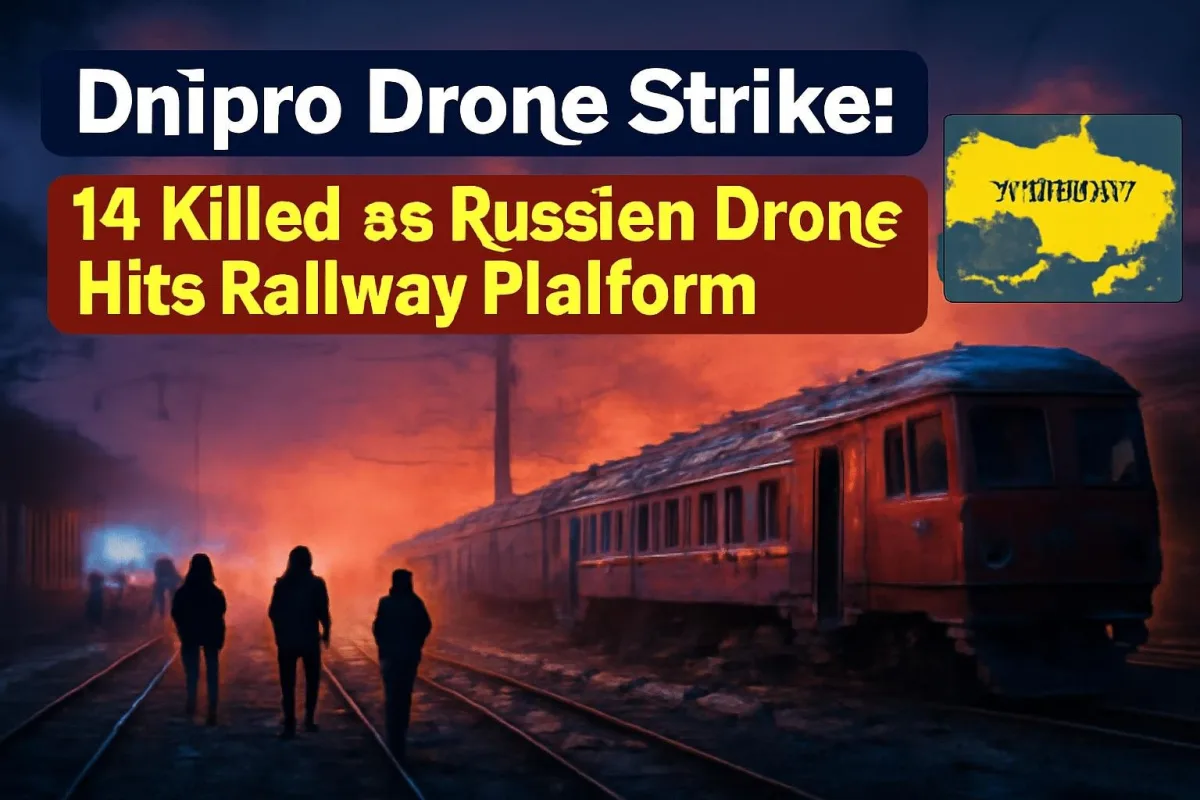
At least 14 people were killed and more than a dozen injured when a Russian drone slammed into a crowded railway platform in the Ukrainian city of Dnipro on Thursday (October 29). The drone hit the platform while a regular commuter train and a long-distance passenger train were standing at the station, President Volodymyr Zelenskyy said, calling the attack "horrific".
The strike is one of the deadliest single attacks on Ukraine's railway network in recent months, and it comes just weeks before Ukraine, Russia and the United States are expected to sit down for fresh talks aimed at ending the war.
What happened at the Dnipro station
Ukraine's air force said it intercepted three jet-powered drones heading for the city during the daytime attack, but a fourth got through and struck the station. Images released after the strike showed two burnt-out passenger trains with shattered windows next to the damaged platform.
Regional governor Oleksandr Ganzha first reported 13 deaths and later raised the toll to at least 14. According to reports, 14 people were wounded, six of them seriously, including an 11-year-old boy.
Oleksandr Pertsovsky, head of Ukrainian Railways, said a heightened threat alert had been issued before the attack, but a large number of people were still on the platform when the drone hit. The operator told AFP that in September alone, passengers had to be evacuated from more than 5,800 train services because of the threat of drone attacks - a sign of how routine such alerts have become for Ukrainian travellers.
| Place | Railway station platform, Dnipro, Dnipropetrovsk region, Ukraine |
| Date | Thursday, October 29, 2026 (daytime) |
| Killed | At least 14 |
| Injured | 14, including 6 in serious condition |
| Drones | 3 intercepted, 1 hit the station (Ukrainian Air Force) |
| Other deaths same day | At least 6 more, in Chernihiv and Kremenchuk |
Reactions from Kyiv and Europe
Zelenskyy said the attack showed that "fair and decisive actions by America and Europe are needed against Russian escalation". He also repeated that sanctions on Moscow must not be eased while the war continues, criticising a recent understanding between US President Donald Trump and Russian President Vladimir Putin that relaxed some sanctions, including allowing Russia to sell diesel on global markets.
French President Emmanuel Macron expressed outrage over the strike and said a limited, localised ceasefire like the one currently in place in the occupied city of Oleshky was not enough. He called Russia's rejection of proposals to end the war intolerable.
There was no direct Russian comment on the Dnipro strike in initial reports, though the Kremlin had said earlier in the week that it would not slow the pace of its military operations even as talks are being prepared.
A wider wave of attacks
Dnipro was not the only city hit. In Chernihiv, a strike killed two 15-year-old girls and wounded nearly two dozen people. In Kremenchuk, a drone hit a residential building, killing three and injuring several others, including a six-year-old child.
Ukraine has also stepped up its own drone campaign. Moscow Mayor Sergei Sobyanin said 613 Ukrainian drones flew towards the Moscow region overnight between Wednesday and Thursday, with 231 destroyed on the approach to the capital - an attack that coincided with a Russia-Africa summit in Moscow.
Russia, meanwhile, has intensified strikes on Ukraine's energy infrastructure, which Kyiv says are designed to leave the country without power through the winter. Since 2022, Russian drones have repeatedly hit Ukrainian trains, destroying hundreds of locomotives and killing several railway workers.
Why it matters for India
India has consistently called for dialogue and diplomacy to end the Russia-Ukraine war, and every escalation affects global energy and food markets that Indian consumers ultimately feel. The debate over easing sanctions on Russian diesel exports is also closely watched in India, which has been a large buyer of Russian crude in recent years. A breakthrough - or breakdown - in the November talks could move oil prices and shipping costs.
What happens next
Zelenskyy has said Ukraine, the US and Russia are set to hold trilateral talks in November to revive stalled peace negotiations, though no firm dates have been announced. Russia continues to demand more territory in eastern Ukraine and sweeping limits on Kyiv's military, while Ukraine says giving up land would amount to capitulation. The fragile local truce in Oleshky, now in its third day, is being watched as a small test of whether ceasefire arrangements can hold.



Comments (0)