
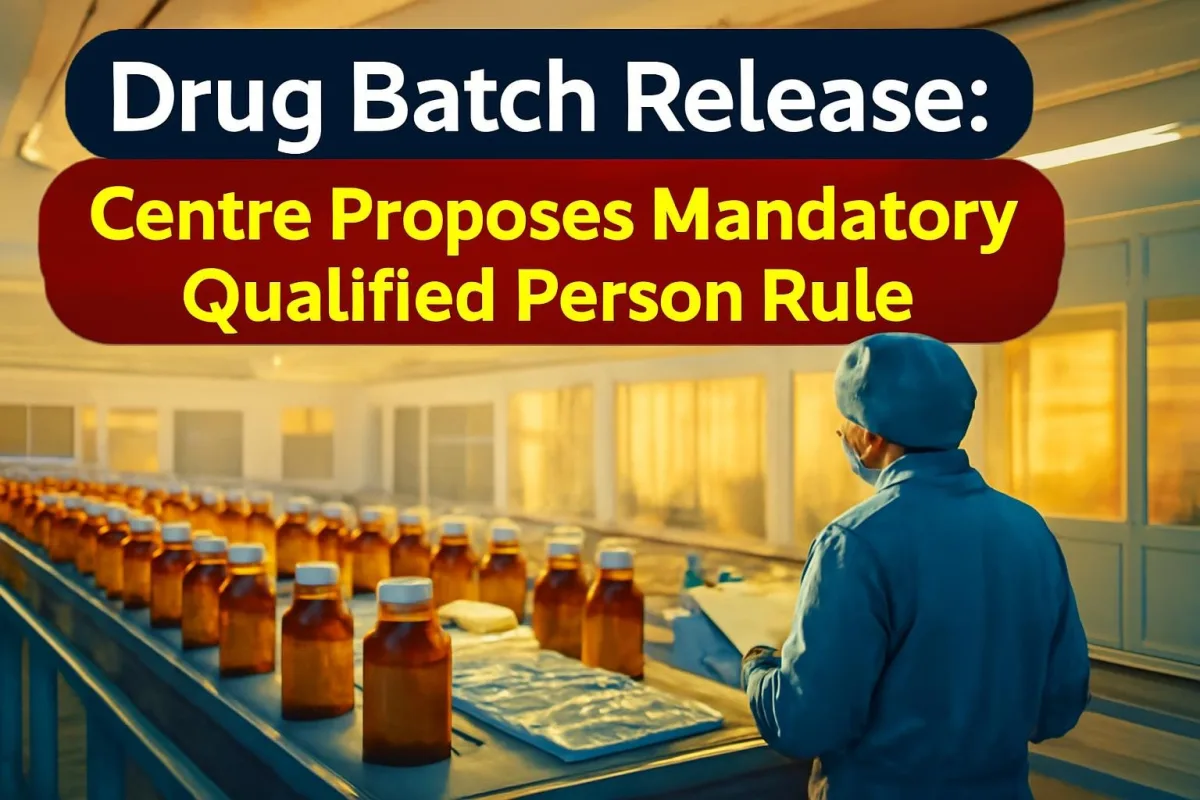
Every strip of tablets or bottle of syrup you buy comes from a "batch" that someone at the factory has to clear for sale. The Union Health Ministry now wants that someone to be clearly named. In a draft amendment to the Drugs Rules, 1945, released on Monday, November 3, the ministry proposed that drug manufacturers must formally authorise a suitably qualified and experienced person to approve the release of each batch, and keep prescribed records for every batch they make.
The idea is simple: if a bad batch reaches the market, there should be no confusion about who signed off on it.
What is batch release?
Batch release is the final checkpoint before medicines leave the plant. It involves an overall review of quality test results, manufacturing records and other documents to confirm that the batch meets the required standards. Only after this sign-off can the batch be distributed to wholesalers, pharmacies and hospitals.
What the ministry has proposed
According to the Health Ministry's statement, current manufacturing licence applications ask for details of the competent technical staff in charge of manufacturing and testing, but "there is no specific provision for mentioning the person authorised to undertake batch release." The draft aims to close that gap.
- Applicants for a drug manufacturing licence will have to designate a qualified and experienced person responsible for batch release.
- That person will release batches in line with Schedule M, the Good Manufacturing Practices (GMP) standards for Indian drug makers.
- Manufacturers must maintain batch-release records as prescribed.
- A standard format for a Batch Release Certificate will be introduced under the rules.
Business Standard reported that the change relates to Rule 68 of the Drugs Rules, which deals with manufacturing licences for drugs other than homoeopathic medicines.
Key details at a glance
| Proposed by | Union Ministry of Health and Family Welfare |
| Law being amended | Drugs Rules, 1945 |
| Main change | Mandatory authorised, qualified person for batch release |
| Standard linked | Schedule M (Good Manufacturing Practices) |
| New document | Prescribed Batch Release Certificate format |
| Who is affected | Drug manufacturers and new licence applicants |
| Public comments | Within 30 days of publication of the draft |
| Status | Draft, not yet final |
Why it matters for patients
India is often called the pharmacy of the world, supplying generic medicines to dozens of countries. But quality lapses at some manufacturers, including contaminated cough syrups in recent years, have raised tough questions at home and abroad. Regulators have since pushed companies, especially small and mid-sized units, to upgrade to the revised Schedule M standards.
Naming an accountable person for every batch is a practice already followed in many strict regulatory systems, such as the "Qualified Person" model in Europe. The ministry says its proposal is meant to establish clear responsibility, make batch-release decisions traceable, add another layer of oversight on product quality and support GMP compliance.
For patients, the benefit is indirect but real. If a medicine is later found to be substandard, investigators can quickly trace who approved it and on what basis, which makes recalls faster and shortcuts riskier.
What it means for drug makers
Large companies that export to regulated markets already have similar systems in place, so the change may mostly be about paperwork for them. Smaller manufacturers may need to hire or train staff with the right qualifications and set up proper record-keeping. Industry bodies are expected to send their views on how "suitably qualified and experienced" should be defined.
What happens next
The ministry has invited objections and suggestions from stakeholders within 30 days of the draft notification being published. Comments can be sent to the ministry by post or email. After reviewing the feedback, the government will issue a final notification, which will specify when the new rules come into force.
Until then, the current licensing rules continue to apply.
Quick FAQ
Will medicine prices go up? The draft says nothing about prices. The change is about documentation and accountability inside factories, so any cost impact is likely to be small for most companies.
Does this apply to homoeopathic medicines? The rule being amended covers manufacturing licences for drugs other than homoeopathic medicines.
Is this already law? No. It is a draft, and it can change after the consultation period ends.





Comments (0)