
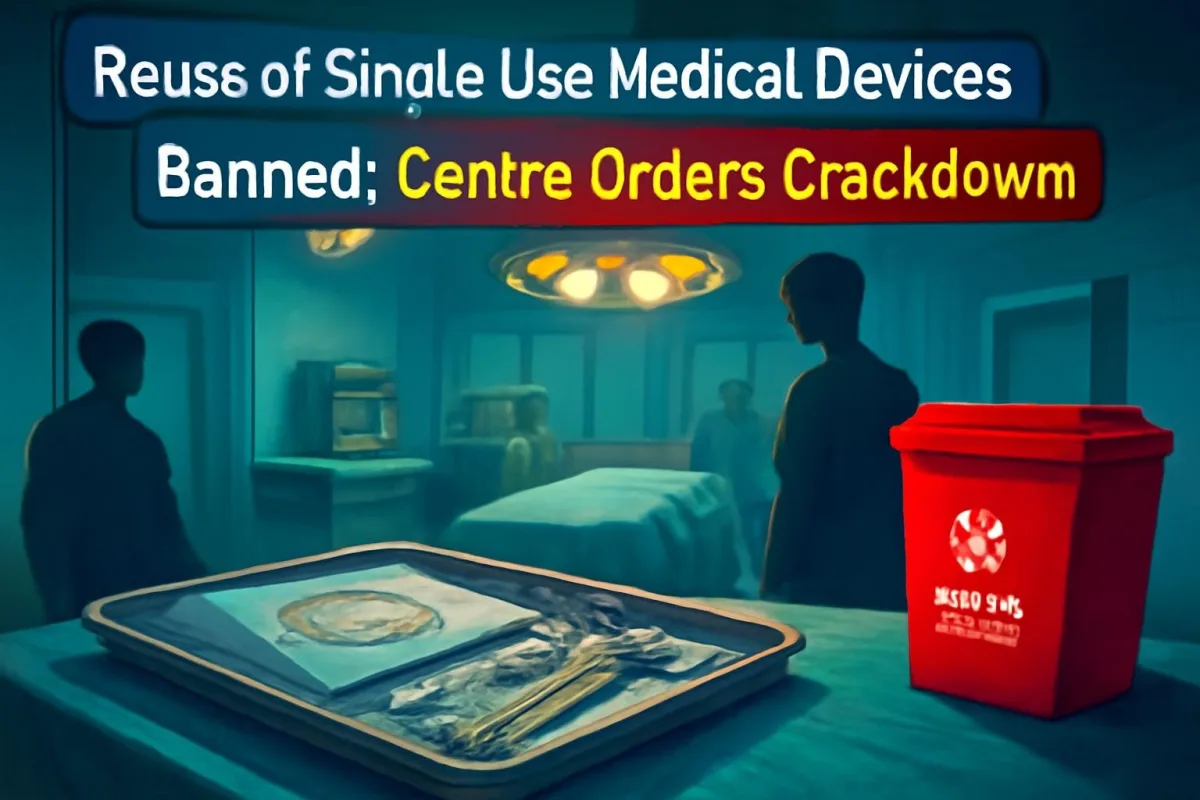
The next time you or a family member goes in for an angioplasty, dialysis or keyhole surgery, the catheter or kit used should be brand new. The Centre has directed all states and Union Territories to strictly enforce the ban on reusing single-use medical devices and disposable surgical items in every hospital – government or private. The order comes from the Directorate General of Health Services (DGHS) in a letter dated October 16, made public on October 24.
The directive follows concerns that devices meant for one patient are being cleaned and used again, putting patients at risk of infections and device failure.
What the DGHS Letter Says
The letter states that reuse of single-use medical devices and disposable surgical items is "strictly prohibited in all healthcare organisations" under the jurisdiction of the Government of India, states and Union Territories. It has been sent to chief secretaries, state health departments, directors of health services, the Drug Controller General of India (DCGI) and state and UT drug controllers.
These authorities have been asked to inspect and monitor healthcare facilities, make sure the rules are followed, and take appropriate action wherever violations are found. Hospitals must use devices strictly in line with the instructions of the original equipment manufacturer (OEM).
Which Devices Are Being Reused
According to the letter, single-use items are reportedly being reprocessed in several high-cost specialities such as cardiology, nephrology, oncology, cardiothoracic and vascular surgery, and neurosurgery. The devices flagged include:
- Cardiac catheters, balloon catheters and ablation catheters
- Guidewires and introducer sheaths
- Dialysers and blood tubing used in dialysis
- Surgical staplers and laparoscopic trocars
- Orthopaedic drill bits
- Syringes and needles, according to the Association of Indian Medical Device Industry (AiMeD)
Key Facts at a Glance
| Point | Detail |
|---|---|
| Issued by | Directorate General of Health Services (DGHS) |
| Letter dated | October 16, 2026 |
| Applies to | All public and private healthcare facilities |
| Enforcement | State health departments, DCGI, state and UT drug controllers |
| Laws cited | Drugs and Cosmetics Act 1940, Medical Devices Rules 2017, Clinical Establishments Act 2010 |
| Earlier order | CGHS office memorandum of December 2016 on empanelled hospitals |
Why Reuse Is Dangerous
Single-use devices are designed to be thrown away after one procedure. Even after sterilisation, they can retain traces of blood or tissue in narrow channels, and repeated cleaning can weaken their material. The DGHS letter warns that this can lead to cross-infections, including hepatitis B, hepatitis C, HIV and bacterial infections, as well as device malfunction and complications during procedures.
Patients May Also Be Overcharged
There is a money angle too. The letter notes allegations that patients are being billed the full price of a new device even when a reused one is used – or that the cost is being claimed from government schemes. Apart from patient safety, such practices may breach the Drugs and Cosmetics Act, the Medical Devices Rules, the Clinical Establishments Act and rules on infection control and biomedical waste management.
Not a New Rule, But a Firmer Push
The ban itself is not new. A Central Government Health Scheme memorandum in December 2016 had already addressed the reuse of such devices in CGHS-empanelled hospitals. What has changed is the scope and the tone: the latest letter covers every healthcare organisation in the country and explicitly asks drug regulators and state health departments to inspect and act, rather than leaving compliance to hospitals themselves.
What It Means for Patients
- Ask before a procedure: You can ask the hospital whether catheters, dialysers or staplers used are new and sealed.
- Check your bill: Itemised bills should list each device. Ask for batch details if something looks off.
- Dialysis patients: Those on long-term dialysis should ask their centre about its dialyser policy in light of the new directive.
- Raise a complaint: Concerns can be taken to the state health department or the state drug controller, which are now tasked with enforcement.
What Happens Next
The real test will be enforcement. States are expected to step up inspections of hospitals, especially in the specialities named in the letter. Hospitals that have relied on reprocessing to cut costs may now have to review their procurement and pricing, while patients can expect clearer answers about what is used during their treatment.






Comments (0)