
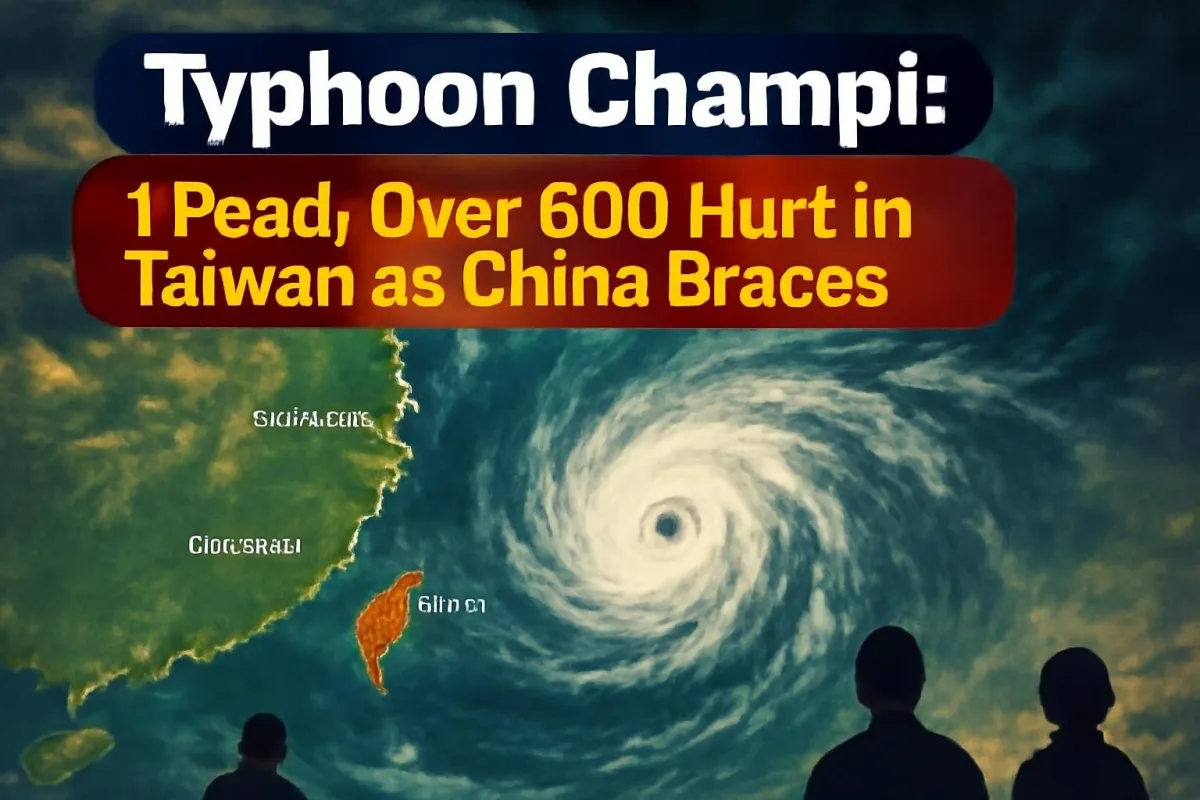
Typhoon Champi, one of the strongest storms of 2026, has left one person dead and more than 600 injured in Taiwan after tearing across the island on Thursday and Friday. Having weakened to a tropical storm, it battered Japan's southernmost islands and was moving north towards China's east coast on Saturday, October 24, where authorities in Shanghai evacuated tens of thousands of residents and cancelled hundreds of flights.
Taiwan counts the damage
Champi brought powerful winds, huge waves and torrential rain to Taiwan. According to AFP, one person was killed and more than 600 were injured from Thursday, when warnings first went up. More than 5,000 people were moved out of danger zones ahead of the storm, including residents of landslide-prone areas in New Taipei and mountain townships in Yilan.
The rain was relentless in the northeast. At least 65 cm fell in Yilan county from Thursday onwards. Along the east coast, waves reached 8 metres at Changbin Harbor in Taitung, sending seawater onto roads and overturning bamboo rafts. At Fugang Fishing Port, also in Taitung, a large crane toppled into the sea after being hit by waves up to 6 metres high. A stretch of Provincial Highway 9 was closed after part of the roadbed was washed away.
Power cuts and cancelled flights
More than 340,000 households were affected by power outages at the peak of the storm, though supply had been restored to over 90% of them by Saturday. Air and sea travel came to a near standstill, with Taiwanese media reporting that close to 1,000 flights were cancelled and dozens of ferry services suspended. Taiwan's weather agency lifted its land warning on Saturday after Champi weakened.
Japan's southern islands hit
As the storm moved on, it swept past Japan's southernmost islands, knocking out power to thousands of households. Japan's government said two people were injured in Okinawa prefecture. Hundreds of flights were cancelled across the region, and tourists on Ishigaki island were left waiting at airports for services to resume.
China braces for landfall
China is now in the storm's path. State broadcaster CCTV warned of strong winds and heavy to torrential rain in Jiangsu, Shanghai and Zhejiang. Tens of thousands of people in Shanghai were evacuated from their homes, some train services were suspended and hundreds of flights in the region were cancelled. When it last weakened, Champi was carrying winds of around 102 km/h as it moved north.
Typhoon Champi: key facts
| Storm | Typhoon Champi (now a tropical storm) |
| Hit Taiwan | Thursday and Friday, October 22-23, 2026 |
| Deaths in Taiwan | 1 |
| Injured in Taiwan | More than 600 |
| Evacuated in Taiwan | More than 5,000 |
| Households hit by power cuts | More than 340,000 (over 90% restored) |
| Heaviest rain | At least 65 cm in Yilan county |
| Japan | 2 injured in Okinawa, hundreds of flights cancelled |
| China | Tens of thousands evacuated in Shanghai; alerts for Jiangsu, Zhejiang |
| Wind speed after weakening | About 102 km/h |
What it means for Indians in the region
Taiwan, Shanghai and the wider Yangtze River Delta are home to a large number of Indian students, professionals and business travellers, especially in the technology and manufacturing sectors. Anyone with travel plans to or through Taipei, Shanghai, Hangzhou or Okinawa over the next few days should check with their airline before heading to the airport, since cancellations and schedule changes are likely to continue while the storm passes.
Indians in affected areas should follow local government instructions, keep phones charged, and stay in touch with family. The disruption also matters for trade. The region's ports and factories are key links in global supply chains for electronics and components that India imports, and even short shutdowns can delay shipments.
Closer to home, the storm comes as India keeps watch on its own weather system. The India Meteorological Department is tracking a low-pressure system in the Bay of Bengal that is expected to affect Andhra Pradesh and Odisha in the coming days.
What happens next
Champi is expected to keep weakening as it moves over cooler waters and closer to land, but heavy rain remains the main threat for eastern China over the weekend. Flash flooding and waterlogging are possible in low-lying parts of Shanghai, Zhejiang and Jiangsu. In Taiwan, the focus now shifts to clearing debris, repairing roads on the east coast and restoring power to the remaining homes.






Comments (0)