
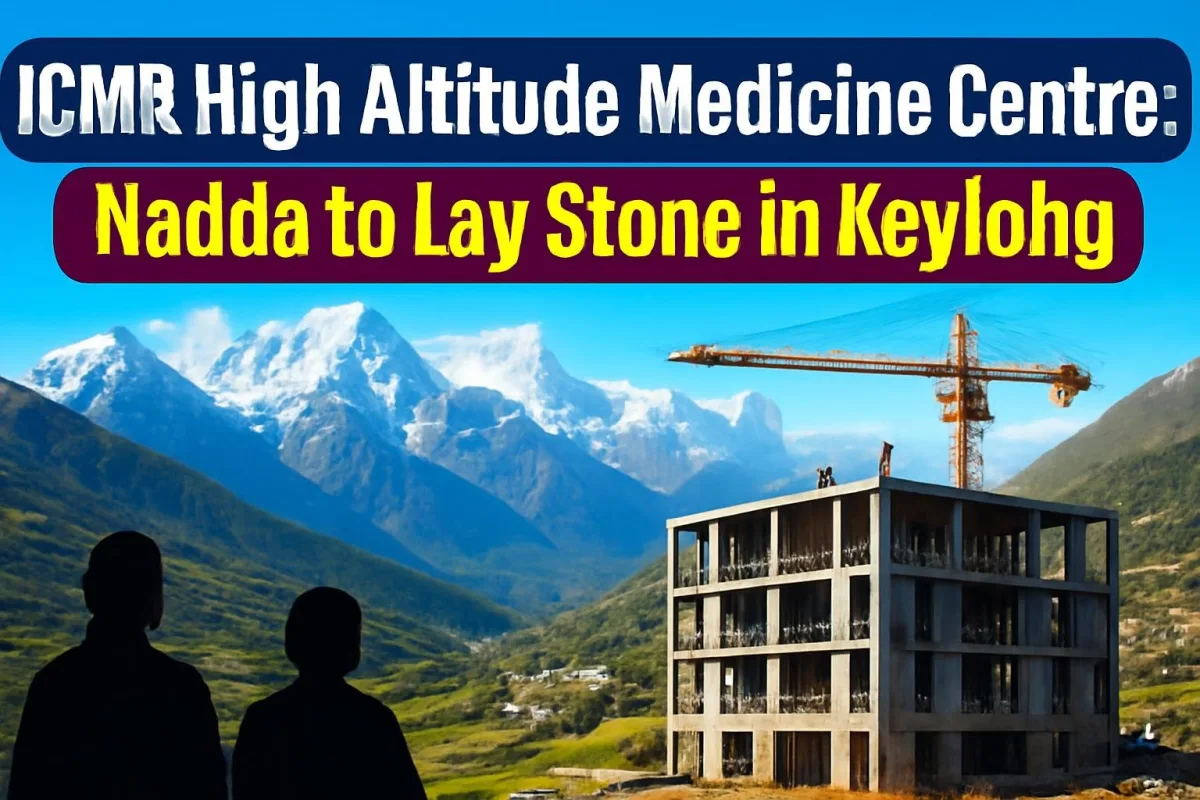
India's high Himalayas are getting their own medical research hub. Union Health Minister Jagat Prakash Nadda will lay the foundation stone of the ICMR Centre for High Altitude Medicine and Public Health Research (ICMR-CHAMP) at Keylong in Lahaul and Spiti district of Himachal Pradesh on Monday, 12 October 2026. The Health Ministry says it will be the Indian Council of Medical Research's first dedicated centre for high-altitude medicine.
Why a high-altitude medicine centre matters
Life in the mountains is tough on the body in ways most people in the plains never think about. Thin air, bitter cold, long winters, landslides and roads that shut for months all shape how people fall ill and how quickly they can reach a doctor. Soldiers posted at forward areas, road workers, pilgrims and tourists face their own risks, from acute mountain sickness to cold injuries.
According to the Health Ministry, the Himalayan ecosystem presents distinct public health challenges because of altitude, extreme climate, difficult terrain, isolation and growing climate variability. These factors affect disease patterns, access to care, occupational health and emergency response. ICMR-CHAMP is meant to build hard scientific evidence on these problems and design healthcare solutions that actually work in such places – and can be scaled up.
What the Keylong centre will research
The centre's mandate is wide. Its research areas will include:
- High-altitude physiology and acclimatisation
- Mountain medicine and disaster medicine
- Climate-sensitive and emerging diseases
- Infectious and non-communicable diseases
- Maternal and child health, and nutrition
- Mental health
- Environmental and occupational health
It will also test digital tools for remote areas – telemedicine, digital health platforms, drone-based delivery of medical supplies and real-time disease surveillance. In a district where villages can be cut off by snow for weeks, a drone that drops off medicines or a video consultation with a specialist can make a real difference.
ICMR-CHAMP: key facts
| Detail | Information |
|---|---|
| Full name | ICMR Centre for High Altitude Medicine and Public Health Research (ICMR-CHAMP) |
| Location | Keylong, Lahaul and Spiti district, Himachal Pradesh |
| Foundation stone | 12 October 2026, by Union Health Minister JP Nadda |
| Set up by | ICMR, Department of Health Research, Ministry of Health and Family Welfare |
| Key partners | Armed Forces Medical Services, national research institutions, Himachal Pradesh government |
| Focus | High-altitude medicine, tribal health, climate-resilient healthcare, disaster preparedness |
Why Keylong was chosen
Keylong is the administrative headquarters of Lahaul and Spiti, one of India's most remote and sparsely populated districts, which borders Ladakh and lies in a strategically sensitive region. Placing the centre here gives scientists direct, year-round access to high-altitude and tribal communities. The ministry says this will allow long-term studies on how environment and changing climate affect health – the kind of research that cannot be done from a laboratory in Delhi.
The centre will partner with the Armed Forces Medical Services (AFMS), whose doctors have decades of experience treating troops in high mountains, along with national research institutes and the Himachal Pradesh government. The aim is translational research – findings that quickly turn into policy and treatment on the ground.
Who will attend the ceremony
The event will include a traditional Bhumi Pujan, groundbreaking and unveiling of the foundation stone, followed by planting of native Himalayan saplings under the Green ICMR Campus Initiative. Nadda will also open a science exhibition, launch the centre's video and website, and release a commemorative postal special cover.
Minister of State for Defence Sanjay Seth, Leader of Opposition in the Himachal Assembly and former Chief Minister Jai Ram Thakur, Mandi MP Kangana Ranaut and Lahaul-Spiti MLA Anuradha Rana are expected to attend. AFMS Director General Air Marshal Sandeep Thareja and ICMR Director General Dr Rajiv Bahl will also be present, the ministry said.
What it means for people in India
Millions of Indians live in hill and mountain regions from Ladakh to Arunachal Pradesh, and lakhs more visit every year as tourists and pilgrims. Yet much of the medical advice for high altitudes is borrowed from studies done abroad. A home-grown research base could lead to better guidelines for mountain sickness, safer pregnancies in remote villages, improved nutrition for tribal communities and faster disaster response when floods or cloudbursts strike.
For travellers heading to Spiti, Leh or the Char Dham, the long-term benefit could be practical, India-specific health advice on acclimatisation and emergency care.
What happens next
After Monday's ceremony, the building layout will be presented and construction is expected to begin. The ministry has not shared a completion timeline or project cost yet. Once operational, ICMR-CHAMP is expected to feed into national programmes on tribal health, digital health and climate-resilient health systems, and to strengthen India's role in global high-altitude medicine research.






Comments (0)