
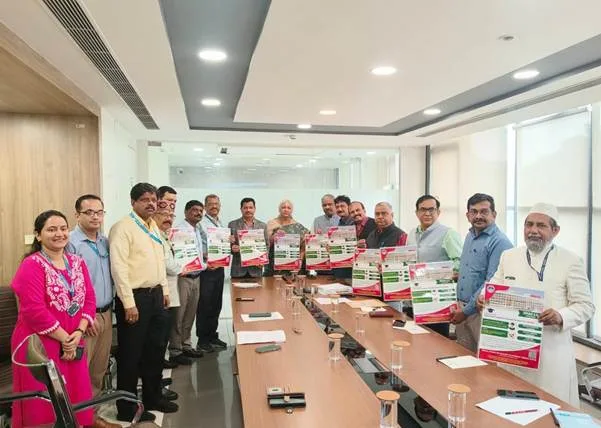
A three-day international conference on Ayurveda and child health comes to a close today, October 17, at the All India Institute of Ayurveda (AIIA) in New Delhi. KAUMARACON-2026, the third international conference on Kaumarabhritya – the branch of Ayurveda that deals with children's health – was inaugurated on October 15 by Vice-President CP Radhakrishnan, who also launched five new digital initiatives of the institute.
The event coincided with AIIA's 10th Foundation Day and brought together Ayurveda practitioners, paediatric specialists, researchers and international delegates.
What is Kaumarabhritya?
Ayurveda is traditionally divided into eight branches, and Kaumarabhritya is the one focused on infants, children and, to an extent, mothers before and after childbirth. It covers nutrition, growth and development, common childhood illnesses and preventive care.
This year's theme was "Shaping the Future of Child Health: Global Perspectives, Research Innovations, and Clinical Frontiers in Kaumarabhritya". The focus, speakers said repeatedly, was on evidence – testing traditional approaches with modern research methods before they are used more widely.
Five digital initiatives launched
On the opening day, the Vice-President launched five digital platforms developed by AIIA:
- AYUSH Start-up Portal – a platform for start-ups in the Ayush sector.
- AIIA–iCAINE website – a new web platform of the institute.
- AyuDIVA – the Ayurveda Digital Innovation and Venture Acceleration Facility.
- Vamana App – related to Vamana, one of the Panchakarma procedures.
- Panchakarma Assessment App – a digital tool for assessment in Panchakarma therapy.
The institute also highlighted two research facilities: a KINDER Lab for paediatric electrophysiology and non-invasive diagnostics, and an Ayurinformatics Lab that uses AI for formulation development and dosage design.
Event at a glance
| Event | KAUMARACON-2026, 3rd International Conference on Kaumarabhritya |
| Dates | October 15–17, 2026 |
| Venue | All India Institute of Ayurveda, Sarita Vihar, New Delhi |
| Inaugurated by | Vice-President CP Radhakrishnan |
| Occasion | AIIA's 10th Foundation Day |
| Digital launches | 5, including AYUSH Start-up Portal, AyuDIVA and Vamana App |
| Ministry | Ministry of Ayush |
Why research on Ayurvedic paediatrics is getting attention
Child health is one of the areas where families most often combine systems of care – a paediatrician for vaccines and acute illness, and home remedies or Ayurvedic advice for diet, digestion and general wellbeing. That overlap is exactly why regulators and institutions want stronger evidence. Without data on safety, dosage and outcomes in children, integration remains informal and uneven.
Tools like an Ayurinformatics Lab, which uses AI for formulation and dosage design, and a dedicated paediatric diagnostics lab are meant to close that gap. Dosage in particular is a sensitive issue in children, whose bodies process medicines differently from adults, so standardising it is a key step before any wider use.
The start-up and venture facilities launched alongside point to another goal: turning research into products and services, from digital consultation platforms to standardised formulations, with institutional backing.
What the leaders said
Vice-President Radhakrishnan urged researchers to keep traditional knowledge alive but to validate it scientifically, and to keep children's health at the centre of their work. He pointed to the global recognition of Yoga and the WHO Global Centre for Traditional Medicine in Jamnagar as signs of growing international interest.
Prataprao Jadhav, Minister of State (Independent Charge) for Ayush, said child health must remain a national priority and noted that Ayurveda is increasingly being linked into the wider healthcare system. Ayush Secretary Vaidya Rajesh Kotecha listed AIIA's growth over its first decade, including more than 45 specialised OPDs, postgraduate and doctoral programmes in 12 specialities and over 97 national and international collaborations. AIIA Director Prof. PK Prajapati said child healthcare is fundamental to building a healthy society.
What it means for parents
For families, the practical takeaway is not a new treatment but a direction. The government is pushing Ayurveda institutions to produce research-backed, child-friendly care – especially around nutrition, prevention and maternal health – and to build digital records and tools that make outcomes measurable.
A word of caution still applies. Doctors across systems advise that children with fever, breathing trouble, dehydration or other warning signs should be seen promptly by a qualified paediatrician, and that any Ayurvedic treatment for a child should be taken only from a registered practitioner, never self-prescribed. Integration works best when both sides know what the child is receiving.
What happens next
With the conference ending today, AIIA is expected to take forward the research collaborations and start-up support announced during the event. The Ayush Secretary also referred to a satellite campus in Goa and three new AIIA institutions announced in the Union Budget 2026-27, which will widen the institute's reach in the coming years.




Comments (0)