
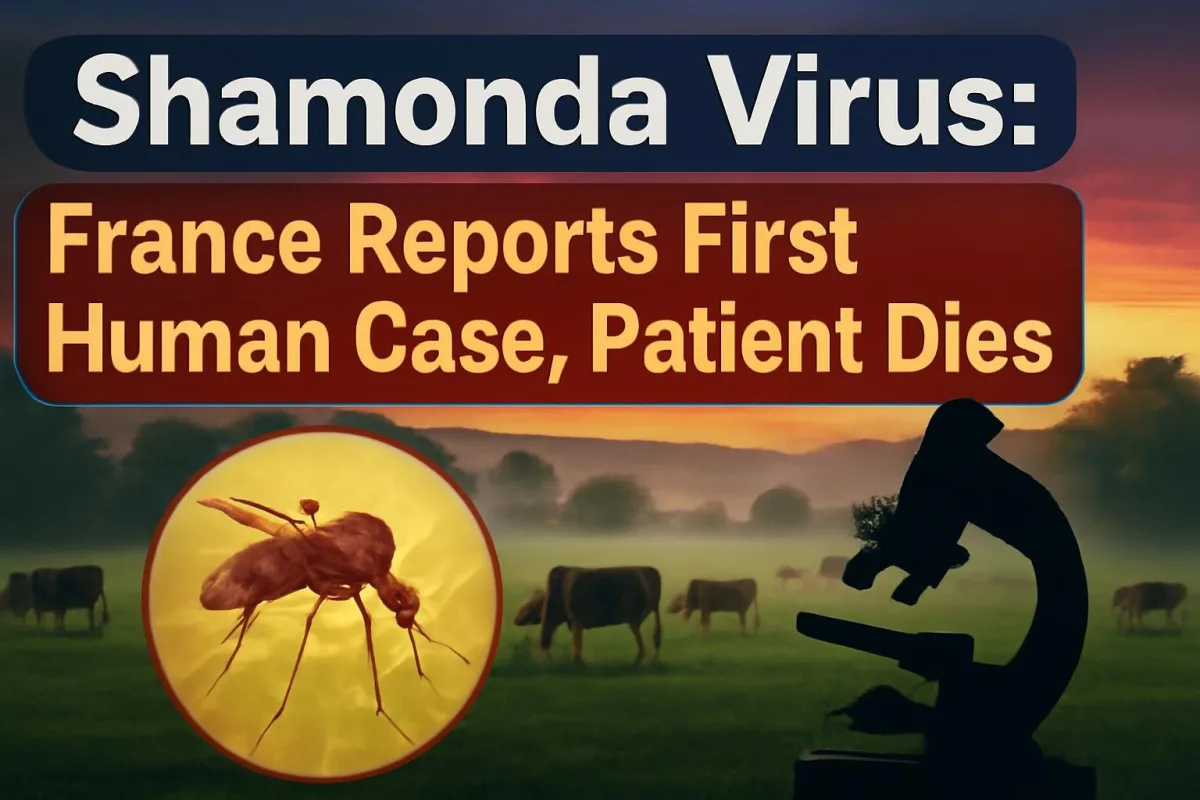
France has reported the world's first known human case of Shamonda virus, an insect-borne infection that until now was only known to affect livestock. The patient, a severely immunocompromised person being treated for a serious illness in Lyon, died in early October. French health and agriculture ministries announced the case on Thursday, October 22, 2026, and said there is no identified risk to the general public.
The news has drawn global attention because scientists had long believed the virus could not infect people. The World Health Organization (WHO) is now working with French authorities to understand how the infection happened.
What is Shamonda virus?
Shamonda virus belongs to the Orthobunyavirus genus, a group of viruses spread mainly by insects. It mostly infects animals such as cattle, sheep, goats, horses and alpacas. The virus is carried by tiny biting flies called Culicoides midges, which are smaller than mosquitoes and often bite at dawn and dusk.
It was first detected in Nigeria in the mid-1960s and has since been reported from time to time in cattle in West, East and Southern Africa and in Japan. It was found in Europe for the first time only this summer, on cattle farms in France. According to the World Organisation for Animal Health, there is currently no commercially available vaccine against it.
Key facts about the case
| Detail | What we know |
| Country | France |
| Announced | October 22, 2026, by French health and agriculture ministries |
| Patient | Severely immunocompromised, treated in Lyon; died in early October |
| Likely source | Midge bite in eastern France, where the virus circulated in animals in spring and summer |
| Virus first found | Nigeria, mid-1960s |
| First found in Europe | Summer 2026, on cattle farms |
| Risk to public | None identified so far, say French authorities |
| Vaccine | None commercially available |
How did the patient get infected?
French officials believe the person was most likely bitten by an infected midge in eastern France, where the virus had been spreading among animals earlier this year. The ministry described it as "an exceptional case involving a severely immunocompromised patient." In simple words, the person's weakened immune system probably made it possible for a virus that normally does not affect humans to cause serious illness.
France has informed the WHO and the European Centre for Disease Prevention and Control. WHO Director-General Tedros Adhanom Ghebreyesus offered condolences to the patient's family and said the agency is helping French authorities study the possible routes of transmission and any wider public health risk. WHO has also noted that more studies are needed to understand how the virus spreads.
Should people in India worry?
There is no reason for panic. This is a single case in France, in a patient with a severely weakened immune system, and there is no evidence of person-to-person spread. Shamonda virus has not been reported in India.
That said, the case is a useful reminder of how animal diseases can sometimes cross over to humans, especially when the climate changes and insects that carry viruses move into new areas. Health experts often call this the "One Health" approach, which links the health of people, animals and the environment. India, with its huge livestock population and many insect-borne diseases such as dengue, chikungunya and Japanese encephalitis, closely follows such developments.
Simple steps that help against insect bites
- Use insect repellent and wear long sleeves, especially at dawn and dusk, when midges and mosquitoes are most active.
- Keep windows fitted with fine mesh screens and use bed nets where needed.
- Avoid standing water around the home and cattle sheds, as many biting insects breed in damp places.
- People with weakened immunity, such as those on cancer treatment or after transplants, should take extra care and follow their doctor's advice.
- Livestock owners should report unusual illness in animals to the local veterinary department promptly.
What happens next
Scientists in France will now study the virus taken from the patient to understand whether it has changed in any way, and how it managed to infect a human. Veterinary authorities are also expected to keep monitoring cattle farms and midge populations in affected areas. WHO and European health agencies will share findings as the investigation moves ahead. For now, the official message is clear: this is an exceptional case, and the risk to the general public remains low.
This article is for general information only and is not medical advice. Please consult a doctor for any health concerns.






Comments (0)