
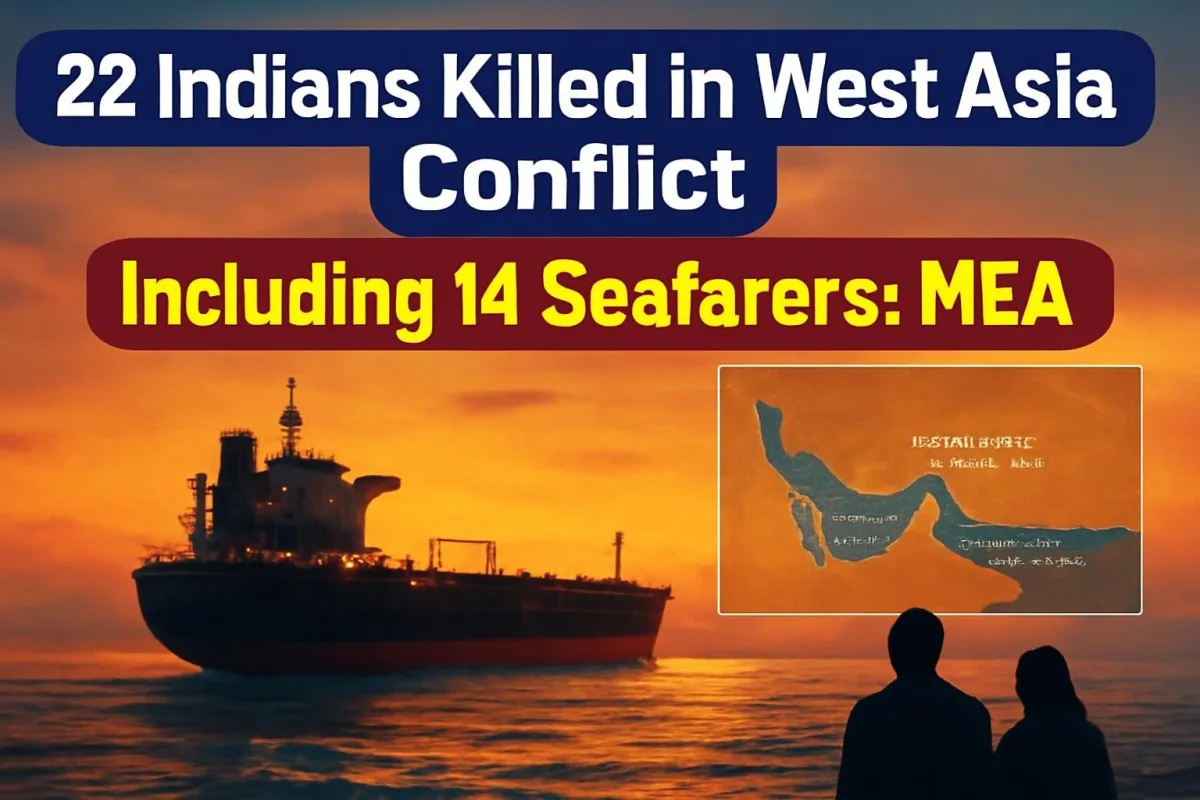
The human cost of the West Asia war for India has climbed to 22 lives. Speaking at his regular media briefing in New Delhi on Wednesday, October 28, Ministry of External Affairs (MEA) spokesperson Randhir Jaiswal confirmed that 22 Indian nationals have died in the conflict so far, and that 14 of them were seafarers working on ships in the region.
Three of the deaths took place in Saudi Arabia, which has been pulled deeper into the crisis after a series of Houthi strikes on its territory. "We remain deeply concerned about the situation," Jaiswal said, adding that the government is in close contact with its missions and the Indian community across the Gulf.
How the conflict reached this point
The conflict began in February after the United States and Israel launched attacks on Iran. What started as a confrontation centred on Iran has since spread across the region. Shipping through the Strait of Hormuz, one of the world's most important oil routes, has been badly disrupted, and that has turned Saudi Arabia's East-West oil pipeline into a vital bypass for crude exports.
That pipeline has now become a target too. The Iran-backed Houthi group in Yemen has carried out several strikes on Saudi Arabia, including on the East-West pipeline. India has publicly voiced serious concern over attacks on Saudi civilian infrastructure and economic assets, warning that they undermine regional stability and threaten free movement of ships through the Bab-el-Mandeb strait, the narrow passage that links the Red Sea to the Gulf of Aden and the Arabian Sea.
Why seafarers have been hit hardest
Fourteen of the 22 Indians who have died were seafarers, a figure that reflects how exposed India's maritime workforce is. Indian crews form a large share of the sailors on oil tankers, bulk carriers and container ships that pass through the Gulf, the Red Sea and the Arabian Sea every day. When shipping lanes become battle zones, the men and women on deck are among the first to face the danger.
The government says its diplomatic posts across West Asia have been closely tracking developments, with special attention to workers and crew in the most vulnerable sea corridors.
Key facts at a glance
| Total Indian deaths | 22 |
| Seafarers among them | 14 |
| Deaths in Saudi Arabia | 3 |
| Conflict began | February 2026 |
| Confirmed by | MEA spokesperson Randhir Jaiswal, October 28 |
| Help for Indians | 24x7 control rooms in Jeddah and Makkah |
New flight options for stranded travellers
Alongside the casualty update, the Consulate General of India in Jeddah has issued an advisory on expanded flight options, aimed mainly at Umrah pilgrims whose travel plans were thrown off by disruption in Saudi Arabia. The consulate says it is working with Saudi aviation authorities, airlines and community groups to restore links to Indian cities.
- Jeddah and Madinah: Saudi carriers are still flying to India, and other international airlines offer one-stop connections through their hubs.
- Dammam: Flynas has added flights to Lucknow, Mumbai, Delhi, Hyderabad, Kozhikode and Kochi.
- Riyadh: Flynas is operating flights to Delhi, Hyderabad and Kozhikode on select dates.
Missions in Riyadh and Jeddah have asked tour operators handling pilgrim groups to use these schedules for orderly returns. Travellers have been told not to head to airports without confirmed rebookings. "Passengers are advised to verify flight schedules, bookings and travel arrangements directly with the concerned airlines," the consulate said. Its 24x7 control rooms in Jeddah and Makkah remain open for anyone who needs help.
What this means for Indian families
Lakhs of families across Kerala, Uttar Pradesh, Bihar, Andhra Pradesh, Telangana and Tamil Nadu have someone working in the Gulf or on a ship that sails through it. For these families, the MEA figure is not just a statistic. It is a reminder to keep emergency contacts updated, to register with the local Indian embassy or consulate, and to stay in touch with shipping companies or employers about safety measures.
If you or a family member is in the region, the practical steps are simple:
- Save the helpline numbers of the nearest Indian embassy or consulate on your phone.
- Register with the mission so officials can reach you in an emergency.
- Follow only official advisories from Indian missions and local authorities.
- Confirm any flight rebooking with the airline before going to the airport.
- Seafarers' families should keep the ship manager's or manning agency's contact details handy.
What happens next
India continues to call for the crisis to be settled through dialogue and diplomacy. With the Houthis now striking Saudi infrastructure and two of the world's key shipping chokepoints under pressure, New Delhi's immediate priority is the safety of its citizens, especially the crew members who keep global trade moving through dangerous waters. Further updates are expected at the MEA's upcoming briefings.






Comments (0)