
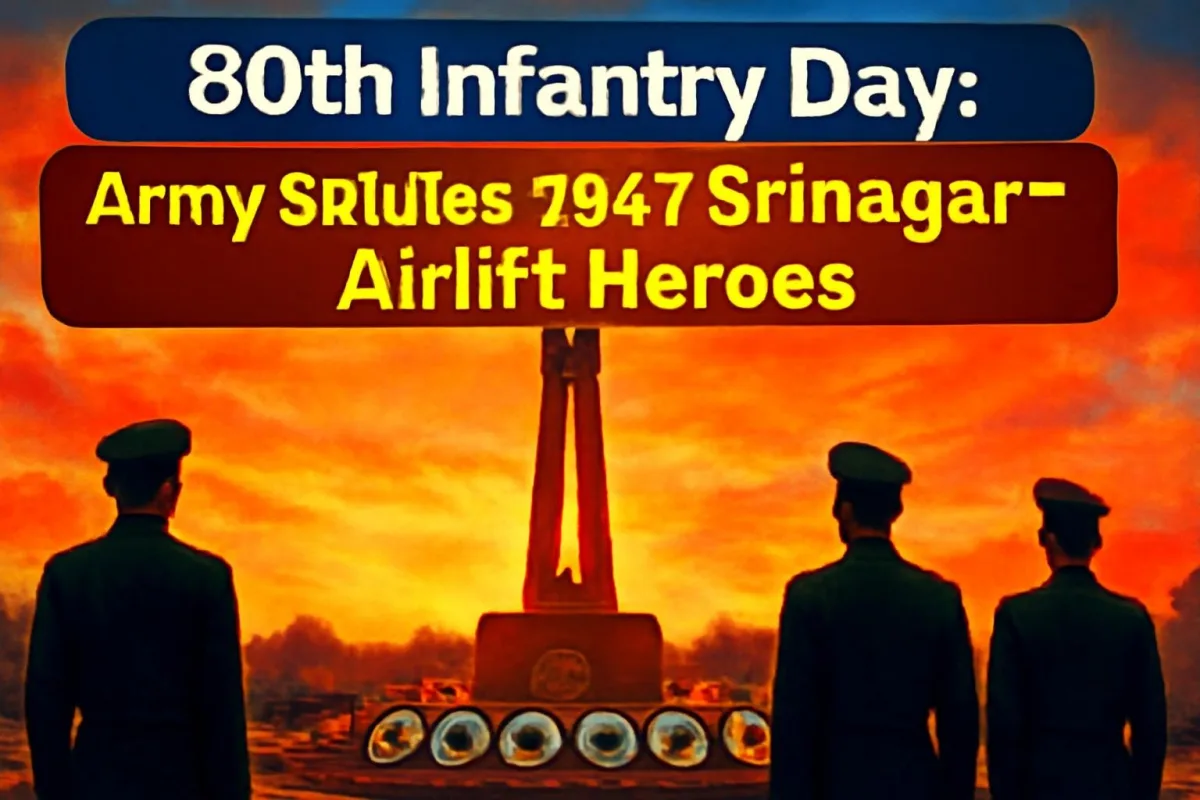
Seventy-nine years ago this morning, a few Dakota aircraft touched down on a small airfield outside Srinagar carrying soldiers of the 1st Battalion, The Sikh Regiment. On Tuesday (October 27, 2026), the Indian Army marked the 80th Infantry Day, also called Shaurya Diwas, with wreath-laying ceremonies, tributes and greetings across the country to honour that landing and every infantry soldier since.
Chief of the Army Staff General Dhiraj Seth and all ranks of the Army extended greetings to serving infantrymen, veterans and their families, while formations from Jammu to Hyderabad held their own commemorations.
Why October 27 Matters
The story begins a day earlier. On October 26, 1947, Maharaja Hari Singh signed the Instrument of Accession, bringing Jammu and Kashmir into India. Pakistan-backed tribal raiders had already poured into the state and were advancing towards Srinagar.
The next morning, the Indian Air Force flew men of 1 Sikh into the Srinagar (Budgam) airfield. The troops secured the airstrip and went straight into action, helping push back the raiders and preventing Srinagar from falling. The operation is remembered as independent India's first military action, and the Army describes it as the first civil-military victory of the new nation.
Among the names the Army recalls every year are Lieutenant Colonel Dewan Ranjit Rai, the commanding officer of 1 Sikh, who was killed leading his men and was posthumously awarded the Maha Vir Chakra; Major Somnath Sharma, the first recipient of the Param Vir Chakra, awarded posthumously for the defence of Badgam; and Brigadier Rajinder Singh, who fought to delay the raiders' advance in the first days of the conflict.
Infantry Day 2026: Key Facts
| Occasion | 80th Infantry Day (Shaurya Diwas) |
| Date | October 27, 2026 |
| Event remembered | Airlift of 1st Battalion, The Sikh Regiment, to Srinagar on October 27, 1947 |
| Day before | Instrument of Accession signed by Maharaja Hari Singh, October 26, 1947 |
| Aircraft used | Indian Air Force Dakotas |
| Army Chief | General Dhiraj Seth |
| Theme of greetings | "Infantry – The Ultimate" |
| Infantry ethos | Naam, Namak, Nishan |
How the Army Marked the Day
Commemorations were held at military stations around the country. In Hyderabad, the Bison Division's General Officer Commanding laid a wreath at the war memorial in the presence of officers, Junior Commissioned Officers, other ranks and veterans, honouring soldiers who laid down their lives in service.
In the north, soldiers of the 7th Battalion, The Dogra Regiment of the Tiger Division, completed a 1,064-km cycling expedition that ran from October 10 to October 27. The team rode from Damana Military Station in Jammu through Punjab and Himachal Pradesh up to Kullu and back towards the 26 Infantry Division headquarters, finishing on Infantry Day itself.
The Army Training Command and Spear Corps were among the formations that posted greetings, and the Indian Air Force, whose transport pilots made the 1947 airlift possible, sent its wishes to Army personnel and families.
Why the Infantry Still Matters
The infantry is the largest fighting arm of the Indian Army and is often called the "Queen of the Battle". From the snow-bound posts of Siachen to counter-insurgency operations in the Northeast and Jammu and Kashmir, it is infantry soldiers who hold ground and finish the fight.
That message has gained fresh weight in 2026. Just days before Infantry Day, Defence Minister Rajnath Singh released the Army's new Land Warfare Doctrine at the Army Commanders' Conference in New Delhi. While it pushes hard on drones, artificial intelligence and multi-domain operations, Singh stressed that ground forces remain indispensable even as air, sea, space and cyber operations grow in importance. For the infantry, the future is about soldiers working alongside unmanned systems, not being replaced by them.
What It Means for Citizens
For most Indians, Infantry Day is a quieter observance than Army Day or Independence Day. But the events of October 27, 1947 shaped the map of the country, and the values the infantry lives by, Naam (honour), Namak (loyalty) and Nishan (the regiment's flag), remain at the heart of the Army's identity.
Many units open their memorials to veterans and families on this day, and schools near cantonments often hold talks on the 1947 operations. If you want to mark the day, visiting a local war memorial or reading the citations of the 1947-48 gallantry award winners is a good place to start.
Looking Ahead
Next year will mark 80 years since the 1947 landing itself, a milestone the Army is likely to commemorate in a big way. Until then, the 80th Infantry Day stands as a reminder that the first defence of independent India was mounted by a few hundred foot soldiers who stepped off an aircraft into the unknown, and held their ground.






Comments (0)