
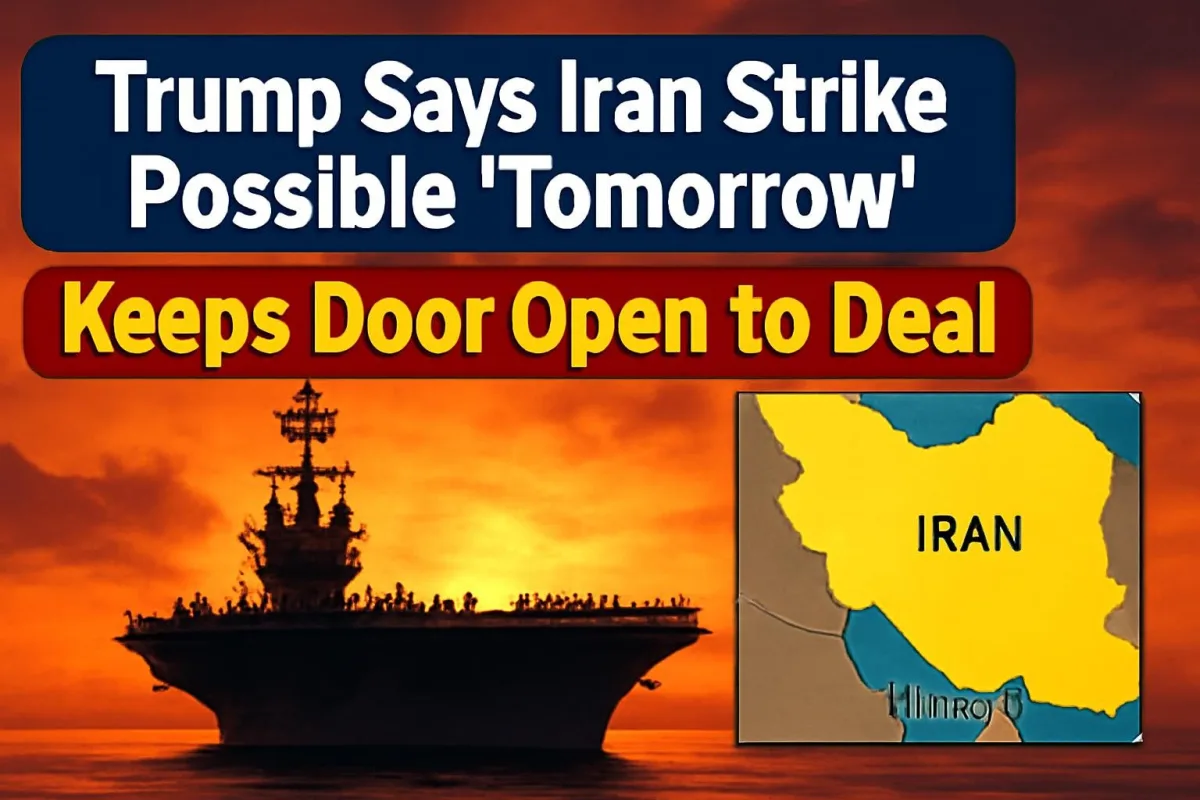
US President Donald Trump has refused to rule out fresh strikes on Iran, saying an attack could come “maybe tomorrow” even as he talked up the chance of a “big, beautiful agreement” with Tehran. His remarks, made over the weekend of October 24–25, 2026, come as the US quietly pulls diplomats and their families out of several Gulf and Middle Eastern capitals and Iranian officials warn that American personnel are now “fair game”.
For a region already eight months into war, the mix of threats and deal talk has left governments, airlines and millions of expatriate workers – many of them Indian – bracing for what the coming days bring.
What Trump said
Asked whether he would strike Iran again, Trump would not commit either way. He noted that he had earlier posted that he would not attack again before the US midterm elections on November 3, but declined to say whether that still held. “Do you really think I'm going to tell you if I'm going to do it?” he told reporters.
He said there was “a possibility I will” strike and, in the same breath, “a possibility we'll have a nice, big, beautiful agreement.” Trump said Iran wants a deal and that he is looking for a permanent solution that stops Tehran from building a nuclear weapon, while openly questioning whether Iran would stick to any agreement.
US media reports have added to the sense that military options are being kept warm. The Hill reported that the Pentagon has prepared options for renewed strikes after the midterms, while The Wall Street Journal reported that sailors with the USS George Washington strike group were loading munitions.
Embassies thin out across the region
The State Department is reducing staff at US embassies in Jordan, Lebanon, Qatar and the UAE, according to multiple reports. Earlier in the week, Washington ordered non-essential staff and families to leave Saudi Arabia, citing a rise in Houthi attacks.
The drawdown follows a report in The New York Times in which two Iranian officials, one of them from the Revolutionary Guards, said Tehran's expanded target list now includes US diplomats and personnel, describing them as “fair game” after the killing of Iranian officials by the US and Israel.
How Tehran is responding
Iranian President Masoud Pezeshkian accused Washington of wrecking talks to end the war. He said Supreme Leader Mojtaba Khamenei had instructed officials to finish a deal, and that “these scoundrels broke the rules of the game.”
Foreign Minister Abbas Araghchi argued that US bases are the main source of insecurity for the countries that host them and said the region should move towards having no foreign troops at all. An Iranian lawmaker went further, warning that any country allowing the US to use its territory or airspace against Iran would become a “legitimate military target.”
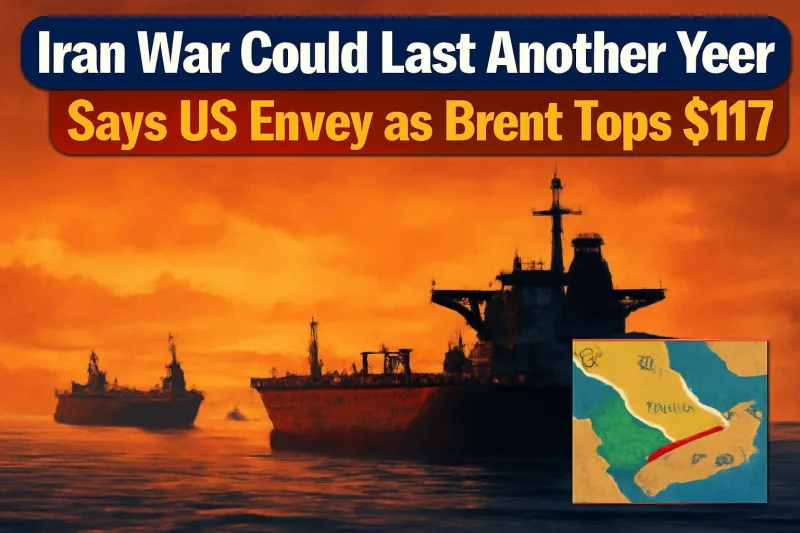
There were mixed signals too. Iran's envoy to Pakistan said Tehran had offered to reopen the Strait of Hormuz if the blockade on Iran was lifted, but a source linked to the Revolutionary Guards rejected that trade-off.
Houthis keep Saudi Arabia on edge
The Saudi-led coalition said it destroyed a Houthi ballistic missile fired towards Riyadh and, separately, a drone in the Riyadh region. The Iran-backed Houthis had earlier warned against using Riyadh's King Khalid International Airport, calling it a “military target.” In Iraq, Prime Minister Ali al-Zaidi said his country “will not participate in any war,” even as Iran-aligned factions push for support for Tehran.
Key facts
| Trump's line | Strike possible “maybe tomorrow”; deal also possible |
| US staff cuts | Jordan, Lebanon, Qatar, UAE; non-essential staff out of Saudi Arabia |
| Iran's warning | US diplomats and personnel called “fair game” (NYT) |
| Iran's offer | Reopen Strait of Hormuz if blockade lifted (disputed internally) |
| Upcoming dates | Israel election on Tuesday; US midterms on November 3 |
| War began | February 2026 |
Why it matters for India
India has a huge stake in Gulf stability. Millions of Indians live and work in Saudi Arabia, the UAE, Qatar and their neighbours, and remittances from the region are a lifeline for families in Kerala, Telangana, Andhra Pradesh, Uttar Pradesh and Bihar. Air India has already suspended flights to Riyadh and Dammam until November 7 after recent attacks, and any fresh round of strikes could disrupt more routes.
The Strait of Hormuz matters just as much. A large share of India's crude oil and LPG imports passes through it, so any escalation – or a deal that reopens the waterway – feeds directly into fuel prices, the rupee and inflation at home.
What happens next
The region is watching two dates closely: Israel's election on Tuesday and the US midterms on November 3. Regional reports say governments are bracing for possible US or Israeli strikes either before or just after those votes, unless a deal comes first. Indian nationals in the Gulf should keep following advisories from Indian missions and airline updates before travelling.

Comments (0)