
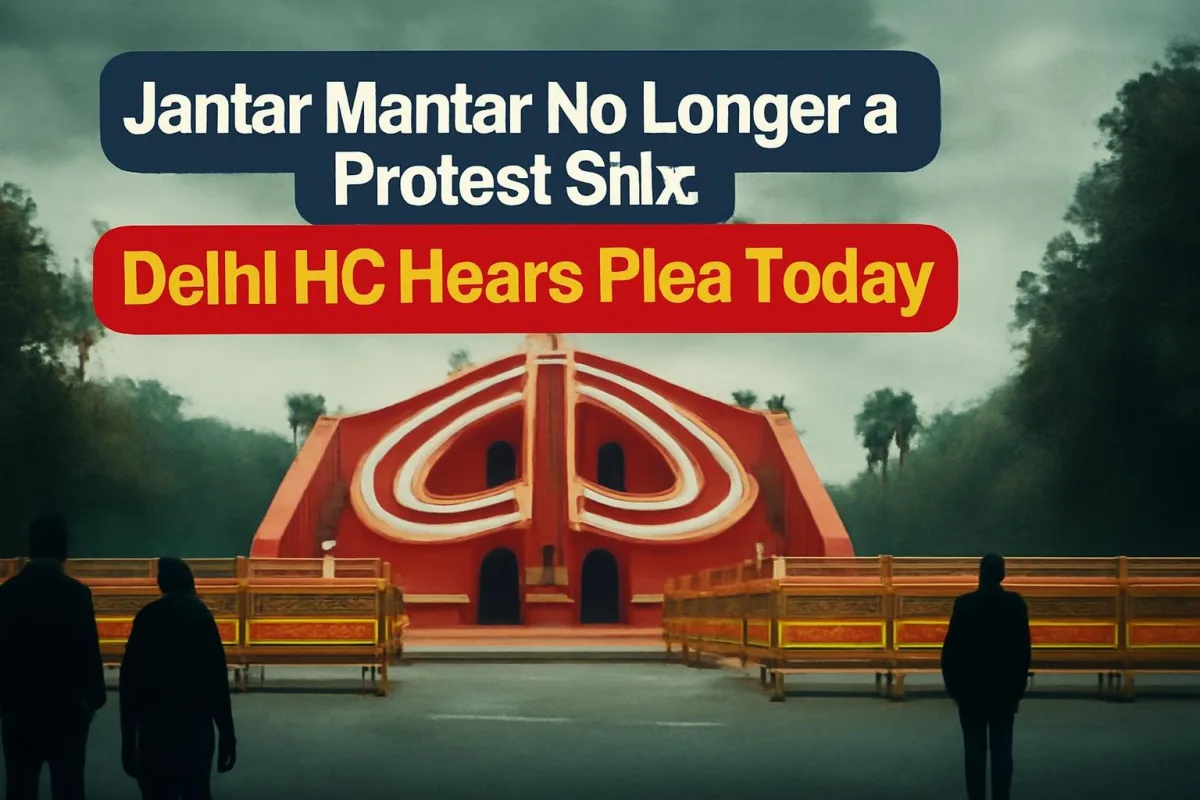
For more than three decades, the narrow stretch of road beside the 18th-century Jantar Mantar observatory has been where India came to shout at its government. That chapter has now closed. Delhi Police has removed Jantar Mantar from the city's list of designated protest venues and named three new grounds instead, and the Delhi High Court is set to hear a challenge to the decision on Tuesday, October 13.
What the new order says
The standing order, issued by Delhi Police Commissioner Anurag Kumar on October 11, partly amends an earlier standing order of April 28, 2022. It formally de-notifies Jantar Mantar as a protest venue and lists three alternatives:
- Ramlila Maidan in central Delhi
- Burari Ground in north Delhi
- CBD (Central Business District) Ground in Shahdara, east Delhi
According to the police, the change follows the recommendations of a committee set up by the Union Home Ministry to identify alternative locations that would still allow citizens to hold protests and demonstrations. "Based on the Committee's recommendations, Jantar Mantar as a protest venue has been de-notified," the police said. A detailed, revised standard operating procedure (SOP) for the three new venues will be issued separately, so rules on permissions, timings and crowd sizes are not yet public.
| Order issued by | Delhi Police Commissioner Anurag Kumar |
| Date of order | October 11, 2026 |
| Venue removed | Jantar Mantar, Parliament Street |
| New venues | Ramlila Maidan, Burari Ground, CBD Ground (Shahdara) |
| Basis | Recommendations of a Home Ministry committee |
| SOP for new venues | To be issued separately |
| Court challenge | Delhi High Court hearing on October 13 |
Why it is happening now
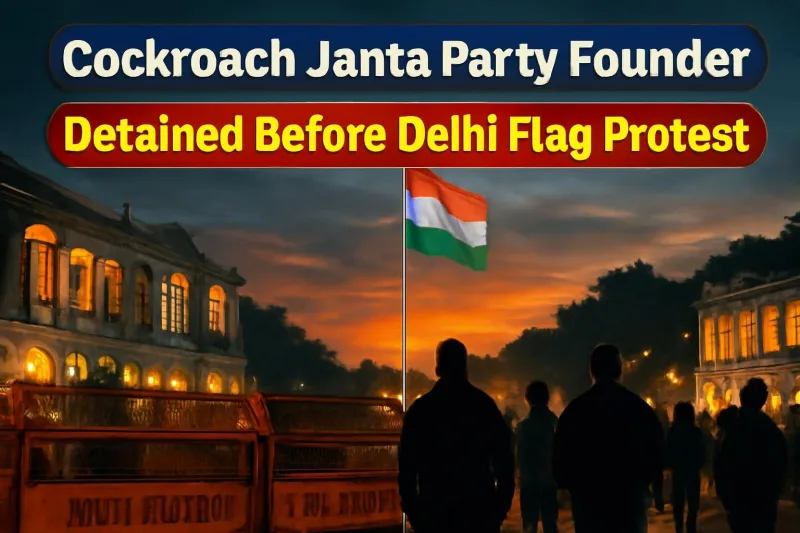
The timing is hard to separate from the political storm in the capital. Over October 10 and 11, hundreds of people gathered after the Cockroach Janta Party called a demonstration against Chief Election Commissioner Gyanesh Kumar over alleged irregularities in the Special Intensive Revision (SIR) of electoral rolls. On Monday, the Congress-led INDIA bloc tried to march towards the Supreme Court on the same issue, and police put up barricades on access roads and kept a close watch on major intersections.
Even after the venue change, security around Jantar Mantar has stayed tight. Police have also warned commuters of possible diversions at around 20 junctions and stretches, including the outer circle of Connaught Place, Mandi House, the Lodhi Road flyover and Patel Chowk, depending on the law-and-order situation. Cockroach Janta Party activists had approached the Parliament Street police station seeking a date for a fresh protest at Jantar Mantar.
The case in the Delhi High Court
On Monday, a bench of Acting Chief Justice Nitin Wasudeo Sambre and Justice Sanjay Sharma agreed to hear a petition against the "closure" of Jantar Mantar as a protest site. The lawyer who mentioned the matter argued that peaceful protests were being suppressed because no working alternative had been made available, and described the situation as a "black day", comparing it to 1975.
The bench noted that the Supreme Court is already examining related issues and has asked the Centre to file affidavits, and said it would consider how far the High Court can go into the matter. It also agreed to hear a separate plea alleging that outsiders entered a weekend protest and harassed demonstrators.
Why Jantar Mantar mattered
Jantar Mantar Road became Delhi's main protest venue in 1993, replacing the Boat Club lawns near India Gate, an area that is now part of Kartavya Path. That shift came after a massive farmers' rally led by Mahendra Singh Tikait in 1988 brought central Delhi to a standstill. Since then, everyone from farmers and ex-servicemen to wrestlers and student groups has used the spot, a short walk from Parliament, to make sure their message reached the people in power.
Moving protests to Ramlila Maidan, Burari and Shahdara changes that equation. Ramlila Maidan is still central and has hosted big movements before, including the 2011 anti-corruption agitation. Burari and the CBD Ground in Shahdara, however, are far from Parliament and the ministries on Raisina Hill. Critics fear this will make protests less visible, while the police argue the larger grounds are easier to manage and cause less disruption to traffic and nearby offices.
What it means for citizens
For anyone planning a demonstration in Delhi, the practical message is simple: Jantar Mantar is no longer an approved venue, and permission will have to be sought for one of the three new sites. Until the new SOP is published, details such as how many people can gather, for how long and with what notice remain unclear. Commuters in central Delhi should keep checking traffic advisories, as diversions may be imposed at short notice.
What happens next
All eyes are on the High Court hearing and on the Supreme Court proceedings, where the Centre has been asked to place its stand on record. The police SOP for the new grounds is the other key document to watch. If the courts step in, the order could be paused or modified; if not, Ramlila Maidan, Burari and Shahdara will become the new addresses of dissent in the capital.



Comments (0)