
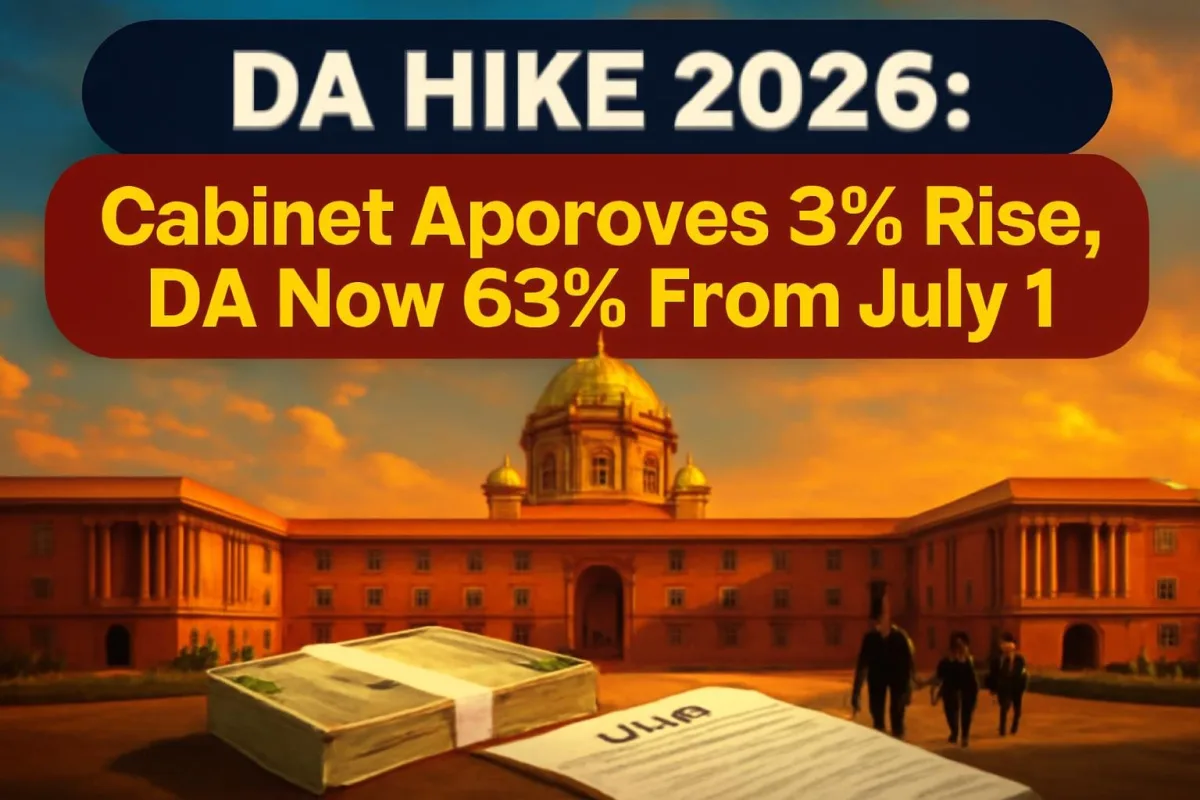
The wait is finally over for lakhs of central government households. On Wednesday, October 28, the Union Cabinet chaired by Prime Minister Narendra Modi approved an additional 3% instalment of Dearness Allowance (DA) for central government employees and Dearness Relief (DR) for pensioners. The increase takes DA and DR from 60% to 63% of basic pay or pension, and it applies with retrospective effect from July 1, 2026.
According to the official release from the Press Information Bureau, the decision covers about 48.54 lakh serving employees and 68.71 lakh pensioners. Together, the combined cost to the exchequer will be Rs 10,016.10 crore a year.
Why this DA hike was so closely watched
DA is revised twice a year, once from January and once from July, to protect salaries and pensions from rising prices. The July instalment is usually cleared in the run-up to the festive season, and this year employee groups had been tracking almost every Cabinet meeting since September. With Diwali around the corner, Wednesday's announcement arrived at a time when household budgets are at their most stretched.
The government said the hike is in line with the accepted formula based on the recommendations of the 7th Central Pay Commission. That formula links DA to the movement of the All India Consumer Price Index for industrial workers, so the size of each hike reflects how fast prices have risen over the preceding months.
Key facts at a glance
| Detail | Information |
|---|---|
| Decision | Additional 3% instalment of DA and DR |
| Old rate | 60% of basic pay/pension |
| New rate | 63% of basic pay/pension |
| Effective from | July 1, 2026 |
| Employees covered | About 48.54 lakh |
| Pensioners covered | About 68.71 lakh |
| Annual cost | Rs 10,016.10 crore (DA + DR) |
| Basis | 7th Central Pay Commission formula |
| Approved on | October 28, 2026 |
How much more will you get?
The hike is calculated on basic pay (or basic pension), not on gross salary. That makes the maths fairly simple. Multiply your basic pay by 3% and you have the monthly increase.
- Find your basic pay on your latest salary slip (for pensioners, the basic pension).
- Multiply it by 0.03 to get the extra DA per month.
- Multiply the monthly gain by the number of pending months since July 2026 to estimate your arrears.
For example, an employee at the entry-level basic pay of Rs 18,000 will now get DA of Rs 11,340 a month instead of Rs 10,800, a rise of Rs 540. Someone with a basic pay of Rs 50,000 will see DA go up by Rs 1,500 a month. A pensioner drawing the minimum basic pension of Rs 9,000 gains Rs 270 a month in DR. Because the hike is effective from July 1, four months of arrears (July to October) will also be due, which works out to Rs 2,160 for an employee on Rs 18,000 basic pay. The exact date of arrears payment will depend on departmental orders that usually follow the Cabinet decision.
What it means beyond government offices
A DA revision has a ripple effect. Several state governments tend to follow the Centre's lead with their own DA announcements, and public sector units often align their allowances too. With more than 1.17 crore employees and pensioners together receiving higher payouts, the extra cash also flows into local markets during the busiest shopping weeks of the year, from jewellery and electronics to sweets and travel.
For pensioners in particular, DR is often the only regular increase they receive. Many retired government staff rely on it to keep up with medical and household costs, so even a modest monthly gain matters.
What happens next
The Department of Expenditure under the Finance Ministry will now issue the formal office memorandum, after which ministries and departments process the revised DA in payrolls. Pensioners will receive the revised DR through their pension-disbursing banks and treasuries. Employees should keep an eye on their next salary slip and check that both the new rate and the arrears have been credited correctly.
The next DA revision, for January 2027, will again depend on inflation data. With the 8th Pay Commission process also under discussion, employee unions are likely to keep a close watch on how DA is treated in any future pay structure.





Comments (0)