
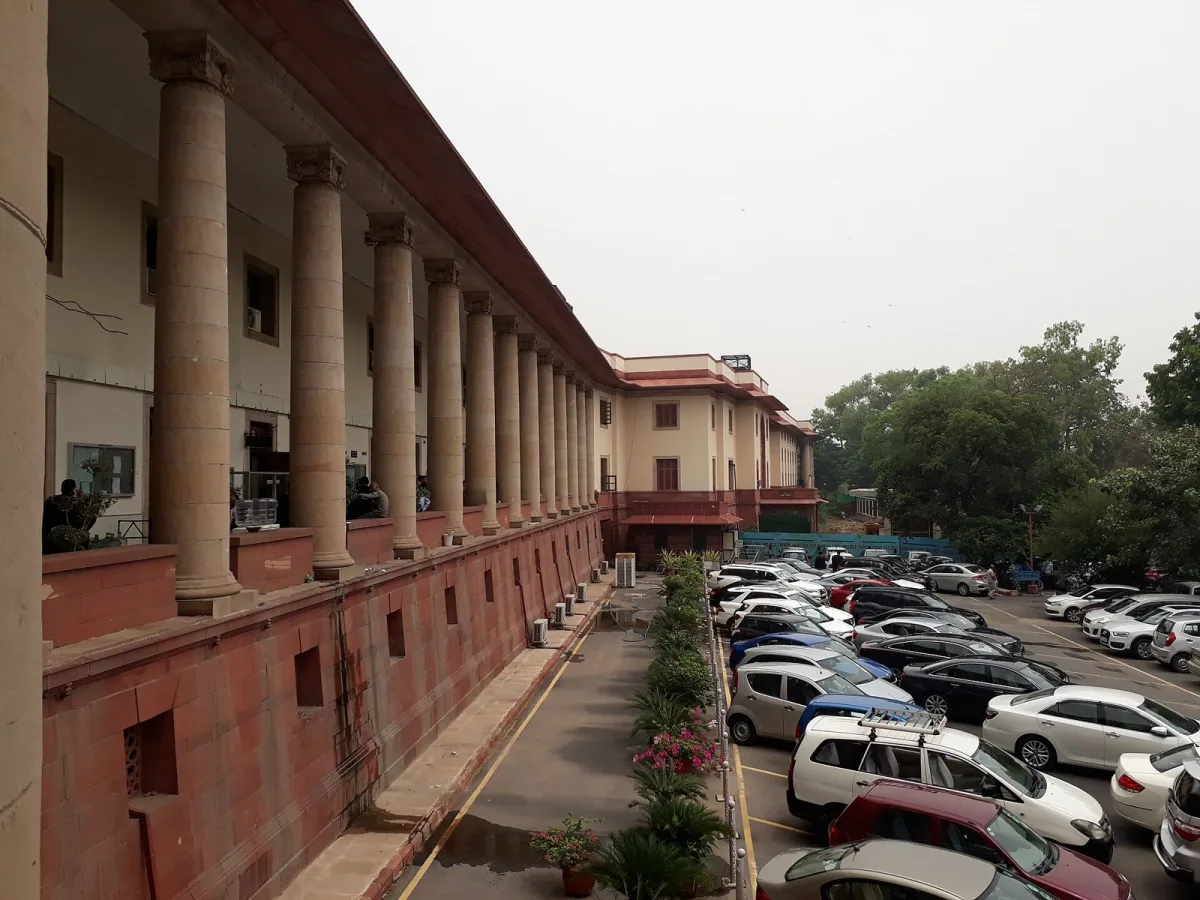
The Supreme Court on Tuesday, October 27, refused to put India's data protection law on hold but agreed to examine a challenge from news publishers who say it could make everyday journalism unworkable. A bench of Chief Justice of India Surya Kant and Justices Joymalya Bagchi and V. Mohana issued notice to the Centre on a petition filed by the Digital News Publishers Association (DNPA) against provisions of the Digital Personal Data Protection (DPDP) Act, 2023 and the DPDP Rules, 2025.
The court made it clear that it would not pass an order behind the government's back. The Chief Justice said no ex parte order would be passed without hearing the other side, as the bench declined the publishers' request for an interim stay and asked the Union government to file its reply first.
What the news publishers are challenging
The DNPA, which represents major digital arms of legacy media houses, wants several parts of the DPDP framework struck down as unconstitutional. Senior Advocate Madhavi Divan, appearing for the association, told the court this was "perhaps the first comprehensive petition by what we call legacy media" against the law.
The petition's core complaint is simple: the Act has no exemption for journalistic work. Under the law, processing a person's digital personal data generally needs that person's consent or must fall within a narrow list of permitted uses. Journalists, the publishers argue, routinely report on people who would never agree to be written about, from officials accused of wrongdoing to companies under scrutiny.
"If I am left to the mercy of the data principal as to whether he or she will give consent, how will news be reported?" Divan asked the bench. She argued that live television and time-sensitive reporting would be hit hardest, and that the rules could effectively force newsrooms to shut down.
The RTI angle
The DNPA has also targeted the DPDP Act's amendment to Section 8(1)(j) of the Right to Information Act. The change widens the exemption for "personal information", which critics say makes it easier for public authorities to refuse information about officials. "Section 8(1)(j), the deletion, is changing the whole concept of news," Divan said. The petition further questions the Centre's power under the DPDP Act to call for information from data fiduciaries, which it says could reach deep into news organisations.
What the Supreme Court said
The bench did not dismiss the concerns. The Chief Justice remarked that media organisations are domain experts and should suggest to both the government and the court how misuse of the law can be prevented. Divan pointed out that journalists are already answerable under multiple frameworks, including the Cable TV rules, uplinking and downlinking guidelines, the IT Rules and the Press Council.
Solicitor General Tushar Mehta, appearing for the Centre, sought two weeks to file a response. The court allowed this and directed that the matter be placed before an appropriate regular bench along with the related cases already pending.
DPDP Act challenge: key facts
| Case | Digital News Publishers Association v. Union of India |
| Date of hearing | Tuesday, October 27, 2026 |
| Bench | CJI Surya Kant, Justice Joymalya Bagchi, Justice V. Mohana |
| Law under challenge | DPDP Act, 2023 and DPDP Rules, 2025 |
| Petitioner's counsel | Senior Advocate Madhavi Divan |
| Centre's counsel | Solicitor General Tushar Mehta |
| Interim stay | Refused |
| Order | Notice issued; Centre given about two weeks to reply |
| Next step | Hearing with pending DPDP-RTI petitions before a regular bench |
Part of a bigger fight over the data law
The DNPA plea is not the first. The Supreme Court is already hearing a batch of petitions against the DPDP Act, especially its effect on the RTI Act. In August, Justice Bagchi had outlined the questions the court would look at: whether the two laws can co-exist, whether the DPDP Act indirectly overrides RTI, whether digital personal data can be treated differently from other information, and whether a blanket bar on disclosing personal information is justified.
The publishers' petition adds a press freedom dimension to that debate. It asks the court to weigh the right to privacy, which the Supreme Court recognised as a fundamental right in 2017, against the freedom of speech and the public's right to know.
What it means for you
For most readers, the DPDP Act is the law that is supposed to protect their phone numbers, addresses and browsing data from misuse by apps and companies. That protection is not in question here. What the court must decide is whether the same rules, applied without any carve-out, would also stop reporters from naming people, using public records or investigating the powerful.
Because the court refused a stay, the law and its rules remain fully in force for now. News organisations, like every other business that handles personal data, have to keep complying while the case is heard.
What happens next
- The Centre files its counter-affidavit within roughly two weeks.
- The DNPA can file a rejoinder answering the government.
- The case is heard along with the existing DPDP-RTI petitions before a regular bench.
- Any decision on whether journalism needs a specific exemption will come only after final arguments.






Comments (0)