
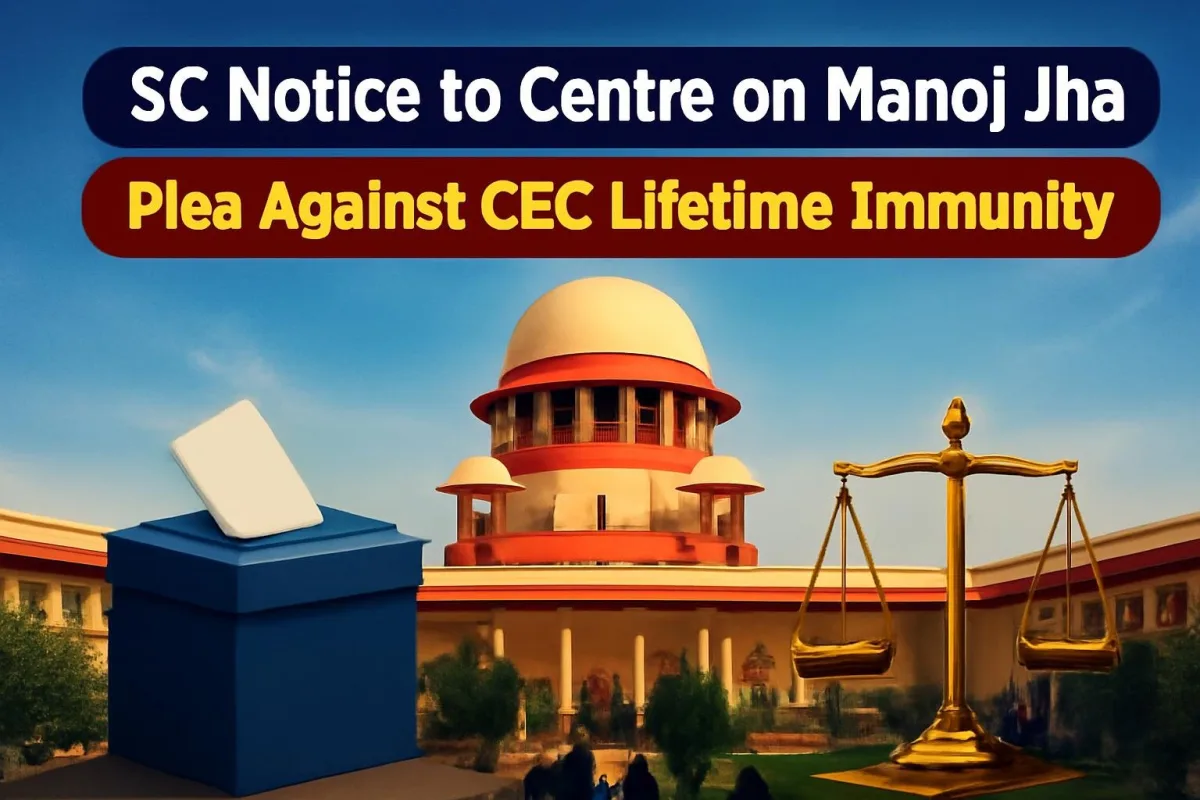
The Supreme Court has agreed to examine whether India's Chief Election Commissioner and Election Commissioners should enjoy lifelong protection from lawsuits and prosecution. On Wednesday, November 4, a bench led by Chief Justice Surya Kant issued notice to the Centre on petitions filed by RJD Rajya Sabha MP Manoj Jha and activist Arun Agrawal, and asked the government to respond within four weeks.
The bench, which also included Justices Joymalya Bagchi and V Mohana, tagged the new pleas with a petition already pending on the same issue and listed the matter for hearing on December 18. The court also indicated that no more fresh petitions on the subject should be filed, since the question is now before it.
What Is Being Challenged
At the heart of the case is Section 16 of the Chief Election Commissioner and other Election Commissioners (Appointment, Conditions of Service and Term of Office) Act, 2023. The provision bars courts from entertaining or continuing any civil or criminal proceedings against a current or former CEC or Election Commissioner for anything done or said while performing official duties, or acts that purport to be official duties.
The 2023 law replaced the old framework for appointing election commissioners and was passed after the Supreme Court had called for a more independent selection process. Section 16 was one of the more debated parts of the new Act, with critics arguing it goes further than the protection given to most constitutional functionaries.
Key Facts of the Case
| Petitioners | Manoj Jha (RJD MP) and activist Arun Agrawal |
| Bench | CJI Surya Kant, Justices Joymalya Bagchi and V Mohana |
| Date of hearing | November 4, 2026 |
| Law challenged | Section 16, CEC and other ECs Act, 2023 |
| Centre's deadline to reply | Four weeks |
| Next hearing | December 18 |
| Related pleas | Tagged with pending petitions on the same issue |
What the Petitioners Argue
Manoj Jha's petition argues that the Constitution does not place any functionary above the law, but Section 16 effectively does so for election commissioners. His plea points out that Article 324, which creates the Election Commission and gives it control over elections, contains no such protection. According to the plea, the provision means a retired election commissioner cannot be prosecuted at all for acts linked to office, whether or not the act was genuinely part of official work.
Arun Agrawal's petition focuses on the words "is or was" in the provision. He argues that these words grant lifelong immunity, extending well beyond a commissioner's tenure. His plea calls the section unconstitutional and arbitrary, and says it has no real link to its stated aim of protecting the independence of the Election Commission.
Both petitioners argue that protecting an institution's independence is different from shielding individuals from accountability, and that ordinary safeguards against frivolous cases already exist in criminal law.
Background: A Growing Legal Fight
This is not the first challenge to Section 16. In October, the Supreme Court had issued notice on a petition filed by the Association for Democratic Reforms (ADR), tagging it with an earlier plea by Lok Prahari. ADR has argued that the immunity violates the right to equality under Article 14, the right to life and liberty under Article 21, and the basic structure of the Constitution. The Jha and Agrawal petitions now join that batch.
The case comes at a time of sharp political friction between opposition parties and the Election Commission. INDIA bloc parties have been protesting over the Special Intensive Revision (SIR) of electoral rolls in several states, and opposition leaders have openly attacked CEC Gyanesh Kumar at public rallies in recent days. While the court has not commented on any of that, the timing has made the immunity question politically charged.
Why It Matters for Voters
For ordinary citizens, the case is about a simple question: who keeps the referee accountable? The Election Commission runs the world's largest elections and its decisions affect every voter. Supporters of the immunity say commissioners must be free to take tough decisions without fear of revenge cases once they retire. Critics say permanent legal protection can weaken public trust in the body.
The Supreme Court's eventual ruling could set the boundaries of that protection, whether by upholding the law, reading it down so that it covers only genuine official acts, or striking it out altogether.
What Happens Next
The Centre now has four weeks to file its reply defending the provision. The petitioners will then get a chance to respond before the matter comes up on December 18. Since the court has tagged all related pleas together, the hearing is likely to cover the full set of arguments raised by ADR, Lok Prahari, Jha and Agrawal.
No interim order has been passed, so Section 16 remains in force for now.
Comments (0)