
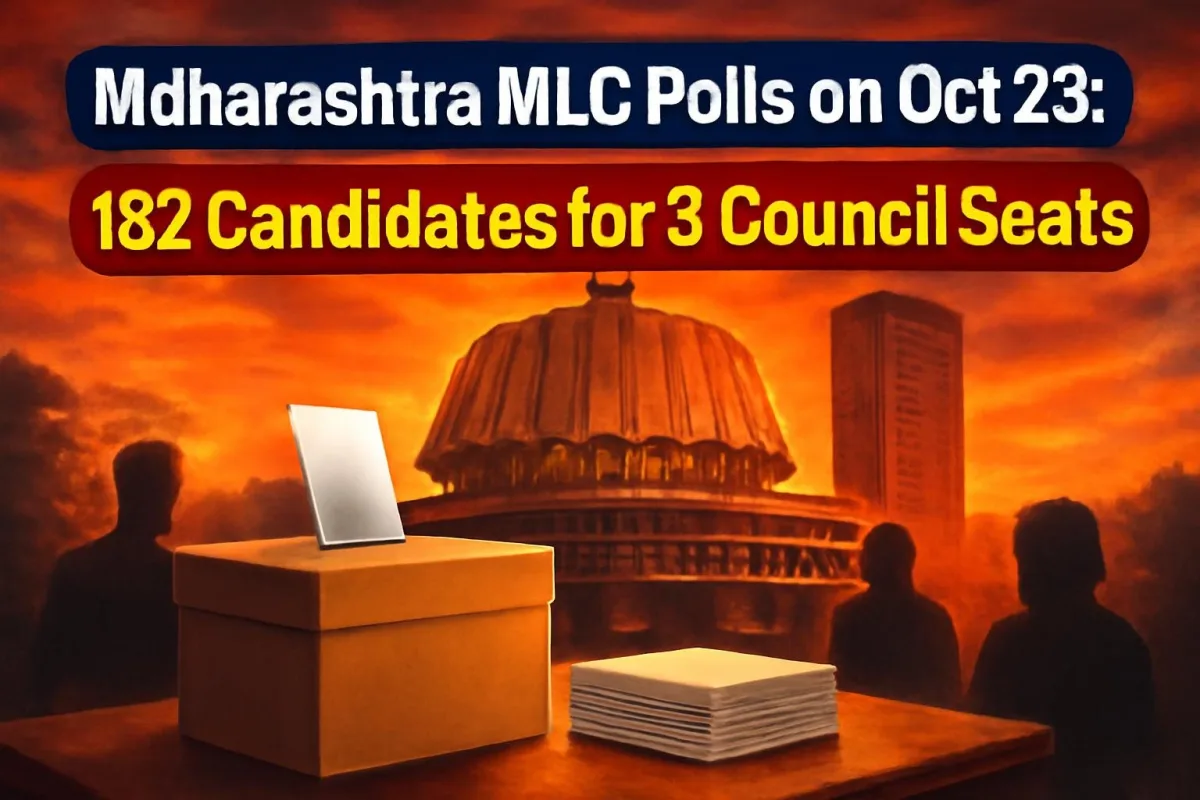
Maharashtra is heading for another round of voting this week, though a very different kind from the assembly or Lok Sabha polls most people know. On Friday, October 23, registered graduates and teachers across five divisions will elect members to the Maharashtra Legislative Council. A total of 182 candidates are contesting for just five seats, making this one of the more crowded council contests the state has seen.
Which Seats Are Up for Election
The biennial polls cover three graduates' constituencies and two teachers' constituencies. The Election Commission of India announced the schedule last month, and the seats fall vacant when the current members retire on December 6, 2026.
| Constituency | Candidates / Polling stations |
|---|---|
| Aurangabad Division Graduates' | 41 candidates / 842 booths |
| Pune Division Graduates' | 47 candidates / 741 booths |
| Nagpur Division Graduates' | 38 candidates / 445 booths |
| Amravati Division Teachers' | 26 candidates / 81 booths |
| Pune Division Teachers' | 30 candidates / 310 booths |
The Pune Division Graduates' seat has both the most candidates and the biggest electorate, with 3,88,019 registered voters. The Amravati Division Teachers' seat is the smallest, with 35,810 voters. In all, more than 10.68 lakh voters are eligible across the five seats, and 2,419 polling stations have been set up.
Outgoing Members
The five members whose terms end on December 6 are:
- Satish Chavan – Aurangabad Division Graduates'
- Arun Lad – Pune Division Graduates'
- Abhijit Vanjari – Nagpur Division Graduates'
- Kiran Sarnaik – Amravati Division Teachers'
- Jayant Asgaonkar – Pune Division Teachers'
Several of these seats have been held by opposition-backed members, which is why the ruling Mahayuti alliance and the opposition Maha Vikas Aghadi are both treating the contest seriously. Nagpur, home turf of Chief Minister Devendra Fadnavis, is being watched closely after the BJP lost the graduates' seat there in the last round.
Election Schedule at a Glance
| Stage | Date |
|---|---|
| Notification | September 29, 2026 |
| Last date for nominations | October 6, 2026 |
| Scrutiny | October 7, 2026 |
| Last date for withdrawal | October 9, 2026 |
| Polling | October 23, 2026 (8 am to 4 pm) |
| Counting | October 27, 2026 |
| Process completed by | October 31, 2026 |
How Graduates' and Teachers' Constituencies Work
Unlike a general election, not everyone can vote in these polls. Graduates' constituencies are open to residents of the division who have been graduates for at least three years and have enrolled on the special electoral roll. Teachers' constituencies are for those who have taught for at least three years in eligible institutions at the secondary level or above.
Voting is also different. Instead of pressing a button on an EVM, voters use paper ballots and mark their preferences by writing numbers (1, 2, 3 and so on) against candidates' names, under the single transferable vote system. Voters must use only the pen provided at the polling station, as ballots marked with any other pen can be rejected.
Checklist for Voters
- Confirm your name on the graduates' or teachers' electoral roll for your division.
- Carry a valid photo identity document to the polling station.
- Reach the booth between 8 am and 4 pm on October 23.
- Mark preferences in numbers, not ticks, using only the pen given at the booth.
Why These Polls Matter
The Legislative Council is Maharashtra's upper house, with 78 members. While the council does not decide whether a government survives, it plays a key role in passing bills and holding the government to account. For parties, graduates' and teachers' seats are also a test of support among educated, mostly urban voters and the teaching community, groups that can shape public opinion ahead of bigger elections.
With the model code of conduct already in force in these divisions, campaigning will close before polling day. Results on October 27 will show whether the ruling alliance can extend its hold on the council or whether the opposition retains its footing in these seats.
Turnout will also be watched. Graduates' and teachers' polls have historically drawn lower participation than general elections, partly because many eligible people never enrol on the special rolls. Parties have been running outreach drives in colleges, schools and housing societies to get their supporters to the booth, and the final turnout figure on Friday evening could offer an early hint of which side has done the better groundwork.

Comments (0)