
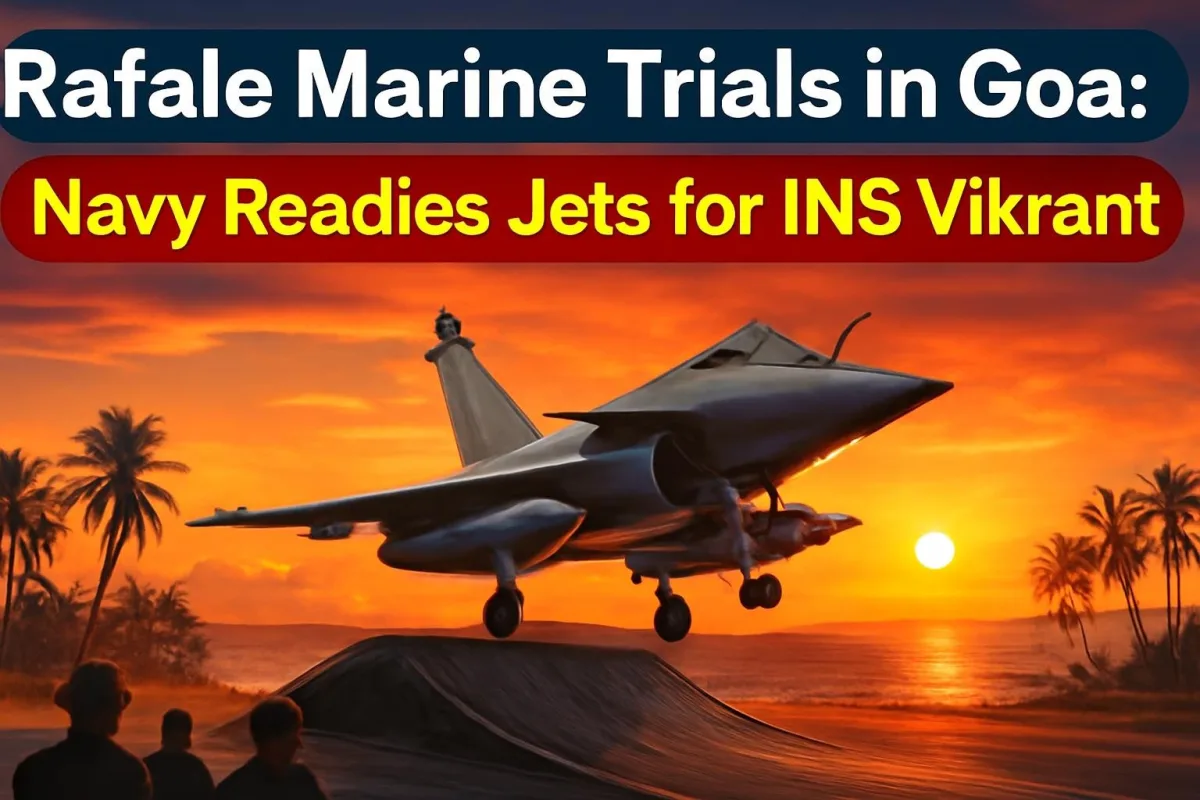
India's carrier-borne fighter plans have moved a step closer to reality. The Indian Navy is carrying out trials of the Rafale Marine (Rafale-M) fighter jet at its Shore-Based Test Facility in Goa, defence officials said on Wednesday, October 21. The tests are focused on the modifications needed for the French-built jet to operate from India's home-grown aircraft carrier, INS Vikrant.
The trials come about 18 months after India signed a deal with France for 26 of these naval fighters, the biggest fighter purchase for the Navy in years.
Why Goa, and what is being tested
The Shore-Based Test Facility in Goa is built to mimic the deck of an aircraft carrier, complete with a ski-jump style take-off ramp like the one on INS Vikrant. It allows the Navy and the manufacturer to check how a jet behaves during short take-offs and arrested landings without risking a ship at sea.
Unlike the US and French super-carriers that use catapults, Vikrant launches its jets off a curved ramp. That makes it important to verify the Rafale-M's performance, weight limits and handling in Indian conditions before it starts flying from the carrier's deck. Officials have not shared a detailed schedule for the trials.
Shore-based testing is a standard step before any new fighter joins a carrier air wing. Engineers typically study how the undercarriage absorbs the stress of repeated launches and recoveries, how the jet's systems respond during a steep climb off the ramp, and how much fuel and weaponry it can carry on take-off. The data gathered in Goa will feed directly into the changes Dassault makes to the Indian version of the aircraft.
The Rafale-M deal in brief
India and France signed the intergovernmental agreement for the jets on April 28, 2025. The order includes 22 single-seat fighters and four twin-seat trainers, and is valued at around Rs 63,000 crore. The package goes well beyond the aircraft: it covers pilot training, flight simulators, weapons, spares, long-term maintenance support and some additional equipment for the Indian Air Force's existing Rafale fleet.
The agreement also includes transfer of technology for integrating Indian weapons, such as the Astra air-to-air missile, along with plans for a Dassault Aviation fuselage production facility and a maintenance hub for engines, sensors and weapons in India.
Key facts at a glance
| Aircraft | Rafale Marine (Rafale-M) |
| Manufacturer | Dassault Aviation, France |
| Jets ordered | 26 (22 single-seat, 4 twin-seat) |
| Deal signed | April 28, 2025 |
| Approximate value | Rs 63,000 crore |
| Trial location | Shore-Based Test Facility, Goa |
| Carriers | INS Vikrant and INS Vikramaditya |
| Deliveries | Expected to begin around 2028 |
What the jet brings to the Navy
The Rafale-M is the naval version of the Rafale already flown by the Indian Air Force. It has a strengthened undercarriage and a tail hook for carrier landings, and according to reports it offers a combat radius of about 1,000 km. It can carry a range of weapons, including Meteor and MICA air-to-air missiles, Hammer precision-guided bombs and Scalp cruise missiles.
The jets are intended for air defence of the fleet, maritime strike, reconnaissance and attacks on shore targets. The French Navy already flies the Rafale-M from its carrier Charles de Gaulle, and India will be the first foreign operator of this version.
Why it matters for India
INS Vikrant, commissioned in 2022, currently relies on the ageing MiG-29K fleet. The Rafale-M is meant to bridge the gap until India's own Twin Engine Deck-Based Fighter (TEDBF) is ready, which is still years away. With China steadily expanding its navy and carrier fleet in the Indian Ocean region, a capable fighter on India's carriers is seen as essential for protecting sea lanes, island territories and trade routes.
Commonality with the Air Force's Rafales is another advantage. Shared spares, weapons and training could make the fleet cheaper and easier to maintain over its decades-long service life.
What happens next
After the Goa trials, the focus will shift to finalising the India-specific modifications and production. Officials expect deliveries to begin around 2028, with the full fleet in service by the end of the decade. Indian pilots are also expected to train on the type before the first jets arrive, so the Navy can start operating them from Vikrant soon after delivery.





Comments (0)