
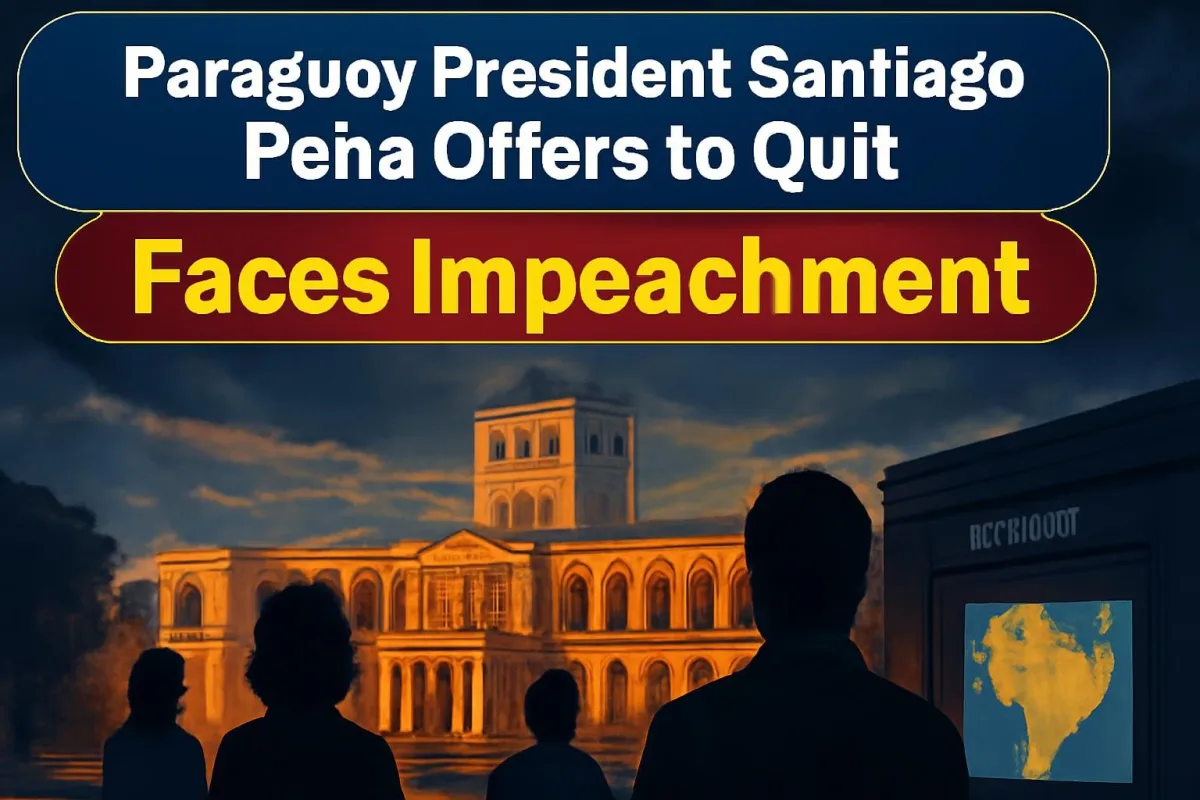
Paraguay has been thrown into its worst political crisis in years. On Thursday, November 5, President Santiago Peña announced in a recorded video that he would step down, days after the collapse of ueno bank, a digital lender used by roughly half the country. But his resignation was never formally accepted. Instead, lawmakers moved straight to impeachment, and the Senate has now begun a trial that could remove him from office.
The twist matters. Peña is, on paper, still president, and the next few days in Asunción will decide whether he leaves through resignation or through a vote that strips him of the protections a former president normally enjoys.
How a bank failure became a presidential crisis
Ueno bank began life as Financiera Ueno, a decades-old consumer finance company that rebranded itself as a digital bank and received a banking licence in 2023. Its parent is Grupo Vázquez. The bank grew fast, signing up around 3 million customers in a country of about 6.5 million people, according to Reuters and Al Jazeera. The Associated Press put the figure at more than 60% of adults.
Trouble surfaced on Monday, November 2, when regulators found that the bank's capital had fallen below half the legal minimum. The central bank stepped in the next day, seizing the lender and announcing that deposits would be shifted to other banks while the rest of the business is wound down. Central bank chief Carlos Carvallo, who had earlier headed Financiera Ueno, resigned the same day.
The political problem for Peña is his own past link to the group. He held a stake in Grupo Vázquez and Ueno Holding, which he says he sold in 2025. He had also appointed Carvallo to run the central bank. Public money was involved too: Reuters and Al Jazeera report that around $850 million in public deposits sat with the bank, while AP put the figure near $800 million.
What Peña said
In his video message, Peña said he was stepping aside "with the stability of our country, social peace and the need to preserve our democratic institutions in mind." He added that his greatest wish was for depositors' money to be returned, and apologised "if I have failed them at any point." He did not accept personal responsibility for the collapse. He later wrote on X that he would appear before the Senate and exercise his right to a defence.
Why Congress refused the resignation
Minutes after Peña's announcement, the Chamber of Deputies voted to impeach him, with AP reporting a 78-0 vote. The charge, under Article 225 of Paraguay's Constitution, is "serious and systematic poor performance" of his duties.
A joint session that could have accepted the resignation collapsed when lawmakers from Peña's own Colorado Party walked out and the session lost quorum. Opposition senators have made clear they want removal rather than a quiet exit. The reason is practical: a former president in Paraguay becomes a senator for life, with immunity. A conviction in an impeachment trial would cancel that status.
Even Horacio Cartes, the Colorado Party leader and Peña's political mentor, backed impeachment, saying the party would not side with "the plundering of public and private funds and pensioners' money."
Key facts at a glance
| President | Santiago Peña (Colorado Party) |
| Resignation announced | Thursday, November 5, 2026 (not accepted) |
| Failed lender | ueno bank, part of Grupo Vázquez |
| Customers affected | About 3 million |
| Public deposits at bank | Around $800–850 million |
| Lower house vote | 78-0 to impeach |
| Votes needed in Senate | 30 of 45 (two-thirds) |
| Successor if removed | Vice President Pedro Alliana, until August 2028 |
Arrests, protests and a rescue for depositors
Prosecutors have moved quickly. Eight ueno executives have been detained, including founder Miguel Vázquez and bank president Juan Manuel Gustale, and AP reports that 27 people have been charged with breach of trust and attempted fraud. Attorney General Emiliano Rolón has opened investigations that also cover the president and other officials, though Peña has not been formally charged.
Anger has spilled onto the streets of Asunción. On Wednesday, riot police used pepper spray and rubber bullets against protesters, some of whom chanted for Peña to go.
To calm depositors, Congress passed a law on November 4 that lets a state guarantee fund repay customers within five business days, with small accounts paid first. According to AP, the cover runs up to about $36,000 per customer, which the central bank says fully protects around 97% of clients. The Labour Ministry estimates around 7,000 direct and indirect jobs are affected by the bank's failure.
Why it matters for India
Paraguay is a small but growing partner for India in South America. Peña made a state visit to India in June 2025, travelling to New Delhi and Mumbai, and the two sides set up a Joint Commission Mechanism. According to India's Ministry of External Affairs, bilateral trade stood at about $214 million in 2025-26, with India selling vehicles, auto parts, agrochemicals and medicines, and buying soya oil, iron, steel and aluminium. Around 600 Indians live in Paraguay, mostly in Asunción and Ciudad del Este.
There is no reported link between the bank collapse and Indian businesses, but a prolonged crisis could slow the trade and investment talks both governments had started after Peña's visit.
What happens next
The Senate constituted itself as a trial court on Thursday evening and was due to resume on Friday morning local time, with Peña expected to present his defence. To remove him, 30 of the 45 senators must vote in favour. If that happens, or if his resignation is eventually accepted, Vice President Pedro Alliana will take over and serve out the term until August 2028.
For ordinary Paraguayans, the more urgent question is whether the promised payouts arrive on time. The speed of those repayments, and the outcome of the Senate vote, will decide whether the country's banking system and its politics can steady themselves in the weeks ahead.





Comments (0)