
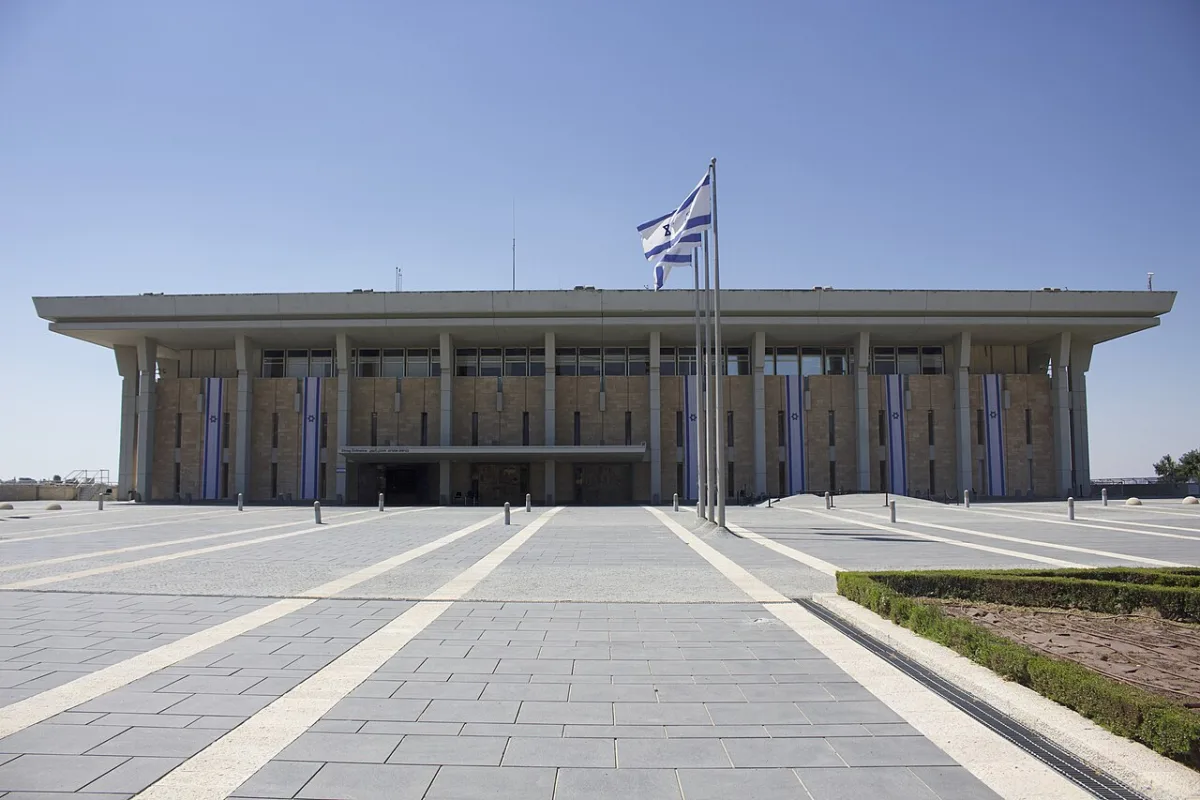
Israel looks set for a change at the top after more than a decade and a half of Benjamin Netanyahu's dominance. Former army chief Gadi Eisenkot, who leads the Yashar party, has been recommended by 67 of the 120 members of the newly elected Knesset to form the next government, while Netanyahu received 46 recommendations. President Isaac Herzog, who wrapped up consultations with all parties on Thursday, said he will announce on Sunday whom he is handing the mandate to.
The numbers look decisive on paper, but Herzog chose to pause for the weekend, pointing to what he called "mutual vetoes" between and within the political blocs.
How the Knesset Split After the October 27 Election
Israelis voted on October 27 to elect the 26th Knesset. Netanyahu's Likud again emerged as the single largest party with 27 seats, but his wider religious-nationalist camp managed only 53 seats in total, well short of the 61 needed for a majority.
On the other side, a four-party, Jewish-led alliance around Eisenkot won 48 seats, and two Arab-led parties together won a record 19 seats. It is that combination, 48 plus 19, which produces the 67 recommendations Eisenkot now holds.
| Key Fact | Details |
|---|---|
| Election date | October 27, 2026 (26th Knesset) |
| Total seats | 120 (majority: 61) |
| Recommended Eisenkot | 67 MKs |
| Recommended Netanyahu | 46 MKs |
| Recommended neither | United Torah Judaism (7 seats) |
| Largest single party | Likud, 27 seats |
| Arab-led parties | Record 19 seats |
| Mandate decision | Sunday, November 8 |
| Time to form government | 28 days, extendable by 14 days |
Who Backed Whom
Eisenkot's 67
Eisenkot was recommended by his own party Yashar, Avigdor Liberman's Yisrael Beytenu, The Democrats, B'Yachad, the Islamist Ra'am party led by Mansour Abbas, and the Joint List. According to Yashar, it is the largest number of recommendations any candidate has received since 2015.
Joint List chair Yousef Jabareen summed up his party's thinking bluntly, saying they were not choosing between good and better, but between what they saw as bad and even worse. Senior Joint List figure Ahmad Tibi told Herzog the party would be ready to back a minority government from the outside.
Netanyahu's 46
Netanyahu was recommended by Likud, Religious Zionism, Otzma Yehudit, Shas and Zehut. The big blow to his camp came from the ultra-Orthodox United Torah Judaism, which decided not to recommend either candidate. The party broke ranks with Netanyahu after the failure to pass legislation exempting ultra-Orthodox men from military service.
Why Herzog Is Waiting Until Sunday
Herzog acknowledged that the result may appear clear, but said there were vetoes between the blocs and within them. He plans personal talks with some party leaders over the weekend before making his choice.
The complication is that a government needs to be built, not just counted. Eisenkot has made recognition of Hamas as a terrorist organisation one of his conditions for any partner, and reports say three of the Jewish-led parties in his alliance have so far refused to sit in government with the Arab parties. That means the most likely shape, if Eisenkot gets the nod, is a minority government with outside support, which is always a fragile arrangement.
Likud leaders have already gone on the attack. Education Minister Yoav Kisch argued that Israel could not meet its challenges with a government relying on Arab parties, and called for a broad national government of Zionist parties instead. Netanyahu himself has seized on an election officials' inquiry into possible vote tampering to cast doubt on the results, an accusation his critics say undermines the democratic process.
What Happens Next
Once Herzog names a candidate on Sunday, that person will have 28 days to put together a coalition, with the option of a 14-day extension. The new Knesset is due to be sworn in on November 10. Until a new government is approved, Netanyahu continues as caretaker prime minister. If no candidate manages to form a government, Israel could be heading back to the polls yet again.
Eisenkot's camp has signalled urgency. Senior Yashar figure Yoram Cohen said the country faces a critical emergency and needs an emergency government quickly, adding that the party would approach all parties that accept its basic principles.
Why It Matters for India
India and Israel share a close strategic partnership covering defence, agriculture, water technology and trade, and thousands of Indian workers have taken up jobs in Israel in recent years. Relations between New Delhi and Jerusalem have stayed strong across governments of different political colours, so a change in leadership is unlikely to alter the basics. Still, a new prime minister would bring a fresh approach to the Gaza conflict and to regional diplomacy in West Asia, a region where India has major energy and diaspora interests.
Sunday's announcement will be the first formal step in what could be the biggest political shift in Israel in years.






Comments (0)